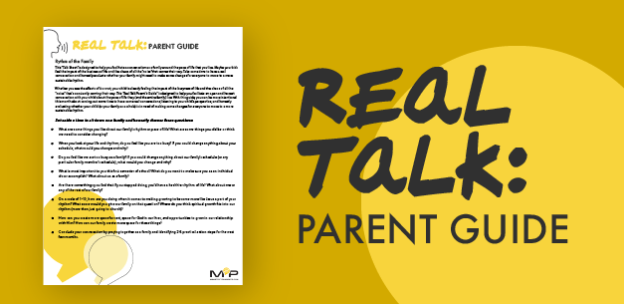
We all feel the pressure to perform in life, and this pressure can have a tremendous impact on our kids. This REAL TALK: PARENT GUIDE is designed to help you facilitate an open and honest conversation with your child about the pressure they feel to perform. With this guide, you can be more intentional this month about carving out some time to have some real conversations and hearing from your kid’s perspective.
Take some time to sit down as a family or one-on-one with your child and talk through the questions provided below. Don’t just interrogate your kid. Instead, take the time to listen intently, be honest, allow them to share things from their perspective, and even honestly answer the questions yourself. The authenticity you show to your child will model for them healthy ways to have real and important conversations.
Would you say that you feel the pressure to perform in any area of your life? Tell me about that.
Do you feel the pressure to perform coming from anyone in our family? If so, can you describe what you feel?
Where does most of the pressure you feel to perform come from? Me or us? Coaches? Siblings? Social media? Teachers? Peers? Yourself?
In what areas of life do you feel the most pressure to perform? School? Sports? With your friends? With your family?
How do you think feeling a lot of pressure to perform is impacting your life on a daily basis?
If there was one thing you could change that would reduce the pressure you feel in any area of life, what would you change? What would be different for you and the pressure you feel because of that change?
What are some things I/we can do as your parents to reduce the pressure you feel and help you feel a healthy pressure to perform?
Are there any things you can do or tools you can use to help yourself reduce the amount of pressure you feel to perform?
How can I pray for you as you learn how to navigate the pressure to perform in life?
Conclude your conversation by praying together as a family and identifying 2-3 action steps for the next few months.
Copy/ Paste this email into a browser and send it to parents.
Subject Line: Feeling the Pressure?
Dear Parents,
Do you ever think about the amount of pressure your child is under? As adults, we have come to expect pressure as a part of life, but our kids are experiencing an enormous amount of pressure at earlier and earlier ages. They feel it as they begin to learn that they have to perform everywhere in life. They have to perform at school, in sports, with their friends, and sometimes at home. This pressure they feel to perform is crushing them in many ways, and they don’t know how to navigate it all.
This month’s Online Parenting Class video will provide you with some tips as to how you can help your child deal with the pressure they feel to perform. To watch the brief video, click the link below.
[ INSERT LINK TO ONLINE PARENTING CLASS VIDEO ]
Thank you for allowing us to partner with you as you lead your family. If you have any questions, please don’t hesitate to reach out.
Cheering you on,
[INSERT LEADER’S SIGNATURE HERE]
EMAIL 2
Copy/ Paste this email into a browser and send it to parents.
Subject Line: Reduce the Pressure at Home!
Dear Parents,
As you seek to help your child navigate the pressure they feel to perform in life, have you ever considered reducing the pressure at home? That’s right, what if we, as parents, turned down the heat when it comes to performance and allowed our kids to have a place to just rest and breathe? What if we helped our kids experience a childhood that is characterized by fun, encouragement, rest, security, and peace instead of memories of pressure, stress, conflict, and anxiety? Would they be healthier in the long run? I think they would!
Check out this month’s blog article that might just give you a different perspective on your child and performance. And if you haven’t watched this month’s Online Parenting Class video, you still have time. To read the blog article or watch the video, click on the links below.
[ INSERT LINK TO M2P PARENTING BLOG ARTICLE ]
[ INSERT LINK TO M2P ONLINE PARENTING CLASS VIDEO ]
We are in this together! Let us know if there is ever anything we can do for you or your family.
I don’t know how good your memory is, but I can remember a few things from my childhood. Now, I have to remember back further than some of you do, but I remember being in elementary school and headed off for that first day. I remember helping my mom pack my lunch box and fill up my thermos. I remember being a little nervous on the ride to school. I remember being scared to walk into the building, even though we had already been to open house and met my teachers. I remember feeling anxious and feeling the pressure that comes with being at school.
I remember playing sports, going to practice and to games and feeling the pressure from my coaches to catch or hit or throw the ball. I remember feeling the pressure to win and the pressure to perform.
I remember riding my bike and in playing in the backyard with a crew of friends for my neighborhood. I remember feeling like I needed to try to fit in with the “cool kids” on the block.
You have some of these same kind of memories too, and your kids are feeling some of the same kind of pressure you felt. Pressure is something that all kids feel, and I’m sure that’s been true throughout all of time.
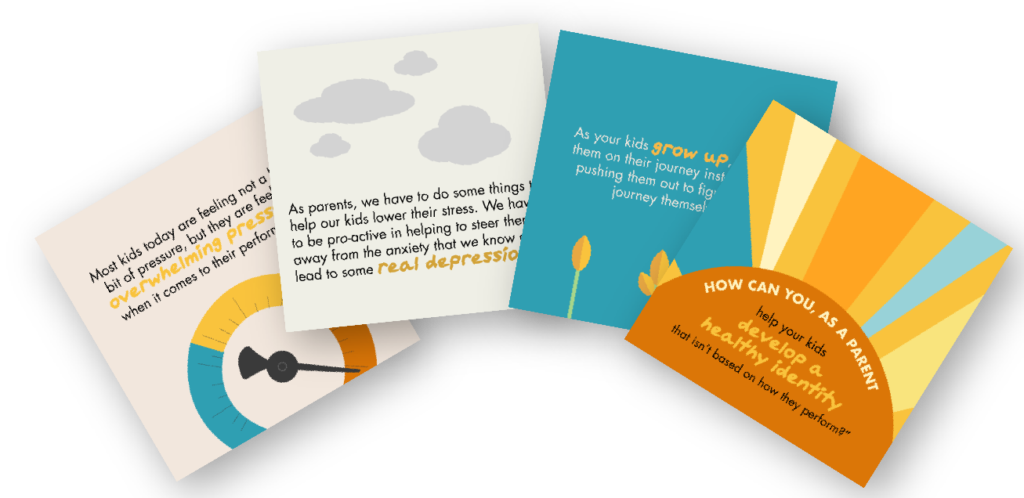
But I want to point out something that I think you already know. This is something that we’ve all known for years, but I feel like the weight of it is either just starting to really hit me, or it’s just getting heavier. Most kids today are feeling not a little bit of pressure, but they are feeling overwhelming pressure when it comes to their performance, and this pressure begins to mount at an earlier and earlier age. They are learning that, “You have to perform or you’re just not good enough.” If you can’t catch or kick the ball you won’t make the travel team. If you can’t get the best grades, you won’t be set up for getting into the AP or honors classes when you get to high school. If you don’t have a cell phone and the right social media account, you’ll get left behind with your group of friends. There is pressure on our kids EVERYWHERE like there has never been before.
We all recognize that the way our kids perform in school, sports, or drama – it can have a real impact on their future. Their school performance can dictate if they can be set up to further their education, and it is important. The sports performance can give them some great opportunities and some fun experiences.
But I would ask, how important are all of these expectations around performance? Is all of this so important they should feel such immense pressure to perform that it crushes them? Is their performance so important that it should consume their childhood years and rob them of experiences they can never get back? Is the long-term benefit of getting that extra three-tenths of the grade point or average or being a little better at kicking, throwing, hitting, or catching the ball worth the lost years that so quickly fade away? Is it so important that we’re okay with our kids believing they are not “good enough” if they don’t get the best grades or get on the right team or get the best part? Is the anxiety worth it?
I say “no.” I say we have to do some things to help our kids lower their stress. We have to be pro-active in helping to steer them away from the anxiety that we know can lead to some real depression. Here are a few practical things you can maybe do to lead your kids in a more healthy direction:
Be aware of the pressure they feel from the world and the pressure they feel from you. You know how much your kids look up to you and often hang on every word you say. Steward that well and say things that will lead your kids away from feeling this enormous pressure to perform that they can so easily feel. Reduce the pressure in your home. I know it may sound crazy in a world that pushes us to drive our kids to success, but maybe lower the expectations just a little. Provide some space for them to just be kids and do whatever you can to help them have a childhood that is characterized by fun, encouragement, rest, and peace instead of memories of pressure, stress, conflict, and anxiety.
And as you help your kids navigate the things they have to do in the world, as you help them develop a sense of responsibility and some of the tools they WILL need to thrive in the world, don’t just push them through it, but help them through it. Don’t always have a posture that forces them to figure it out and develop some grit (which they definitely need). But, help them along the way. Help them learn the things they need to learn, help them step into the things they need to step into, be WITH them on their journey instead of pushing them out to figure out the journey themselves.
Take some time to think through how you can help your kids navigate the pressure they feel to perform on so many levels. Pay attention to the social pressure they are under and do whatever you can to help them develop a healthy identity that isn’t based on how they perform.
This month is all about rhythm. As a children’s ministry worker, you need to make sure you have a healthy rhythm and pace of life as you lead the kids and families at your church. If you aren’t in a good place to lead, the people around you will feel it. You also have the opportunity to help parents evaluate their own pace and evaluate whether their family is too busy to focus on the things that are really important in life. Don’t forget to check out this month’s articles, the toolbox item, and the videos for both you and the parents you serve. As always, let us know if there is anything we can do to help you!
Blessings,
The M2P Team
WHAT IS IT?
This REAL TALK: PARENT’S GUIDE is designed to help you facilitate an open and honest conversation with your child about the pace of life they (and the entire family) live. With this guide, you can be more intentional this month about carving out some time to have some real conversations, listening to your child’s perspective, and honestly evaluating whether your child (or your family as a whole) is in need of making some changes for everyone to move to a more sustainable rhythm.
HOW TO USE IT
Download the REAL TALK: PARENT’S GUIDE and post it on your website.
Email parents a copy of the resource or a link to it and encourage them to take time as a family to have the conversation.
Print copies of the REAL TALK: PARENT’S GUIDE for parents to grab at church.
We want to encourage, challenge, and equip you this month to develop a healthy personal rhythm and an intentional ministry rhythm as you lead in children’s ministry from who God has created you to be. From a children’s ministry standpoint, how can you plan ahead and coordinate with the other ministries in your church in order to stay in sync while not overtaxing the families of your church? Individually, how can you focus on your own connection with God, evaluate your own rhythm, and make room to do some things to grow yourself spiritually?
This month we want to encourage parents to evaluate their family’s rhythm and pace of life and make some intentional decisions to slow down and develop a healthy rhythm. We are all so busy, but parents can do some things to build a sustainable pace that will lead their families to a more healthy place.
We want to encourage, challenge, and equip you this month to develop a healthy personal rhythm and an intentional ministry rhythm as you lead in children’s ministry from who God has created you to be. From a children’s ministry standpoint, how can you plan ahead and coordinate with the other ministries in your church in order to stay in sync while not overtaxing the families of your church? Individually, how can you focus on your own connection with God, evaluate your own rhythm, and make room to do some things to grow yourself spiritually?
Click the image above to watch the video or click HERE!
Whether you see the effects of it or not, your child is already feeling the impact of the busyness of life and the chaos of all the “noise” that’s constantly coming their way. This “Real Talk Parent’s Guide” is designed to help you facilitate an open and honest conversation with your child about the pace of life they (and the entire family) live. With this guide, you can be more intentional this month about carving out some time to have some real conversations, listening to your child’s perspective, and honestly evaluating whether your child (or your family as a whole) is in need of making some changes for everyone to move to a more sustainable rhythm.
Set aside a time to sit down as a family or one-on-one with your child and candidly discuss these questions:
What are some things you like about our family’s rhythm or pace of life? What are some things you dislike or think we need to consider changing?
When you look at your life and rhythm, do you feel like you are too busy? If you could change anything about your schedule, what would you change and why?
Do you feel like we are too busy as a family? If you could change anything about our family’s schedule (or any particular family member’s schedule), what would you change and why?
What is most important to you this first semester of school? What do you want to make sure you as an individual do or accomplish? What about us as a family?
Are there some things you feel that if you stopped doing, you’d have a healthier rhythm of life? What about me or any of the rest of our family?
On a scale of 1-10, how are you doing when it comes to making growing to become more like Jesus a part of your rhythm? What score would you give our family on that question? Where do you think spiritual growth fits into our rhythm (more than just going to church)?
How can you create more space for rest, space for God in our lives, and opportunities to grow in our relationship with Him? How can our family create more space for these things?
Conclude your conversation by praying together as a family and identifying 2-3 practical action steps for the next few months.
Do you ever feel like your family calendar is a little out of control? For your kids, there’s school, sports, dance, drama, friends, church, homework, practice, rehearsal, games, events, and so much more. For you, there’s work, home, family, friends, church, plus all of the things I listed for your kids. It can be exhausting for sure!
There has to be a way to help your family develop a healthy pace of life and rhythm that will breathe life into your days instead of draining the life out of you. We have some tips for you. Check out this month’s parent video to hopefully find a few ways to lead your family into a good place as we start the fall.
Email 2
Psalm 46:10 says, “Be still and know that I am God.” It’s an encouragement for us to step away from the craziness of life and take some time to just rest in who God is. As parents, you have the opportunity to lead the way in taking time for God and maybe, just maybe, scaling back on all that you and your family are involved with. You can model to your kids and teens what it means to slow down and rest.
This month’s Ministry to Parents articles and parent video give you some great ideas on how you can lean into a healthier pace of life for yourself and how to encourage your kids to do the same. Click here to see the video and click here to read the articles.
Don’t forget that we’re here to support you and your family. Please let me know if you have any questions.
Thank you,
[INSERT LEADER’S SIGNATURE HERE]
Video Script
If I asked you, “Are you too busy?” what would you say? Well, I think I know. When I talk to parents and ask “How are you guys doing?” the response I get most often is “Well, we’re busy.” It’s interesting, when people say they’re busy, there is rarely a qualifier on it. It’s not, “Well, we’re good busy” or “We’re bad busy” … although there is sometime a “we’re crazy busy” …
The question I think we need to ask is this: “How busy is too busy?” When it comes to you, personally, how busy is too busy? I went through a season recently where I was way too busy. I got into a spot where I had said “yes” to way too many things, and I could feel it. Now, probably like you, I usually feel like I’m too busy, but this was to another level.
As I found myself in that situation, I could sense that overwhelmed feeling that kind of hovers around you. It was with me all the time. There wasn’t much space to think because I just had to keep doing. There wasn’t much time to breath and just be because I had to keep things going and I had to be productive. I bet you can relate.
I noticed that the overwhelming feeling I had could easily bleed out into my family, into my wife and my kids. The way I was treating and dealing with them could easily drift to a place I didn’t want it to be.
And then, as our kids have grown up, THEY have gotten busier too. The demands on their time go up as they get older, and the activities they are involved with get more serious. There are more and longer practices, there is more and harder homework, there are more social opportunities and, if we’re not careful, our kids will drift into a pace of life that they simply cannot mentally and emotionally sustain. They may be able to put on a mask and get through it for a while, but a crazy busy, unsustainable pace is simply not good for kids and teenagers.
So, when it comes to both you and your kids, when you think about your family, what can you do to maybe slow it down a little bit and build a more sustainable, intentional rhythm to life? Hopefully you have some family traditions that are important, things that both you and your kids look forward to doing together, things that can stay on your calendar. But, I bet there are some things that you can, and maybe you should, say “no” to,
I know it may sound crazy, but what if you, as their parents, helped your kids scale back the things they are involved in? What if, instead of pushing them to do and be involved in more, you led them to do and be involved in less? What would it look like for you to lead them to make wise choices with their time and create some space to rest and just be a kid or a teenager? If they weren’t so busy, would they maybe not feel so much pressure and have some time to just be and grow? Because you know what, that’s what they need.
Psalm 46:10 says this, “Be still and know that I am God.” Do you have time to actually do that? More than just going to church services and events, do you have the space to just mediate and reflect on God and your relationship with him? Do your kids have the time and space to just breath and spend time with God growing in their faith, or are they just way too scheduled and are they crowded to the point that have no time for God?
As you step into a new season this fall, think about, are there some things you can do for yourself as a parent to slow down and just be? Are there things that you can say “no” to in order to say “yes” to some better things? Can you develop an intentional, healthy rhythm for yourself and for your family that will lead you to a more peaceful home, to better relationships, and to a more healthy heart? Can you maybe sit down with your family and make some decisions not just about what you will be involved with, but maybe decide that there are some things you won’t be involved with in the coming months? Will you miss some things … yes. Will you maybe at home a little more … yes. Will you maybe have a little more “down time” than you are uses to … yes? Will it be worth it? That’s a big ole yes! It will be worth it to develop a healthy, sustainable family rhythm that gives you a sense of peace that you maybe haven’t experienced in years. It’ll help your pace. It’ll help your heart. It’ll help your faith. It’ll help your kids. And overall, it will just help your family. Which I know is what you want.