

Category Archives: Kids Parenting Class

You Are The Primary Spiritual Leader For Your Kids

EMAIL 1

Copy/ Paste this email into a browser and send it to parents.

Subject Line: Family Discipleship: It Starts with You

Dear Parents,

You likely know this, but as a parent, you play a significant role in the spiritual health, growth, and development of your children. Actually, according to the Bible, you are the primary spiritual leader for your kids. Hearing that may have made you cringe a little or make your hands start to sweat, but the truth is that you are perfectly positioned to be the best spiritual leader your kids could ever have. It’s God’s design.

One way to encourage spiritual growth in your children is to model a strong and consistent faith yourself. Your kids are watching you lead by example as they try and decipher what following Jesus actually looks like. That’s why it’s important for you to spiritually lead them by example. Let them see you making worship a priority for the family. Let them be a part of you studying and taking about God’s Word. Let them see you lead out in praying, serving others, and living a life of generosity and grace. Find ways to involve your children in these activities. In fact, this month we are providing you with a number of resources that will help you to do just that.

These resources will place practical tools at your fingertips that you can use to lead spiritual exercises and conversations that will help your kids grow in their faith and position you to be the primary spiritual leader for your family.

To watch this month’s Online Parenting Class video, click the link below.

[ INSERT LINK TO ONLINE PARENTING CLASS VIDEO ]

You can do this! We are always here for you if you need us.

Praying with you and for you as you lead at home.

[ INSERT LEADER’S SIGNATURE HERE ]


EMAIL 2

Copy/ Paste this email into a browser and send it to parents.

Subject Line: Talking and Praying: Conversations at Home

Dear Parents,

We value faith and family because God values faith and family. In fact, God created you (the parent) to be the primary spiritual influence in your child’s life. We know that can feel a little scary or intimidating at times. Spiritual discussions are intimate and, therefore, can feel a little bit awkward at first. You may feel nervous and scared, wondering how your kids are going to react. Others might have tried something similar that didn’t work, so you want to be cautious.

That’s why our desire is to come alongside you (not replace you) and to equip you with encouragement and the practical tools you need to lead your children in spiritual practices, conversations, and in growing to become more like Jesus.

One way you can help your children grow in their faith is by creating opportunities for them to ask questions and explore their beliefs, as well as discuss their doubts and fears. Talking about God, who He is, and how we can all can rely on Him will impact your kids in a big way. Don’t shy away from these conversations about faith, doubts, or fears. Instead, share with your kids about what God is doing in your life and why you trust in Him.

Deuteronomy 6:4-9 says, “Hear, O Israel: The Lord our God, the Lord is one. You shall love the Lord your God with all your heart and with all your soul and with all your might. And these words that I command you today shall be on your heart. You shall teach them diligently to your children, and shall talk of them when you sit in your house, and when you walk by the way, and when you lie down, and when you rise. You shall bind them as a sign on your hand, and they shall be as frontlets between your eyes. You shall write them on the doorposts of your house and on your gates.

Here’s the reality, discipleship does not need to be a far-off concept. It doesn’t need to be intimidating, scary, or reserved for the “professional Christians” to do at our church. Discipleship is simply being a follower and student of Jesus and then teaching your kids to do the same. It happens in everyday life, it happens at home, and you can do it.

Take a few minutes to check out this month’s blog article for some ideas to help you as you become more intentional in leading your kids spiritually. You’ll be glad you did.

[ INSERT LINK TO M2P PARENTING BLOG ARTICLE ]

And don’t forget to check out this month’s Online Parenting Class Video.

[ INSERT LINK TO M2P ONLINE PARENTING CLASS VIDEO ]

Thank you for allowing us to partner with you as you lead your family. If you have any questions, please don’t hesitate to reach out.

In this alongside you,

[ INSERT LEADER’S SIGNATURE HERE ]



M2P June KIDS Parent Video Script

Let’s play a game. I’m going to ask you a question, and I want to see what your response is. Now obviously, I’m not really going to see your response, but I want YOU to pay attention to your response.

Ready? When it comes to what you want for your kids in the future, what rises to the top of the list? What do you think about when you picture your kids and their young adult years? Now I know that might be a long way away for some of you, but it’s worth thinking about now.

My guess is your answer is some version of the word “successful.” You want for your kids to be successful in life. That means they have had a season of being successful in school, maybe successful in sports, and successful in their relationships. You just hope for them to be successful, whatever that looks like in your mind.

But let me possibly put a different picture in your mind. Not that I don’t want for my kids to be successful; believe me, I do. However, there is something that I want more than that. Would you say that you want for your kids to be disciples? Specifically, disciples of Jesus. We all know that a disciple is simply a follower or student of someone else, and my guess is you wouldn’t be watching this video if you didn’t have a sense of what discipleship is. You may hear about it at your church, know that it’s an important process, and you may even cringe a little bit when you think about it. Discipleship can be something that is reserved for those “super spiritual” people over there. It’s what the pastor does and teaches. We go to church and are good members, but those people over there are the disciple-makers.

However, I would love for you to consider something different when it comes to both being a disciple and where discipleship happens. Do you know that you are called to be a disciple? If you are serious about your faith and you call yourself a follower of Jesus, discipleship has to be a part of your life. You have to be spending time with God, learning his Word, and doing your best to live out a life of faith every day. Too many of us settle into being a “casual” Christian, and we don’t take discipleship seriously. Trust me; I’ve been there.

I also want you to consider the idea that the best discipleship actually doesn’t happen at church; it happens at home. And the best people to disciple kids into a true relationship with God through Jesus aren’t children’s pastors or ministers, or even volunteers at church–it’s you as their parents. Again, I’d like to see your response to that. Because most of us might be a little scared of that. We know that we aren’t perfect, and we are worried that we don’t have what it takes to communicate what it means to live a true life of faith to our kids. But I want for you to know that you are perfectly positioned to be the best spiritual leader your kids could ever have. Your love for them will never be surpassed by anyone else, and if you are a true disciple yourself, then you will believe that the most important thing you can pass on to your kids is a life of faith. The picture of success changes, and you will focus on not just the things that the world says are success but what God says is success.

So, here are a few simple ideas for you. First, model what it means to be a disciple of Jesus. Let your kids see you reading the Bible and having quiet time with God. Let your kids hear you praying and asking God to be in the middle of your life. Let your kids see you live a life of love and generosity. This modeling will go further than you could possibly imagine.

Second, pray together as a family. When your kids are young, begin to ask them what you can be praying for in their life. When a kid knows that a parent is praying for them, it gives them more confidence in their own faith in God. Also, share with your kids things they can be praying for when it comes to your life. Obviously, only share what is appropriate, but asking them to talk to God on your half is another powerful part of their discipleship.

Finally, talk about not just following God’s law (the “rules”) but talk about how God is moving in your life. Share about what you are learning and how God is molding and shaping your thoughts and actions. These conversations don’t have to be scheduled family devotions but can just become a normal and natural part of your family’s life. The more comfortable you get talking about Jesus and how he is impacting your family, the more comfortable your kids will be with doing the same.

Here’s the reality, discipleship does not need to be a far-off concept. It doesn’t need to be reserved for the professional Christians to do at church. Discipleship is simply being a follower and student of Jesus and then teaching your kids to do the same. It happens in everyday life, it happens at home, and you can do it.


Leading Our Kids Through Age/Grade Transitions And Trusting God Along The Way

EMAIL 1

Copy/ Paste this email into a browser and send it to parents.

Subject Line: Ready or Not, They’re Growing Up!

Dear Parents,

There are certain moments in family life when we come face to face with the fact that things are changing. We sometimes joke that we would like to “freeze time” and keep our kids at a certain age. Well, the reality is that we can’t actually freeze time, and we can’t stop our kids from growing and changing, but that’s not necessarily a bad thing—especially if we lean in and focus on what we can do. And what we can do is celebrate what God has done/is doing in their lives and try to set them up for whatever is next. It’s true that transitioning out of a new grade or school, or ministry can be scary for a child (and for you as a parent). It’s true that our kids (and even us as parents) often have no idea what to expect as they march toward the next stage of life. But it’s also true that we, as parents, can learn how to lead our kids to the next stage of life in a way that causes them to look toward the future with healthy anticipation. It all starts with us choosing to adjust our attitude and learn how to step into the next phase with a sense of joy and trust in the Lord ourselves. This month’s Online Parenting Class video will provide you with some much-needed encouragement and truth to help you lead your family to do just that.

To watch this month’s Online Parenting Class video, click the link below.

[ INSERT LINK TO ONLINE PARENTING CLASS VIDEO ]

Thank you for allowing us to team up with you as you lead your family. If you have any questions, please don’t hesitate to reach out.

Cheering you on,

[INSERT LEADER’S SIGNATURE HERE]


EMAIL 2

Copy/ Paste this email into a browser and send it to parents.

Subject Line: Trusting God Along the Journey

Dear Parents,

One of the hardest things to do as a parent is to learn how to trust. You have to learn how to trust your kids, how to trust others, how to trust yourself, and how to trust God. If we had to rank those, trusting God would need to land at the top. I know it sounds simple, doesn’t it? But we, as parents, often struggle to trust God (especially when it comes to our kids). There are lots of things going on in our culture and changing in the world that cause us to doubt, fear, and hold tight. But, as your kids grow up and move from season to season, you’ll find that no matter the culture or the changing world we all live in, we need to trust God more and more with our everything (especially our kids). This is a month of transitions where your kids might be finishing one grade, moving into an entirely new stage of life, or moving out of a ministry at church.

Check out this month’s blog article that will offer you some Scripture, encouragement, and some practical ideas on learning how to trust God even more through these life changes. And if you haven’t watched this month’s encouraging Online Parenting Class video, you still have time. To read the blog article or watch the video, click on the links below.

[ INSERT LINK TO M2P PARENTING BLOG ARTICLE ]

[ INSERT LINK TO M2P ONLINE PARENTING CLASS VIDEO ]

We are in this together! Let us know if there is ever anything we can do for you or your family.

Praying for you as you lead at home,

[INSERT LEADER’S SIGNATURE HERE]


M2P May KIDS Parent Video
Leading the Way to the Next Phase

Obviously, one of the biggest jobs we have as parents is helping our kids learn how to navigate what is ahead of them. I don’t know about you, but as our kids have grown up, I feel like they are changing all the time. It all happens so fast, and they transition from one phase of life to the next in the blink of an eye. These transitions are normal and natural, and we have the opportunity to help our kids be ready for whatever is next.

Now here’s what I know is true. As our kids grow out of preschool and they move into elementary school and beyond, it can be kind of sad. Let’s face it; little kids can be lots of fun with their joy, laughter, and overall carefree mindset. OK, maybe it’s not all fun all the time, but you get my point. They are headed to the dreaded teenage years, which don’t have to be dreaded, but that’s another whole conversation.

As our kids grow up, we can put off the vibe that we are sad that they are progressing. We also go in and out of times of being fearful and anxious about the world they are stepping into. We have to be careful as parents to not project this anxiety onto our kids and help them believe that they are ready for the next phase of life. This next phase could be moving into a new grade, into a new school, or into a new ministry. All of this comes with new experiences, new friends, new coaches, and teachers, and it can all be a bit overwhelming for them.

But let me read to you a piece of scripture that has meant a lot to me for a long time. It’s Philippians 4, and it says this. “Do not be anxious about anything, but with prayer and petition, submit your requests to God. And the peace of God, which transcends all understanding, will guard your hearts and minds in Christ Jesus.” So, as your little ones move into being a little bit bigger ones, don’t be anxious. I know, I easier said than done. There can be a lot to be anxious about. However, our posture comes down to how much we actually trust God to lead and guide our kids. We cannot put a stop to the natural process of growth. We cannot box them up and keep them from all the transitions that are ahead of them. But we can train them as best we can and give them the confidence that they are ready for whatever is next. Balance the fact that it is a big deal that they are stepping into a new phase with the fact that it is normal to step into the next phase.

Help them believe that the fears they have are normal, but they have what it takes to get through it all. A few years ago, I heard a phrase that I started using with my kids whenever I knew they were facing something that might seem a little bit daunting to them. I would say, “I know it’s hard, but you can do it.” If we can both empathize with our kids about their fears and instill in them a belief that, with God’s help, they can get through it, I promise you they will be better in the long run.

And the “with God’s help” part is really important. Back to Philippians 4, we need to present our request to God. We need to ask God to be with our kids as they move into this next phase of life. And the scripture tells us that if we do that, the peace of God, which is bigger than anything we could possibly imagine we’ll guard our hearts. Our kids need to believe that they can do it, and we need to believe that God can do it. There is a peace that we can parent with if we will put ourselves in our family before God.

One more thing about helping our kids move from one phase to the next. We have to recognize that our kids are changing fast, and the kid you are parenting now isn’t the kid you were parenting then. Often as parents, we get stuck in parenting the kid they used to be instead of the kid they are or the kid they are becoming. Again, we do this because we hate to see them grow up. We want to freeze them in time and enjoy them like they are. But they are moving and growing, and they will head to the next phase whether we like it or not. We need to be looking ahead and treating them like either the kid they are now or maybe the kid they are becoming instead of the kid they were. This takes a lot of thought and effort on our part, but I promise you it will help prepare them for the road ahead and increase the likelihood that they will be able to navigate life in a healthy way.

As a parent, train yourself to look forward when it comes to your kids instead of just looking back. Sure, looking back at all of those pictures and memories is a lot of fun, but her kids are headed forward, and the best thing we can do for them is to help them take whatever next step is in front of them and be prepared for the journey ahead.


Helping Your Kids Recognize And Build Healthy Friendships

EMAIL 1

Copy/ Paste this email into a browser and send it to parents.

Subject Line: Building Healthy Friendships

Dear Parents,

Let’s schedule a play date! That’s a phrase you have probably found yourself using at some point as your kids have continued to grow up. Have you ever paused to wonder why you work so hard to help them make friends with other kids? Maybe it’s because, deep down, you realize that the people whom your kids become friends with and those they surround themselves with will have a significant influence on the choices they make and will ultimately determine the direction and quality of their lives. So, you do whatever you can as a parent to help connect them with good potential friends because you want your kids to build healthy friendships. What you might not know is that as your kids get older, you still have the opportunity to influence and steer them toward healthy friendships; this will be true all along their journey to adulthood.

This month we are providing you with some excellent ideas, tools, resources, and, as always, a little extra encouragement that will help you start or take another step forward in an ongoing conversation with your kids about healthy friendships—what they look like and how to recognize the healthy from the unhealthy.

To watch this month’s Online Parenting Class video, click the link below.

[ INSERT LINK TO ONLINE PARENTING CLASS VIDEO ]

Hang in there and know that we are in this together! We are always here for you if you need us.

Praying with you and for you as you lead at home.

Your friend,

[INSERT LEADER’S SIGNATURE HERE]


EMAIL 2

Copy/ Paste this email into a browser and send it to parents.

Subject Line: Good Friends: They Matter to Our Kids

Dear Parents,

As you think about the preferred future for your kids, there is one thing that will have the most significant impact when it comes to the path they will walk, the choices they will make, the direction their lives will go, and ultimately the quality of their lives. It’s their friends. I bet that you already know this to be true, but I’ll remind you just the same. The people whom your kids choose to be friends with, surround themselves with, and do life with will have a tremendous impact on the decisions they make, where they go in life, and how fulfilling their life will be. If we know that their choices in friends is going to have such a big impact on them, wouldn’t it make sense that we work really hard to help them figure out this part of life?

In this month’s blog article, you’ll learn some tools to help equip your child to recognize, value, and make good friends. Take a few minutes to check it out. You’ll be glad you did.

[ INSERT LINK TO M2P ONLINE PARENTING BLOG ARTICLE ]

And don’t forget to check out this month’s Online Parenting Class video, where we explain the importance of leaning in and paying attention to the friendships your kids are building. We will also share with you some ways that you can leverage your influence as a parent to help your kids better navigate this crucial area of life.

[ INSERT LINK TO ONLINE PARENTING CLASS VIDEO ]

Thank you for allowing us to partner with you as you lead your family. If you have any questions, please don’t hesitate to reach out.

In this alongside you,

[INSERT LEADER’S SIGNATURE HERE]


M2P April KIDS Parent Video Script
“Building Healthy Friendships”

I remember when our son was in late elementary school, we had just moved to a new town, and we knew he was going to need some new friends. As we settled into a new school, new people, and a new routine, we started to meet families and get to know some other kids. There was this one group of boys who, you could tell, were kind of the “cool kids” of the elementary school (if there is such a thing). These kids were all athletes, like our son, and for a few years, I was kind of hoping that he would become a part of their crew. Well, he could never quite break in, and, if I’m honest, he didn’t even really try. Seeing where all of these kids are today, I’m actually really thankful that, when it comes to friendships, he went a different route. And the route he went started at church.

You see, during that season of life, we were getting really plugged in at our new church, and that became the place where he began to develop good, healthy, God-centered friendships that are still critical to him today, years later. As parents, we all want for our kids to build solid friendships that will help them grow, develop, and enjoy their childhood years. Part of what we need to do is pay attention to the friendships our kids are developing and do whatever we can to gently steer them into friendships that will be good for them. Deep down, I knew that the “cool kid” crew probably wasn’t the best group for my son to be a part of, but I really wanted him to have some good friends. When I saw him developing the types of friendships I really wanted him to have at church, I pushed him in that direction.

As parents, you have the opportunity to dial certain relationships in and other ones out. Now we can’t completely control who our kids are friends with, and I don’t think we should try. But we can put our kids in environments with people we want them grow closer to. Proximity matters, and with kids, proximity often matters most. Surround your kids with other kids you WANT them to build relationships with. Have families over, do special events together, make church on Sunday and church events a priority for your family. I promise you the leaders at your church want to create environments where kids can build solid, healthy relationships based around a relationship with God, and those are the kinds of friendships you want your kids to have.

Do your best to pay attention to the friendships your kids are building. As you are moving through life with your kids, listen for who they talk about and watch who they gravitate towards when in social situations. And then try to determine if the friendships they are developing are giving them life and building them up … or draining them and pulling them down. Part of what we want to do as parents is help our kids learn how to discern what friendships are good for them and what friendships are bad for them, even if they enjoy them. Years ago, I learned a phrase from Andy Stanley, and I started using it with my kids. I’ve used it so much that they know it and will often recite it back to me when we are having conversations about friendships. It says this: Your friends will determine the quality and direction of your life. Let me say it again: Your friends will determine the quality and direction of your life. As adults, we know this to be true. It’s really just another way to say what God says in Proverbs 13:20: “He who walks with the wise grows wise, but a companion of fools suffers harm.”

What if you started embedding both of those phrases into the hearts and minds of your kids. What if you helped them see that the company they keep and the friends they choose not only has an impact on their lives today but it has an impact on their lives for a long time to come.

Here’s the last thing I’ll say. As parents, we should be praying for our kids in so many ways, and one of the ways we can pray for them is in the area of friendships. Pray that your kids will build healthy relationships that will encourage them and build them up. Pray that they will have friends who share their faith, morals, and values. Pray that they can be growing in their relationship with God through their relationships with their friends. Pray that you can be discerning and wise as you seek to help them develop the friendships they are going to need as they grow and develop.

So, when it comes to the friendships your kids are building, remember that who they connect with and who they build friendships REALLY matters and, as their parent, you have the opportunity … and maybe even responsibility … to help them build healthy friendships that will give them what they need.

Navigating The Madness Of All The Noise And Busyness

EMAIL 1

Copy/ Paste this email into a browser and send it to parents.

Subject Line: The Madness of Spring

Dear Parents,

As we begin to move into spring and all that it brings, we’d like to encourage you to resist succumbing to a certain chaos that we all feel. Now sure, there’s a March Madness that you might get into (if you’re a sports fan), but we need to do everything we can to steer our kids away from developing patterns of living in a madness that will lead them to a life that is far less than the one God wants for them. You know what I mean; busy schedules, school, sports, pressure to achieve, and developing fears all have a way of taking over our kids’ thoughts. As parents, you have the opportunity to model to your kids how to live differently in the world and teach them the principles and skills that will help them build a healthy perspective on how to live. Instead of marching through the madness, we can learn to develop a peace that comes from God and will guard our hearts. If we develop this peace ourselves, we just might be able to pass it on to our kids.

During this month of March Madness, we want to provide you with some ideas, tools, resources, and a slam dunk of encouragement to equip you to help your kids build a healthy perspective on how to live outside of the madness.

To watch this month’s Online Parenting Class video, click the link below.

[ INSERT LINK TO ONLINE PARENTING CLASS VIDEO ]

Thank you for allowing us to team up with you as you lead your family. If you have any questions, please don’t hesitate to reach out.

Cheering you on,

[INSERT LEADER’S SIGNATURE HERE]


EMAIL 2

Copy/ Paste this email into a browser and send it to parents.

Subject Line: Marching Away from the Madness

Dear Parents,

If you had to rate how crazy your world is right now, what would you say? What about your kid’s world? Your answers likely revolve around how busy your family is, how much you pay attention to current events, and how good your relationships are. We can all point to parts of our lives that can make us believe we’re going mad, but there is hope. There is more. There is a different way of life that we can all step into if we will simply stop focusing on and joining in on all of the noise, chaos, and madness; stop letting it lead our thoughts and our actions.

Check out this month’s blog article that might just give you a different perspective on the noise you’re experiencing, as well as some tips on what you can do to decrease all the noise and distractions “dinging” for your attention. And if you haven’t watched this month’s encouraging Online Parenting Class video, you still have time. To read the blog article or watch the video, click on the links below.

[ INSERT LINK TO M2P ONLINE PARENTING BLOG ARTICLE ]

[ INSERT LINK TO ONLINE PARENTING CLASS VIDEO ]

We are in this together! Let us know if there is ever anything we can do for you or your family.

Praying for you as you lead at home,

[ INSERT LEADER’S SIGNATURE HERE ]


M2P March KIDS Parent Video Script
“Peace In The Madness”

Often when I have the chance to talk to parents, I have a couple of assumptions. Now, I know what assumptions can sometimes do to us, but we’re not gonna go there .

I assume that we all want to be great parents. We all want to do everything we can to offer our kids what they need as they grow up. I assume that we all want to have a healthy, sustainable pace of life that doesn’t overwhelm us and doesn’t suck the life out of our family. I assume that we all want for our kids to develop the skills they need to have a healthy, sustainable pace of life that doesn’t overwhelm them in the future. I assume that we all want for our kids to grow up with a real faith that makes a difference in their lives.

We’re in a month that is affectionately referred to as “March Madness” by anyone who follows college basketball. It’s a month where we get to watch this basketball tournament that often takes crazy twists and turns and can be kind of chaotic. And we love it … unless our team is supposed to win, and they don’t, but that’s another story.

We love the madness. But you see, it’s not just the tournament and the month of March that are madness … our lives can sometimes spiral into a different kind of madness that leads us away from all of the things I started our conversation with. We lose focus of being great parents and offering our kids what they really need. We develop an unhealthy pace of life that drains us and leads us, as adults, to a place of fear and worry, and anxiety. We fail to teach our kids that they don’t have to live in the madness and they don’t have to settle for a chaotic pace of life and a cluttered brain and heart.

And I think all of this madness and the noise around us all is so loud that it’s REALLY hard for our faith and our kids’ faith to take root and grow. Because I know for me, and hopefully for you, the ultimate goal is for our kids to know and love Jesus and live from a peace that only comes from Him.

If you have figured out how to live in a way that you can effectively go through life, but block out the madness, then more power to you. Keep it up, and send us some tips on how you’ve been able to do that. But if you struggle with all of the madness, we would encourage you to do a few things. First, Take some time to sit down with a piece of paper or a journal and a pen. Write down what parts of the madness are getting to you. Part of any attempt to change is identifying where you are and being honest about the current state of things. Second, find someone who you can talk to about this. Maybe it’s your spouse; maybe it needs to be a close friend or possibly a pastor or someone at your church. Whoever it is, have a conversation! We are not meant to do life alone, so just ask someone to sit with you and hear about what’s going on in your heart. They don’t have to solve anything; they can just be in it with you. And finally, spend some time asking God to show you how things can change. Prayer is powerful, and even though God doesn’t always take things away or make things smooth, He is always with us, and that matters.

Philippians 4:6-7. It says, “Do not be anxious about anything, but in every situation, by prayer and petition, with thanksgiving, present your requests to God. And the peace of God, which transcends all understanding, will guard your hearts and your minds in Christ Jesus.”

God doesn’t want us or our kids to live in the madness. He wants us to live in the peace that He offers. And if we can learn to do that, we can step more into being the parents we all want to be and the parents our kids need us to be.

Kids & Dating: It’s More Than “The Talk,” So Start The Conversation Now!

EMAIL 1

Copy/ Paste this email into a browser and send it to parents.

Subject Line: Kids and Dating: Pay Attention

Dear Parents,

My guess is that there are a lot of things you think and worry about when it comes to your little ones. You think about their health and well-being. You are concerned with their physical, mental, and spiritual development and how they will grow in the next several years. I would also guess that you don’t spend as much time during this phase thinking about their dating life. Sure, you might be praying for their future spouse, but are you doing anything intentionally now to help set up your kids for a successful dating life? This month we want to provide you with some excellent ideas, tools, resources, and a little needed encouragement that will help you start an ongoing conversation with your kids about relationships and dating in an age-appropriate way and better equip you to navigate these conversations along the way.

To watch this month’s Online Parenting Class video, click the link below.

[ INSERT LINK TO ONLINE PARENTING CLASS VIDEO ]

Thank you for allowing us to partner with you as you lead your family. If you have any questions, please don’t hesitate to reach out.

In this alongside you,

[INSERT LEADER’S SIGNATURE HERE]

EMAIL 2

Copy/ Paste this email into a browser and send it to parents.

Subject Line: More Than “The Talk”

Dear Parents,

Your little ones have a lot going on. They are growing and developing in so many ways, and it’s a lot of fun to watch. Before you know it, they’ll be taking an interest in that someone special and making decisions about relationships, boyfriends, girlfriends, and dating. I know that it seems eons away, but if you don’t open this conversation now, then you are rolling the dice on getting caught off guard with these issues and conversations later. The stakes are just too high and your kids’ futures are much too precious to risk. So, this month we want to provide you with some ideas, tools, resources, and some much-needed encouragement that we hope will help you as a parent be better equipped to navigate leading your kids through these critical areas of life.

In this month’s blog article, you’ll discover some practical tips for laying a foundation with your kids in an age-appropriate way now so that they can engage in healthy relationships in the future. Take a few minutes to check it out. You’ll be glad you did.

And don’t forget to check out this month’s Online Parenting Class video, where we give you some thoughts and ideas on why it’s never too soon to open an ongoing conversation about relationships with your kids.

[ INSERT LINK TO M2P ONLINE PARENTING BLOG ARTICLE ]

[ INSERT LINK TO ONLINE PARENTING CLASS VIDEO ]

Hang in there and know that we are in this together! We are always here for you if you need us.

Praying with you and for you as you lead at home.

[ INSERT LEADER’S SIGNATURE HERE ]


Video Script

This month we’re talking about dating. And you’re probably wondering if you have the correct parenting video! After all, isn’t dating a teen topic? Well, yes and no. Teens are the ones going on dates, so why do we need to talk about this now while your children are young? Because it matters. One of the goals of parenting is to keep the end game in mind. Who do you want your kids to be as they grow into adulthood? What characteristics do you want to instill in them before they leave your nest? Looking ahead helps focus your perspective on how to parent along the way.

You should be prepared that some children start to take an interest in the opposite sex earlier than you’d expect. In 2021, the American Academy of Pediatrics said kids start dating at an average age of 12 and a half for girls and 13 and a half for boys. If that’s the average, that means kids also start dating at younger ages. Kids’ access to social media, whether on their own devices or on a friend’s, as well as television shows and movies depicting young relationships, present the idea of dating early, and it may not be what you want for your children. In my experience with middle to late elementary grades, I’ve seen kids as young as 3rd grade begin writing “love notes” and pairing off. They talk about having a boyfriend or girlfriend. These relationships are often benign, but it does indicate a need to have conversations early before their ideas about boy/girl relationships are fully developed based on what they hear and observe.

Young boyfriend/girlfriend situations are problematic. Parents respond in different ways. You can talk about what dating is, when it might be appropriate to start dating, and most importantly, how you feel about dating through a God-shaped lens. Or you can look at these relationships as cute, going so far as to meet the other child’s parents, and take the kids to movies or other activities so they can go on an actual date. However, when you encourage the relationships of younger children, you are placing them in a position they are not yet ready for. These early relationships need to be handled carefully. Younger kids are at a stage of development where they aren’t prepared for the emotional aspects of dating, especially defining self based on what a person you care about thinks and heartbreak when the relationship is over.

It’s not too soon to begin thinking about what your guidelines are going to be. It’s far easier to set expectations before you’re in the position where your child wants to date than it is to make up the rules on the spot. Sooner or later, your child will ask you about dating. It may be curiosity questions when they’re younger or an “I want to date” request later. It’s better to be prepared ahead of time and teach your kids the values and guidelines set in your family along the way than it is to put the brakes on when you’re in the thick of it.

So what should you as a parent of younger children need to consider?

Have conversations with your spouse about your beliefs and guidelines for dating. If you are a single parent, talk with parents of younger children and process this topic together. All parents can benefit from seeking out those who are in the midst of the dating years with their kids. Gather information from them about things they’re glad they decided upon and things they wish they would have done differently. It’s never too early to begin to define what dating will look like in your home and start talking with your kids about it as they grow up. You and your children will be better prepared when the time comes.

Here are a few questions for you to think about in these conversations:

  • Why do people date? Is it purely for the purpose of looking for a spouse, is it a rite of passage, or is it to learn about navigating relationships?
  • What are your guidelines going to be?
    • Will you set a certain age to begin dating? Or will you use your child’s developmental ability to handle the emotional and physical side of dating?
    • What do you think about group dating as opposed to one-on-one dates?
    • How will you set boundaries like curfews, what are appropriate places to go on dates, and age differences?
  • What should your kids look for in a boyfriend/girlfriend? What traits are important? This is a question you can actually ask your children. With younger kids, some answers may be funny, but they can also be insightful. This conversation should be a regular thing as your child grows up.

It’s hard to imagine your younger child ever dating, but the day will come. The more time you spend now preparing for the future, the more you will be glad you did when you reach that stage of parenting.

Learning To Lose The Long List Of Resolutions By Embracing Profound, Lasting Change With My One Word

EMAIL 1

Copy/ Paste this email into a browser and send it to parents.

Subject Line: Just a Word

Dear Parents,

I think we all know that words are powerful. They set direction, chart courses, and lead us in so many ways. But, as you and your kids head into the new year, what if you didn’t struggle with failed resolutions and unchanged behavior? What if you decided to focus more on formation than behavior modification–for your kids and for yourself? This month we introduce you to a book and idea called My One Word. This process helps you and your kids determine the type of person you want to be as you move along your faith journey. In this month’s Online Parenting Class video, pastor and author Mike Ashcraft shares more about this My One Word concept and how you can utilize it in this new year with your family.

To watch the brief video, click the link below.

[ INSERT LINK TO ONLINE PARENTING CLASS VIDEO ]

Wishing you and your family a Happy New Year!

Praying with you and for you as you lead at home.

[INSERT LEADER’S SIGNATURE HERE]

EMAIL 2

Copy/ Paste this email into a browser and send it to parents.

Subject Line: My One Word

Dear Parents,

How would you like to move into this new year with your family having a tool and a process that can truly help everyone in your home grow in their faith? We’re not talking about picking resolutions that focus on behavior modification and rarely work. Instead, we’re talking about a way to look at your life that will frame your entire year and allow God to work in you and your kids even when a failure occurs. Instead of thinking about ways to modify behavior, you could simply pick one word. In this month’s blog article, you’ll be inspired and equipped in some ways to do just that through My One Word. Take a few minutes to check it out. You’ll be glad you started the new year with this quick read.

[ INSERT LINK TO M2P ONLINE PARENTING BLOG ARTICLE ]

And don’t forget to watch this month’s Online Parenting Class video, where pastor, author, and creator of My One Word, Mike Ashcraft, walks you through the process.

[ INSERT LINK TO ONLINE PARENTING CLASS VIDEO ]

Thank you for the honor and privilege you give our ministry in allowing us to walk alongside you and your family in this new year.

In this alongside you,

[INSERT LEADER’S SIGNATURE HERE]


Video Script

Hi parents, Chris Sasser here, and I am excited for the way we’re going to step into the new year at Ministry to Parents. You know, most years, we might pick resolutions, and we know that those never really work. Well, this year, we’re going to encourage you to step into the new year in a new way. Maybe instead of picking some resolutions, you can just pick one word to frame your entire year, and today you’re going to hear from my friend and pastor Mike Ashcraft.

Hey parents. One of the things that happens early on in our children’s lives is they begin to answer “do” questions with “be” answers. From the moment they arrive in kindergarten, they start asking, “What do you want to do when you grow up?” and we begin to answer those questions with, “I want to be a doctor” or “I want to be a teacher” or “I want to be an architect,” and very quickly we begin to sort of make synonymous our vocation with our identity. And this isn’t super harmful because it’s sort of the normal ways that things are kind of progress, but I think we have an opportunity to do something different, something that profoundly shapes not only we interact with our kids in their elementary school years, but really sets a foundation for them to consider how their vocation is going to become an expression of their identity rather than the way to define it. And what kids need, and I think the opportunity for us, years ago we began this process where we stopped picking New Year’s resolutions, we stopped making promises about the kind of changes we were going to make in our lives, and instead we begin to pick a word. We just asked a simple question, “What kind of person you want to become?” You can lead your kids through this right, “What kind of person would you like to become?” “What kind of traits would you like to see in your life and become more readily available, more seeable in your life over the course of a year?” Have them make a list of those things, is it kindness, is it goodness, do they want to become more outgoing? Whatever it might be, just help them make that list. Have those conversations with them, then narrow that list down, and then have them simply pick one word. This is a great exercise, not only kind of envisioning but actually selecting and eliminating because you’re going to have four or five words that you want. You’re going to make them, or force them, or help them pick just one because this is what focus is ultimately about. Then that word will serve as a lens through which you will see your entire life over that year, and what you will see your kid’s life and kind of watch and help them watch what’s happening in them so every time they do something right that that moves in a direction away from the kind of person they want to become, instead of it being a scolding and a, “You got to promise to do better” it becomes, “Hey, what if we realigned our vision with the kind of person that you want to become, that we want to be and experience together?” You use this process with your kids, and over time what they begin to learn and realize is that who they are becoming is far more important than what it is they’re going to do. Your kids are going to grow up with so much pressure to do things, to do more to get into the right schools, to do all the right things, and the reality is God has designed us such that those good and beautiful things come out of the good and beautiful character that He longs to form in our lives. And what we want to do is to provide a way for our kids to see that and to stay focused on that, and to experience God’s promise as he says that “he who began a good work in them is faithful to bring it to completion.” And as parents, we get to help reshape and reframe and just realign our kids to the vision of who it is that they want to become and the kind of work that God wants to do in them.

Well, parents, I know that was incredibly helpful, and I also know that as a parent over the last number of years, taking my kids through this has really given us a lot of things to talk about at home and some ways for me to encourage my kids to step into who they are becoming. So, two things I would encourage you with is, number one, go through the my one word process yourself as a parent because as you continue you to lead your kids, you need to be growing in your own faith, and I promise you this is a tool that will help you do that for the new year. And then, secondly, figure out ways to talk to your kids about this and maybe lead your kids through the My One Word process because, as they step into a new year, they need a different lens on who it is that they can become. For more information, go to myoneword.org. You’ll be glad you did.

Learning To Value Rest & Practice Sabbath

EMAIL 1

Copy/ Paste this email into a browser and send it to parents.

Subject Line: Learning To Valuing Rest

Dear Parents,

We all know that the holidays can be a bit crazy for all of us. This supposed season of joy can often spiral into a season of chaos with so much to do and so many places to be. We place value on a lot of things that, if we’re honest, might not really matter in the long run. This month we want to encourage you to take some time to value rest and maybe slow it down a little. What would it look like for both you and your family to learn how to rest in God and who He is and really celebrate “God with us” – Emmanuel? Check out this month’s Online Parenting Class video to take some steps in that direction.

To watch the brief video, click the link below.

[ INSERT LINK TO ONLINE PARENTING CLASS VIDEO ]

I hope you and your family have a great, restful holiday season this year!

Praying with you and for you as you lead at home.

[ INSERT LEADER’S SIGNATURE HERE ]

EMAIL 2

Copy/ Paste this email into a browser and send it to parents.

Subject Line: Embracing the Idea of Sabbath

Dear Parents,

In your life, do you embrace the idea of sabbath? Other than knowing that the church talks about Sunday being a sabbath, have you ever really thought about what sabbath means and how you can incorporate it into your normal rhythm of life? Instead of feeling overwhelmed and exhausted this holiday season, what if you decided to focus on doing less and on hitting pause (with a sabbath) so that you could spend more time savoring every moment with your family? In this month’s blog article, you’ll be encouraged and given some ways to do just that. Take a few minutes to check it out. You’ll be glad you did.

[ INSERT LINK TO M2P PARENTING BLOG ARTICLE ]

And don’t forget to watch this month’s Online Parenting Class video where we encourage you to learn a little more about what it means to embrace a normal sabbath in your life and learn how to live from a place of rest.

[ INSERT LINK TO M2P ONLINE PARENTING CLASS VIDEO ]

Thanks again for letting us speak into your life, and we pray that you and your family can embrace a life that flows from sabbath and rest.

In this alongside you,

[ INSERT LEADER’S SIGNATURE HERE ]

Video Script

Well, welcome to the chaos! I mean we are in a time of life, the holiday season, where things get a little crazy. Your kids are ready to get to that long-awaited break from school and there’s a lot of stuff happening that lead up to Christmas. You may have family events and parties with friends, you have errands to run and services to attend and, oh yeah, presents to buy. But we all know that this season is supposed to be about something else … It’s supposed to be about Emmanuel, “God with us.” We get to celebrate the birth of Jesus and receive the spirit of God into our hearts and lives, and we get to lead our kids in that same direction.

Well, I have a question for you that might be good for you to ponder this time of year. How often do you take time to just rest? Yes, I said rest. I don’t just mean sleep rest. I don’t just mean Netflix binge rest or scroll on your phone rest. I don’t mean time off for vacation rest. I mean rest that is rooted in Psalm 46:10, which says: “He says (meaning God), He says, ‘Be still and know that I am God.’” How often do you step into the practice of being still? How often do you think about and allow your heart and mind to know that He, Jesus, is God? How often do you find a spot where you can put everything away, where you can focus your heart and your mind, and you can maybe live in what Paul in the new testament calls “a peace that transcends understanding” that only comes from God?

When it comes to this particular season, the holidays, I would encourage you to maybe do something that you might not normally do. I would hope that you could value REST in God. What if you could let go of the need for everything to get done, for everything to be perfect, and what if you could embrace a rest that focuses on God and His love for you? What would this season of your life look like if all the things that the world tells us are important just faded to the background and you didn’t run yourself and maybe your family ragged? What if “Emmanuel, God with us”, was enough? You can still have Christmas and buy presents and enjoy gatherings. But what if you took some of the time and emotional energy you normally put into the craziness of the holidays, and you just rested? And what if you led your kids to do the same?

Your kids are out of school and home. Slow down and enjoy it. Make the most of that time. Maybe focus on some simple traditions you can create for your family so your kids will experience the holidays in a different way. Maybe model for your kids a different way of living and show them that the most important thing we can do is love God and love others.

And then, when we head into a more “normal” time of life, whatever that looks like, step into some practices that will allow you to experience real rest. Do you value sabbath? Most of us, when we think about “sabbath” we think about Sunday as a Sabbath and that’s when we go to church and try to take the day off (but youth sports has ruined that). What if you embraced the biblical concept of Sabbath, a regular period of time in your life, say weekly, where you rest in God and who He is? Again, not just rest, but rest IN GOD? Sabbath is a way of remembering and expressing the truth that God is our creator and deliverer and sustainer. We are dependent on him for all we have in the world AND for the strength we need to lead in the way He has called us to lead our families. Make space for sabbath in your life and maybe lead your kids into a practice of sabbath. They need it. They need to learn the value of resting in God and the fact that He loves them. They need space to embrace who He has created them to be and experience the peace that comes with that.

Yes, the holidays can be crazy, and we can get worn out, but we all know that life in general can be crazy, and we can get worn out at any time of the year. If we’re going to be able to sustain any type of sanity and joy in life, we have to learn how to rest.


Get In The Game For Your Child. Get In The Game With Your Child.

EMAIL 1

Copy/ Paste this email into a browser and send it to parents.


Subject Line: More Than a Referee

Dear Parents,

As our kids move through the game of life, parents can often feel like a referee. There are fouls to call and boundaries to watch. If we want for our kids to really embrace and grow in their faith, we need to be more than a referee. We need to be “in the game” with them.

This month’s Online Parenting Class video will provide great encouragement for you and some practical tips, ideas, and resources on how to better lead/coach your kid’s spiritual growth journey. To watch the brief video, click the link below.

[ INSERT LINK TO ONLINE PARENTING CLASS VIDEO ]

Thanks for letting us be “in the game” with you as we all seek to help our kids grow in their faith. Please let us know if there is anything we can do for you.

In this alongside you,

[ INSERT LEADER’S SIGNATURE HERE ]

EMAIL 2

Copy/ Paste this email into a browser and send it to parents.

Subject Line: Are You “In the Game?”

Dear Parents,

As parents, it’s often easy to sit in the stands and watch our kids move through life. Sure, we want to cheer them on, but there are times when we need to be more than their biggest fan. We need to be “in the game” with them.

In this month’s blog article, you’ll discover some practical tips on get off the sidelines and get in the game. Take a few minutes to check it out. You’ll be glad you did.

And don’t forget to check out this month’s Online Parenting Class video, where we give you some encouragement, tips, ideas, and resources on how you can do more than cheer your kids on but play in the game with them.

[ INSERT LINK TO M2P PARENTING BLOG ARTICLE ]

[ INSERT LINK TO M2P ONLINE PARENTING CLASS VIDEO ]

Hang in there and keep playing hard! Also, remember that we are always here for you if you need us.

Praying with you and for you, as you lead at home.

[ INSERT LEADER’S SIGNATURE HERE ]

Video Script

Whistle …… That’s a personal foul on Sally for pushing her brother! Oh wow, that’s a technical foul on Billy for biting Sally! That actually might be targeting!

When it comes to family life, do you sometimes feel like a referee? When our kids are small, and our house is busy, we sometimes spend all day long just calling fouls, keeping score, and trying to keep the game under control. The reality is that when we think about the mental, emotional, and spiritual growth and development of our kids, it’s a bigger game to care about, isn’t it? I recently heard a quote that I think applies to what I want to talk about. “Let’s not lose our kids to a world that isn’t playing fair with this generation. What we have to do is GET IN THE GAME!”

I don’t want to reduce the lives of our children to a game, but I think the analogy works. There is a game, and sometimes several games, that they have to play each and every day, and you and I, as parents, have to pay attention to the games that our kids are playing. There’s a game that is happening with their identity where they are trying to figure out who they are and where they belong. They play comparison games with their siblings, and their peers, and with the world. They sometimes play games with their faith. As they grow up, they learn the right things to say, and they can sometimes be involved with church just enough to make it look like they are serious about it all. And the way the world is influencing our kids is not fair! We could call a lot of fouls on that.

In order for our kids to be in the right game of life and faith, I would argue that we, as their parents, have to be so much more than referees; we have to be in the game with them. Now I’m not talking about the helicopter game where we hover and make sure everything is going well. But I do mean that we need to do more than be satisfied with just being in the stands and watching them play, but we need to be playing WITH them. In order for your kids to be “in the game,” you need to be “in the game” too.

We need to be in the game with our own faith. Too many parents send their kids to Sunday school and VBS, and other church events hoping that the church will lead their kids in the right direction. Well, I have to tell you that our kids see through that. If we are hoping that they will develop a real, authentic faith themselves, we have to model what a real, authentic faith looks like and make talking about faith a normal and natural part of life.

We also need to be in the game when it comes to the relationships we are building with our children. We need to go beyond just guiding them and teaching them the things we think they need to know, but we need to intentionally connect with them in order to deepen the relationships that we have together. We have to invest in them and give them time, and because our kids are so busy, we might sometimes need to adapt our schedules to fit into theirs. We also might need to walk away from the games or other things we do on our devices and not be distracted when we interact with our kids.

Finally, I think we need to be in the game with our church. As humans, we are wired for community, and we need to value being involved with the faith community of our church. Again, if we push our children to be involved in church, but we aren’t involved ourselves, in the long run, our actions will speak louder than our words, and they might not value being a part of a faith community.

So, what does it mean for you, as a parent to be “in the game” when it comes to the faith of your kids? Because you know what? You’re #1. You are, You are the #1 spiritual leader in your kids’ lives, so figure out how you can get in the game with them and not just be a spectator in the stands.

Building Strong Relationships With Your Child

EMAIL 1

Copy/ Paste this email into a browser and send it to parents.


Subject Line: Building Strong Relationships at Home

Dear Parents,

We all know that relationships are at the center of our lives and that no relationships are more important than those in our own homes. However, building strong relationships with our children can sometimes be tricky to navigate. And, if we are honest, there are times when cultivating thriving relationships with our children can prove to be downright challenging. If you long to build healthy and thriving relationships with your children that will stand up through trials and the test of time, it’s going to require a strong relationship with God, intentionality, and a lot of investment from you as the parent. Building these relationships isn’t always going to be easy, but the ROI will pay rich dividends for you, for your kids, and for your entire family.

With that in mind, we want to provide you with some ideas, tools, resources, and a little needed encouragement to help you navigate building strong, healthy, and thriving relationships with your child.

This month’s Online Parenting Class video will provide you with some encouragement and a few proven tips on building and deepening spiritual and relational connections with your children at home. To watch the brief video, click the link below.

[ INSERT LINK TO ONLINE PARENTING CLASS VIDEO ]

Thank you for allowing us to partner with you as you lead your family. If you have any questions, please don’t hesitate to reach out.

In this alongside you,

[INSERT LEADER’S SIGNATURE HERE]

EMAIL 2

Copy/ Paste this email into a browser and send it to parents.

Subject Line: Practical Tips to Strengthen Your Relationships with Your Kids

Dear Parents,

How strong would you say your relationships are with your kids? Do you wish you knew some things you could do to strengthen those relationships with your child? If you are anything like most parents raising children, it’s a safe bet that your answer to that question is a “Yes!”

In this month’s blog article, you’ll discover some practical tips on building, strengthing, and maintaining your relationships with your kids. Take a few minutes to check it out. You’ll be glad you did.

And if you haven’t watched this month’s Online Parenting Class video, you still have time. Take a few minutes to invest in your family’s long-term relational health today! Click on the links below to read the blog article or watch the video.

[ INSERT LINK TO M2P PARENTING BLOG ARTICLE ]

[ INSERT LINK TO M2P ONLINE PARENTING CLASS VIDEO ]

Thanks again for trusting us to influence your family. It’s an honor.

Praying for you as you lead at home,

[INSERT LEADER’S SIGNATURE HERE]

Video Script

Years ago, I heard a great piece of parenting advice from a mentor of mine. He said this, “One of the goals in parenting is to have a REAL relationship with your kids when they are in their 20s.”

Now, depending on how old your kids are, that may feel like a long way down the road, and you may be thinking, “There’s a lot that happens between now and then.” And that’s kind of the point, there’s a LOT that happens between now and then, and what happens in your relationships with your kids over the next number of years can dictate whether or not you will have a REAL relationship with them in their adult years.

As our kids grow up, one of the things that happen is our relationships can quickly become somewhat mechanical, because there are a lot of things that have to get done. Every day we have to get our kids up, and make sure they’re fed and clothed before they walk out the door. They have to gather all of their stuff and get to school and then after school there might be practice or there’s cleaning up and dinner and homework and events and just a lot of stuff to do! At the end of the night, we all collapse and get up the next day to do it all over again.

In the midst of all the chaos, what gets crowded out … is the relationship. We’re all often in the same space and all trying to move in some direction forward, but building deep, meaningful relationships that will last a lifetime can be hard.

So, as we think about the goal of having a real relationship with our kids when they get older, we have to determine what we can do to along the way to build and strengthen our relationships with one another.

  1. The first thing I would suggest is to give them time, and lots of it. Kids of all ages want our time. Their words and body language may sometimes say otherwise, but they crave healthy relationships with us, and that takes time. In a culture where we are always busy and forever distracted, we have to make quality time with our families (and particularly with our kids) a real priority.

In giving our kids time, we have to remember that they are smart and observant, and they know when time doesn’t equal attention. One night while we were at the table eating dinner, I felt compelled to check something that was buzzing on my phone. My son, using a quote from a TV ad campaign, said, “Dad, device-free dinner?” Simply being in the same physical space doesn’t mean that I am truly present with others in that same space. If I want my kids to believe that I am really there for them, I need to step away from technology and put my full attention on them. If I don’t, they will notice.

As we navigate this principle, we may have to give them time on THEIR time. If you haven’t heard, kids are busy. One day when my daughter got home from soccer practice, she asked me to play a card game with her. I was finishing up something for work, and we were soon to be eating dinner. I had a choice to make. She had the time and was asking me for mine. Thinking about this principle, I walked away from the computer and into a game of Crazy 8s, and I was glad I did.

  1. Along the same lines, take the time to just talk. In a world where we feel like we always have to be efficient and get things done, we can sometimes struggle with seemingly wasting time. Small talk about nothing with our kids can drive us crazy (at least it can me), but we have to learn to talk about anything so we can talk about everything. When we can get into the habit of having conversations with our kids all the time, we set the stage for the big conversations that will come down the road. We have to build a relationship where our kids will share things with us about their emotions, their thoughts, their dreams, their friendships, and their struggles. If talking to mom and/or dad is not a normal part of their lives by the time they get to their teenage years, it may be hard for them to learn to share the details of their lives. Don’t fall into the trap of always trying to solve life’s problems for them. Just be there for them and listen.
  2. And finally, be their biggest fan. You don’t always have to be their coach (formally or informally). You don’t always have to be their teacher, although they do need to respect and listen to you. You certainly don’t need to do what a lot of parents do, become their agent, who is always negotiating for them and pushing them down a certain path. Just be their biggest fan. Cheer for them in sports, in school, in theatre, and in their relationships. Make sure they know, beyond the shadow of a doubt, that you have their back, that you are proud of them, and you will be with them all along the way. If your kids feel like you are FOR them as they navigate their life, if they really believe that you are in it for THEM and you want to help them grow into who God has created THEM to be, your relationship will grow and you’ll have the opportunity to influence them in a far greater way.

Relationships matter, and your relationships with your kids are some of the most important you or they will ever have. Nurture them, invest in them, and give them the time and attention they need. In the long run, you’ll be glad you did.

Help Your Kid Navigate the Pressure to Perform

EMAIL 1

Copy/ Paste this email into a browser and send it to parents.


Subject Line: Feeling the Pressure?


Dear Parents,

Do you ever think about the amount of pressure your child is under? As adults, we have come to expect pressure as a part of life, but our kids are experiencing an enormous amount of pressure at earlier and earlier ages. They feel it as they begin to learn that they have to perform everywhere in life. They have to perform at school, in sports, with their friends, and sometimes at home. This pressure they feel to perform is crushing them in many ways, and they don’t know how to navigate it all. 


This month’s Online Parenting Class video will provide you with some tips as to how you can help your child deal with the pressure they feel to perform. To watch the brief video, click the link below.


[ INSERT LINK TO ONLINE PARENTING CLASS VIDEO ]


Thank you for allowing us to partner with you as you lead your family. If you have any questions, please don’t hesitate to reach out.


Cheering you on, 

[INSERT LEADER’S SIGNATURE HERE]


EMAIL 2

Copy/ Paste this email into a browser and send it to parents.


Subject Line: Reduce the Pressure at Home!


Dear Parents,

As you seek to help your child navigate the pressure they feel to perform in life, have you ever considered reducing the pressure at home? That’s right, what if we, as parents, turned down the heat when it comes to performance and allowed our kids to have a place to just rest and breathe? What if we helped our kids experience a childhood that is characterized by fun, encouragement, rest, security, and peace instead of memories of pressure, stress, conflict, and anxiety? Would they be healthier in the long run? I think they would!


Check out this month’s blog article that might just give you a different perspective on your child and performance. And if you haven’t watched this month’s Online Parenting Class video, you still have time. To read the blog article or watch the video, click on the links below.


[ INSERT LINK TO M2P PARENTING BLOG ARTICLE ]


[ INSERT LINK TO M2P ONLINE PARENTING CLASS VIDEO ]


We are in this together! Let us know if there is ever anything we can do for you or your family.


Praying for you as you lead at home,

[INSERT LEADER’S SIGNATURE HERE]


To view the video, click on the link below.

CLICK HERE TO VIEW THE VIDEO


Video Script

I don’t know how good your memory is, but I can remember a few things from my childhood. Now, I have to remember back further than some of you do, but I remember being in elementary school and headed off for that first day. I remember helping my mom pack my lunch box and fill up my thermos. I remember being a little nervous on the ride to school. I remember being scared to walk into the building, even though we had already been to open house and met my teachers. I remember feeling anxious and feeling the pressure that comes with being at school. 

 I remember playing sports, going to practice and to games and feeling the pressure from my coaches to catch or hit or throw the ball. I remember feeling the pressure to win and the pressure to perform. 

I remember riding my bike and in playing in the backyard with a crew of friends for my neighborhood. I remember feeling like I needed to try to fit in with the “cool kids” on the block.  

You have some of these same kind of memories too, and your kids are feeling some of the same kind of pressure you felt. Pressure is something that all kids feel, and I’m sure that’s been true throughout all of time.  

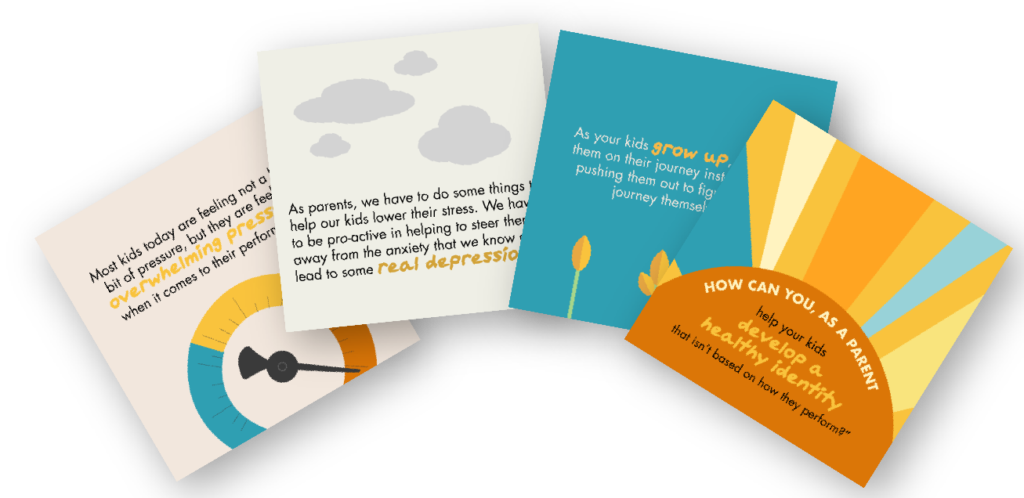
But I want to point out something that I think you already know. This is something that we’ve all known for years, but I feel like the weight of it is either just starting to really hit me, or it’s just getting heavier. Most kids today are feeling not a little bit of pressure, but they are feeling overwhelming pressure when it comes to their performance, and this pressure begins to mount at an earlier and earlier age. They are learning that, “You have to perform or you’re just not good enough.” If you can’t catch or kick the ball you won’t make the travel team. If you can’t get the best grades, you won’t be set up for getting into the AP or honors classes when you get to high school. If you don’t have a cell phone and the right social media account, you’ll get left behind with your group of friends. There is pressure on our kids EVERYWHERE like there has never been before.  

We all recognize that the way our kids perform in school, sports, or drama – it can have a real impact on their future. Their school performance can dictate if they can be set up to further their education, and it is important. The sports performance can give them some great opportunities and some fun experiences.  

But I would ask, how important are all of these expectations around performance? Is all of this so important they should feel such immense pressure to perform that it crushes them? Is their performance so important that it should consume their childhood years and rob them of experiences they can never get back? Is the long-term benefit of getting that extra three-tenths of the grade point or average or being a little better at kicking, throwing, hitting, or catching the ball worth the lost years that so quickly fade away? Is it so important that we’re okay with our kids believing they are not “good enough” if they don’t get the best grades or get on the right team or get the best part? Is the anxiety worth it?  

I say “no.” I say we have to do some things to help our kids lower their stress. We have to be pro-active in helping to steer them away from the anxiety that we know can lead to some real depression. Here are a few practical things you can maybe do to lead your kids in a more healthy direction: 

Be aware of the pressure they feel from the world and the pressure they feel from you. You know how much your kids look up to you and often hang on every word you say. Steward that well and say things that will lead your kids away from feeling this enormous pressure to perform that they can so easily feel. Reduce the pressure in your home. I know it may sound crazy in a world that pushes us to drive our kids to success, but maybe lower the expectations just a little. Provide some space for them to just be kids and do whatever you can to help them have a childhood that is characterized by fun, encouragement, rest, and peace instead of memories of pressure, stress, conflict, and anxiety. 

And as you help your kids navigate the things they have to do in the world, as you help them develop a sense of responsibility and some of the tools they WILL need to thrive in the world, don’t just push them through it, but help them through it. Don’t always have a posture that forces them to figure it out and develop some grit (which they definitely need). But, help them along the way. Help them learn the things they need to learn, help them step into the things they need to step into, be WITH them on their journey instead of pushing them out to figure out the journey themselves.  

Take some time to think through how you can help your kids navigate the pressure they feel to perform on so many levels. Pay attention to the social pressure they are under and do whatever you can to help them develop a healthy identity that isn’t based on how they perform.