


June’s Partner Resource is Here!
Check out Toolbox: Encourage Parents for your 3 Handouts for Step and Single Parents!

Church leaders have endless lists running through their minds on any given day. Now and then, a thought pops in, “Where is the Jones family? I haven’t seen them in a while.” Then, another thought arrives, and we move on. So how can we reach those families without putting in place a brand new program? What can we do to reconnect with families while we lead our ministries and organizations? In this quick video, you will learn simple, practical tips to implement into your every day quickly.
Grab a cup of coffee and settle in because it’s time to check out your new parenting resources!
This month, we give you Part 2 of the popular “Say This, Not That” series. And as you think about your upcoming year, we created videos to help parents transition their children to middle school and college. To see more of your goodies, just keep scrolling.
Thank you for the privilege to partner with you.
~The M2P Team

WHAT IS IT?
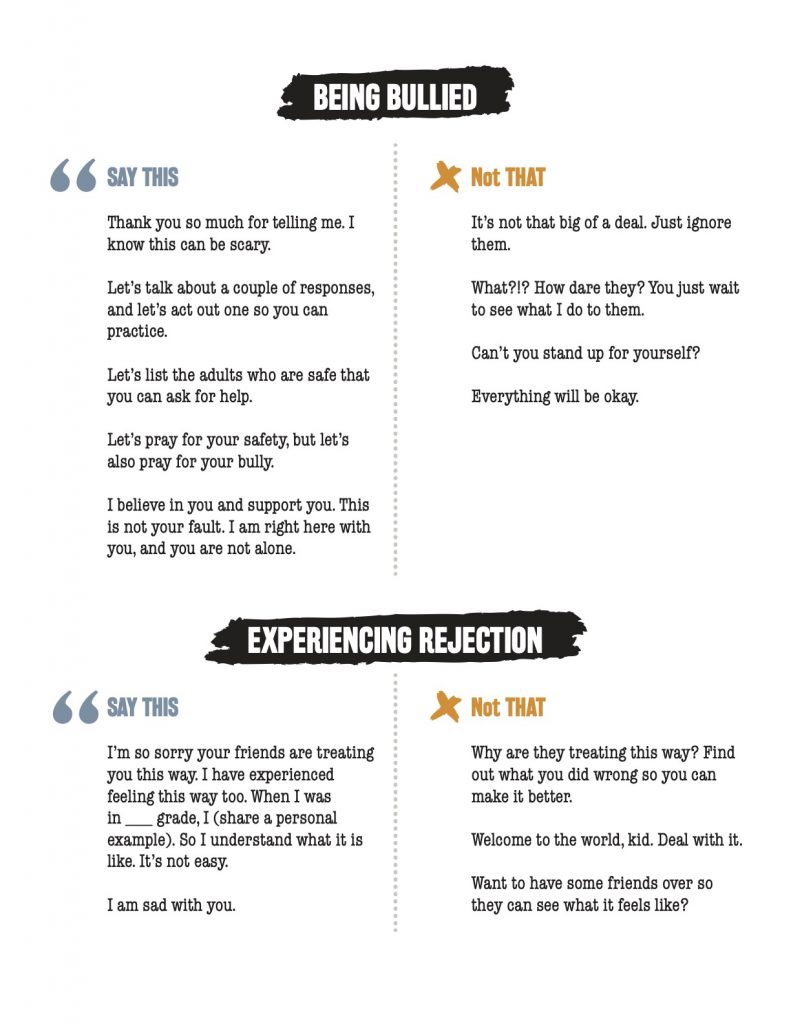
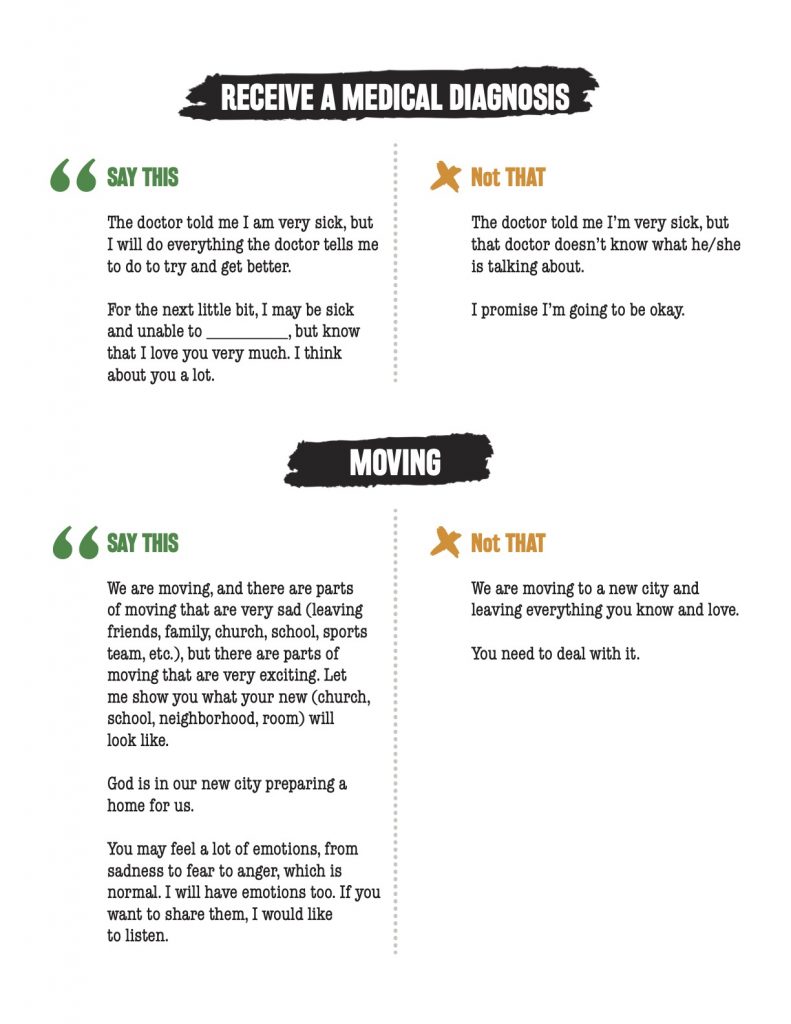
Our 2nd edition of Say This, Not That gives parents a verbal response to say when their child or teen shares about a “sticky” situation. It’s not easy to stay calm in the heat of the moment, so this guide is a quick, go-to reference.
HOW DO I USE IT?
To download, click TOOLBOX.

Seasons of Change: 4 Conversations to Prepare Your Child for Middle School
As children enter the last few years of elementary school, we want to help parents prepare them for junior high. In this video, we give them four conversations to use during car rides that provide their son or daughter with guidance for the middle school years.
To download, click PARENT VIDEOS.

Church leaders have endless lists running through their minds on any given day. Now and then, a thought pops in, “Where is the Jones family? I haven’t seen them in a while.” Then, another thought arrives, and we move on.
So how can we reach those families without putting in place a brand new program? What can we do to reconnect with families while we lead our ministries and organizations? In this quick video, you will learn simple, practical tips to implement into your every day quickly.

This month, your upcoming partner resource is Tammy Daughtry from CoParenting International, who has been helping co-parents raise amazing kids in complex families since 2004.


It’s a technology takeover with Tony Bianco from Family Technology Plan. For the month of June, Tony hosts a 4-part podcast series around the subject of tech. Below are his upcoming episodes:
Ep. 42 Making the Most of Technology in Your Ministry
Ep. 43 Where “Bored” Students will spend their time on the Internet
Ep. 44 Using Technology to Keep Your Students Connected Over Summer
Guest Post by Tammy Daughtry from CoParenting International

Say This, Not That Part 2 gives parents a verbal response to say when their child shares about a “sticky” situation. It’s not easy to stay calm in the heat of the moment, so this guide is a quick, go-to reference. It inspires parents to have emotionally healthy discussions around difficult subjects. Sometimes all parents need is a small prompt in the right direction.
HOW DO I USE IT?
Click here to download the word document.
Seasons of Change: 4 Conversations to Prepare Your Child for Middle School
Copy/Paste the email below.
Subject Line: 4 Conversations to Prepare Your Child for Middle School
Parents,
As your child enters the last few years of elementary school, we want to help you prepare them for junior high. Today, we give you four conversations to use during car rides that provide your son or daughter guidance for their middle school years.
To view the short video, click the link below.
https://vimeo.com/parentministry/review/551790539/4ad4330f25
It is my privilege to join alongside you on this parenting journey. If you need anything or have any questions, please do not hesitate to reach out.
[INSERT SIGNATURE HERE]
Copy/Paste the email below.
Subject Line: Seasons of Change
Dear Parents,
Some parents grow anxious when they think of sending their daughter or son into the halls of middle school. Other parents are afraid of what will when occur during the adolescent years. Today, we give you four conversations to have with your child during the elementary years to prepare them for what’s coming. It will ease your mind and theirs…just a little!
To watch the brief video, click the link below.
https://vimeo.com/parentministry/review/551790539/4ad4330f25
Thank you for the opportunity to partner with your family. Please contact me if you need anything.
[INSERT SIGNATURE HERE]
VIDEO
SOCIAL MEDIA SWAG

We have a new video that offers parents four conversations to help prepare their child for middle school. These discussions are perfect for car rides and road trips. Check your inbox for more.

Season of change is inevitable for parenthood. Our new video gives parents four conversations to have with their children during the elementary years to help prepare them for junior high. Check your inbox for more!

Start now by preparing your child for middle school with these four easy and encouraging conversations in our new parent video. Check your inbox for more!
Do you worry or fear about your child’s middle school years? In our new parent video, we give you four conversations that will help ease your child’s mind and heart as they (and you) think about the future. To view, check your inbox for more.
VIDEO SCRIPT
If I ask you to think back to your junior high years, what comes to mind? For many of us, we just cringed because those middle school years are not always the most fun. I use the term wonderfully awkward to describe this season. It’s actually a beautiful time where you transition from a child to a young man or woman, but in the transitions and shifts, we go from what is comfortable to what is awkward, uncertain, and clumsy. So today, here are a few conversations to prepare your child for this important transition.
First, discuss the term “developmentally appropriate.” You can use this term with your son or daughter throughout conversations over the years to help them understand the changes within their minds, hearts, and bodies. When you talk about this concept over and over, they eventually will believe the message, “I’m okay. This is uncertain what I’m going through, but I’m okay. I’m normal.”
Second, discuss the topic of friendships. During the middle school years, friendships make a natural shift. Until this point, they were based on classes in elementary schools, parent’s friendships, or neighborhood locations. But when they move onto middle school, the connections are based on interests, likes, and dislikes, such as gaming, sports teams, or music.
This transition contributes to the awkwardness of middle school because it can be tense and stressful at times. They may potentially go through sadness or grief. They also have to go through the nervousness of new friendships, or they may want to keep a friend from elementary years, and now they will need to work outside to maintain it. When tweens understand what is happening with friendships, it helps them feel okay.
Third, discuss the transition between child and adult. Let them know they will have one foot in childhood and develop one foot into adulthood. This time can be exciting because it means freedom and adventure are coming. But at times, they may be sad and miss their childhood years. Sometimes they might see a kids menu at a restaurant and realize, “I can’t order that anymore,” or they head to a playground and realize, “I’m too tall to play on the playground.” They may play with a childhood toy and feel embarrassed to play with it, wondering, “Should I want to do childlike things? I feel awkward.”
This tension makes them feel like they don’t know who they are anymore. This moment is a great time to speak words into their hearts, saying something like, “You might be feeling this, and if you are, it’s okay. It’s normal and developmentally appropriate. You’re going to be okay. You still are very much a child, so it’s okay to play, and when you’re ready to put it up, then you can.”
Fourth, discuss the search for likes and dislikes. During the next few years, your son or daughter will be searching for their likes and dislikes. They once may have liked the color green, and now they hate it. They once wanted to eat meat, and now they’re vegan. It changes as quickly as the weather. Do they like surfing? Skating? Do they like hip hop or country music, or both? They may try all of these things. And if we aren’t preparing them for this desire to change, which is developmentally appropriate, they might begin to feel like something’s wrong. It’s developmentally appropriate that they’re supposed to try things, and if they don’t like it, they can move on to something else.
These four conversations are just a few of the topics you can cover to help prepare your child for the middle school and junior high years. It may be awkward, but it can be wonderfully awkward. And thank you for your willingness to help prepare your child for these upcoming years.

Copy/Paste the email below.
Subject Line: 3 Ways to Teach Your Child About Managing Time
Parents,
Some people may think that children are too young to learn how to manage time, but what if we started introducing the concept through practical and concrete ways, such as school and playtime. In today’s brief video, we give you three ways to use your child’s everyday world to introduce “time management concepts.” It’s easy and quick. To get started, click the link below.
https://vimeo.com/parentministry/review/537428433/afb7a39633
As always, it’s my pleasure to partner with you and your family. If you need anything, please feel free to contact me.
{INSERT SIGNATURE HERE}
Copy/Paste the email below.
Subject Line: How To Teach Your Child About Time Management
Parents,
Some of you may have heard about the three ways to manage money: give, save, spend. Well, time is similar…work (school), play, and rest. As children move between school, soccer fields, piano lessons, and church, you can have an ongoing conversation about their time and commitments. It creates the perfect opportunity to start the subject about why they do what they do.
Today, we give you a brief video that encourages you to have this conversation with your child. Click the link below to view the video.
https://vimeo.com/parentministry/review/537428433/afb7a39633
The elementary years are an important time to lay the groundwork for much larger discussions coming down the road about time management. You can get a head start by doing some preparation now.
If you have any questions or want to discuss further, please do not hesitate to reach out.
{INSERT SIGNATURE HERE}
VIDEO
SOCIAL MEDIA SWAG

For a brief minute, let the continually rolling list of adult responsibilities take a break, and we focus only on one task at hand: playing with our children. When we play with them, we teach them the value of managing our time well. Learn more in our new parent video! Check your inbox for more.

When our children work, they are stewards and caretakers of their brains and bodies for a bigger purpose. As they grow up, school turns into a job. This job makes way for those gifts and talents for their provision and to bring God glory. Learn more in our new parent video. Check your inbox for more!

Some of you may teach your children the 3 ways to manage money: give, save, spend. Well, time is similar, but with work, play, and rest. In our new parent video, we quickly show you how to teach your child 3 ways to spend their time well.

We have a new parent video for you!!!! Check your inbox for more.
VIDEO SCRIPT
In today’s video, we give you 3 concrete ways to teach your child how to spend their time. It’s so easy to do that I bet you’re already doing it and didn’t even know it. Here are 3 God-intended ways to spend time: Work, Play, Rest.
Number one. Work. This principle is one that God created in the Garden of Eden. He intended us to work and not just sit around all day being fed grapes as people fan us. That’s not God’s goal for us. The ability to build something or create something with our hands and to do work is a gift from God. Even for children!
One of the ways they spend time doing “work” is in school. Whether it be learning how to read, using a glue stick, or running on the playground, they go to school every day to “work,” similar to adults. When our children work, they are stewards and caretakers of their brains and bodies for a bigger purpose. As they grow up, school turns into a job. This job makes way for those gifts and talents for their provision and to bring God glory.
Teach your child that school has a bigger purpose. God created for them and gave them work, which is one incredible way to spend their time. BUT… it’s not the only way.
The second way your child can spend their time is through play. It’s a child’s love language to play. And one of the best things a parent can do is to play with them. Playing means we choose some age-appropriate recreation with our children where we can laugh and enjoy ourselves. For a brief minute, let the continually rolling list of adult responsibilities take a break, and we focus only on one task at hand: playing with our children—no correcting or instructing, just connecting. And we share a hobby with our children. This use of time exemplifies to our children that “playing” is just as important as work—the two stay in balance with each other.
The third way is rest. We don’t just work and play, we also rest, which is a tweak on Play. Rest is a use of the time that God gives us to calm our minds and hearts. Resting was given to us by God when He talked about the Sabbath. He instructed us to set aside a window of time to stop everything, unplug from the noise, and plug into Him. We invite him in to fill us up, talk to us, and we to Him. It’s worship, whether in hiking through the woods, singing with our Church community, or reading a child’s devotion to our children. We allow God to reenergize and replenish, so we’re free to live fully. Like when the phone runs out of battery or the car out of gas.
God has designed us, including our children, to need to stop and rest. How can we provide these moments equally for our children as we do rest and play? Ask the Lord to show you what is best for your family? How can you schedule moments of rest with your 6-year-old or 9-year-old? Each age, personality, and family dynamic mean rest look different, so ask the Lord to show you how.
Some of you may teach your children the 3 ways to manage money: give, save, spend. Time is similar. Teach your child the 3 ways of time management: work, play, or rest. Show them how to do it by modeling it for them, with your schedule, but more importantly, their schedule. As you schedule their activities throughout the elementary years, keep these three in mind. When you do, you follow time management the way God intended. And hopefully, as they become teenagers and adults, they will remember and repeat.

It’s May, and we’ve got lots of goodies for you this month on Care for the Soul. Dividing it into three sections, we focused on physical, emotional, and spiritual.
You’ve shared with us how your parents struggle with time management resulting in physical exhaustion. So we took a unique approach and introduced a simple concept of managing time into the parent videos.
We also give your parents a creative approach to understanding emotionally healthy discussions with conversation prompts. Last, we offer a Spiritual Identity piece called Child of the King in a poster format through our partner resource.
There’s lots more, but we’ll let your finger do the work. Keep on scrolling. Thank you for the privilege of partnering with you.
~The M2P Team
P.S. We’re Star Wars geeks. We couldn’t resist the pun.

WHAT IS IT?
Say This, Not That is a quick, non-threatening, and simple guide to inspire parents to have emotionally healthy discussions around difficult subjects they face as adults. Sometimes all parents need is a small prompt in the right direction to get the conversation going.
HOW DO I USE IT?
Print and give as a handout.
Add it to your church website.
Email directly to parents.
Use the word document and create your design.
Put it into presentation software, such as PowerPoint, and scroll before a parent meeting.
Time Management: 3 Ways to Teach Your Child About Managing Time
Some people may think that children are too young to learn how to manage time, but what if we started introducing the concept through practical and concrete ways, such as school and playtime. In this video, you can give parents three ways to use a child’s everyday world to introduce “time management concepts.”

This year, we’ve heard from many of you about the struggle to cast a vision about family ministry. It’s one thing to talk to your leadership staff. It’s another to describe it to families. In this month’s coaching video, Jeremy gives you some encouragement on how to implement this vision to the parents in your church and community.

This month, your upcoming partner resource is Dr. Ed Laymance, a licensed professional counselor, a licensed marriage and family therapist, and a board-certified professional Christian counselor with over more than 40 years of ministry, education, and counseling experience.
You’ll receive his CHILD OF THE KING proclamation of our spiritual identity in a poster format of 8×10 or 18×24. You can email these to families or print and hang them in your church…or print one for your office as a reminder. 🙂

Elisabeth and Jeremy kick-off a new series on Tuesday, May 4, Time To Rest. As restrictions slowly lift, some of us may find ourselves feeling the full effect of helping our tribes through a global pandemic. If you need some personal encouragement or ideas on how to step away, this 4-part series is for you.
New podcast episodes every Tuesday!
Guest Post by Dr. Ed Laymance from dredlaymance.com
Guest Post by Michael Bayne, pastor of GCC
Guest Post by Tony Bianco, from Family Technology Plan
New blog every Monday!


WHAT IS IT?
Say This, Not That is a quick, non-threatening, and simple guide to inspire parents to have emotionally healthy discussions around difficult subjects they face as adults. Sometimes all parents need is a small prompt in the right direction to get the conversation going.
HOW DO I USE IT?
Click here to download the word document.


This year, we’ve heard from many of you about the struggle to cast a vision about family ministry. It’s one thing to talk to your leadership staff. It’s another to describe it to families. In today’s video, Jeremy gives you some encouragement on how to implement this vision to the parents in your church and community.