
Parents,
This month, we tackle an issue that is becoming more and more prevalent in our society: childhood anxiety. As parents, we know that the world is exerting so much pressure on our kids, and they often feel levels of stress and anxiety that their little minds and bodies are not equipped to handle. We need to pay close attention to what is happening to our kids and do whatever we can to help them land in a healthy place as they grow and develop. If we can pay attention, learn what to look for, and lean in when it comes to guiding our kids through the chaos of the world, they will have a much better chance of making it through their childhood years with a faith that is real and develop a life of peace. This month’s resource, entitled 10 Ideas To Help Your Child Navigate & Cope With Anxiety, will give you some things to think about and some ideas to implement as you seek to lead your kids and help them navigate the stresses of the world and the anxiety they feel.
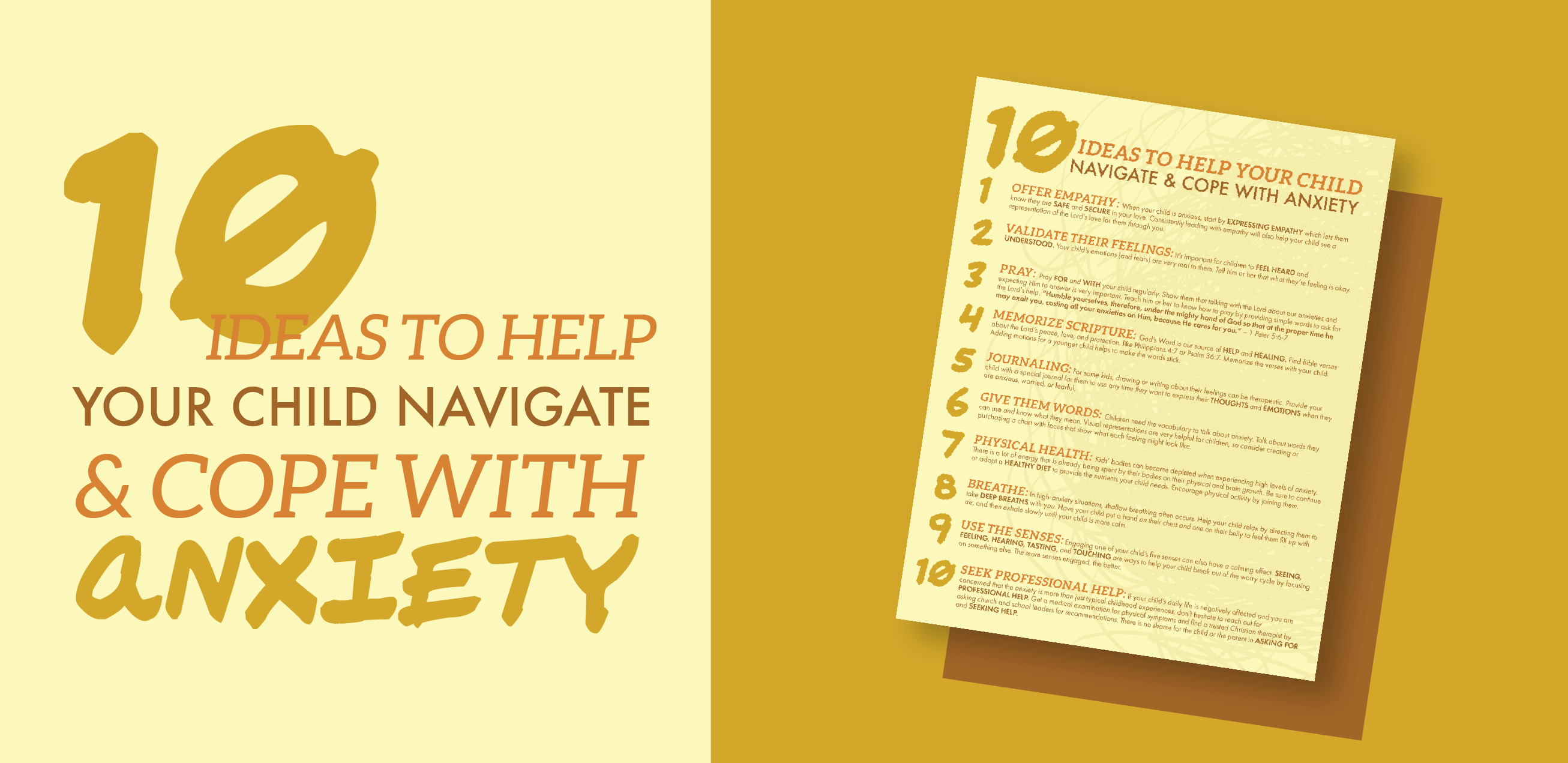
10 Ideas to Help Your Child Navigate & Cope With Anxiety
- Offer Empathy – When your child is anxious, start by expressing empathy which lets them know they are safe and secure in your love. Consistently leading with empathy will also help your child see a representation of the Lord’s love for them through you.
- Validate Their Feelings – It’s important for children to feel heard and understood. Your child’s emotions (and fears) are very real to them. Tell him or her that what they’re feeling is okay.
- Pray – Pray FOR and WITH your child regularly. Show them that talking with the Lord about our anxieties and expecting Him to answer is very important. Teach him or her to know how to pray by providing simple words to ask for the Lord’s help. “Humble yourselves, therefore, under the mighty hand of God so that at the proper time he may exalt you, casting all your anxieties on Him, because He cares for you.” – 1 Peter 5:6-7
- Memorize Scripture – God’s Word is our source of help and healing. Find Bible verses about the Lord’s peace, love, and protection, like Philippians 4:7 or Psalm 36:7. Memorize the verses with your child. Adding motions for a younger child helps to make the words stick.
- Journaling – For some kids, drawing or writing about their feelings can be therapeutic. Provide your child with a special journal for them to use any time they want to express their thoughts and emotions when they are anxious, worried, or fearful.
- Give Them Words – Children need the vocabulary to talk about anxiety. Talk about words they can use and know what they mean. Visual representations are very helpful for children, so consider creating or purchasing a chart with faces that show what each feeling might look like.
- Physical Health – Kids’ bodies can become depleted when experiencing high levels of anxiety. There is a lot of energy that is already being spent by their bodies on their physical and brain growth. Be sure to continue or adopt a healthy diet to provide the nutrients your child needs. Encourage physical activity by joining them.
- Breathe – In high-anxiety situations, shallow breathing often occurs. Help your child relax by directing them to take deep breaths with you. Have your child put a hand on their chest and one on their belly to feel them fill up with air, and then exhale slowly until your child is more calm.
- Use the Senses – Engaging one of your child’s five senses can also have a calming effect. Seeing, feeling, hearing, tasting, and touching are ways to help your child break out of the worry cycle by focusing on something else. The more senses engaged, the better.
- Seek Professional Help – If your child’s daily life is negatively affected and you are concerned that the anxiety is more than just typical childhood experiences, don’t hesitate to reach out for professional help. Get a medical examination for physical symptoms and find a trusted Christian therapist by asking church and school leaders for recommendations. There is no shame for the child or the parent in asking for and seeking help.

HERE’S A PREVIEW OF THE RESOURCE: