
Author Archives: Elisabeth

Spiritual Discussions

SPIRITUAL DISCUSSIONS: HOW TO START A CONVERSATION ABOUT THE BIBLE

EMAIL 1

Dear Parents,

As you begin your spiritual conversations with your child, we have 3 simple tips to help you start those discussions. From the “big picture” to practical resources, in less than five minutes, you receive a basic starter kit for a spiritual dialogue with your child.

Click the link below to view.

https://vimeo.com/parentministry/review/433835008/45cd823342

We believe in you and your family. If you ever need anything, please let us know.

[INSERT SIGNATURE HERE]

EMAIL 2

Dear Parents,

Have you ever wanted to start a conversation with your child, but don’t know where to start? Do you wonder what you need to know?

We have a brief parent video that gives 3 simple tips on a basic understanding of the Bible. With these foundations in place, step into those spiritual conversations with God-confidence. Just click the link to get started.

https://vimeo.com/parentministry/review/433835008/45cd823342

If you have any questions, please do not hesitate to reach out.

[INSERT SIGNATURE HERE]


VIDEO

SOCIAL MEDIA SWAG



Have you ever wanted to start a conversation with your child, but don’t know where to begin? Parents, we have a brief video that gives 3 simple tips to help you get started. Check your inbox for more!



Parents! It’s that time!!! We have your new Video!!! Check your inbox for more information.



As you think about spiritual conversations with your child, we have 3 tips to help get you started. Check your inbox for more!


Spiritual discussions are most effective at home. Prepare for the parenting journey with these 3 simple tips. Check your inbox for more!

VIDEO SCRIPT

Have you ever wanted to talk to your kids about the Bible, but you don’t know where to start? Do you look at your Bible and think I’m so confused, or I am so overwhelmed and you know what, I’ll just leave this to the professionals, or I need a degree to understand this. And if you think that way, I want you to know you’re not alone. The majority of parents struggle in knowing how to read and study the Bible and then how to pass that down to their children. And one of the things in God’s love story, the scriptures in the book of Deuteronomy chapter six, he asked parents to pass it down to their children. And so many parents long and want to know how to do that, but they just don’t know how to get started. So today, I’m going to give you three simple steps to get you started in understanding the Bible.

And think about it like kindling, my husband and I, the other day, we’re trying to start a fire. And as we were trying to get the fire going in our fire pit, one of the things that occurred was we needed a lot of kindling to get going, to get the fire set and so that we could begin to start our smores process. Well, think about it like this. These three tips will help you get started, very basic.

So number one, the whole Scripture is a love story. It is God’s love story of how he is pursuing mankind. Started in the Garden of Eden, he created human beings, and he wanted to build a relationship with them. Then when the fall occurred, and they began to choose what they thought was the better way, a separation occurred. And then God began to put a love story, a rescue story in place. He said, “I’m going to send my son Jesus to save them so that we can come back into a relationship together.” And the scriptures tell of this story, and that is the overview. There’s a lot of other sub-themes to it, but the main theme is that it’s a love story. It is a love story of how God loves you about how God loves your children.

Number two, it’s important to know the context of the verses that you study. Here’s what I mean by that. Have you ever had someone repeat what you said, and they took it out of context? There’s nothing more annoying in the whole world, right? Because you’re like, “Come on. That is not what I meant to say.” Well, that’s a lot like the scriptures. It is said within the context of a love story. So it’s important to know the context of when it was written, how it was written, who wrote it and why they wrote it. And that’s why you see people engaging Bible study tools. It’s one of the reasons why people engage paraphrases, like The Message or the Jesus Storybook Bible. And another reason why it’s important to know the context is because sometimes there are others who can bring in what I call spiritual misrepresentation, and they can begin to use the scriptures out of context. And so for you to be equipped, to know when that is occurring when you study the context of the scriptures, you can also teach your children this. They can recognize when someone is misusing those scriptures.

And third, the first was, know that it’s a love story. Two, know that it’s important to understand the context, and three, know that it’s written from a different time period and in a different language other than English. So because of that, if you feel like it’s like trying to understand Shakespeare, you’re okay. That is a normal thought- that sometimes the “thee’s” and “thou’s” and the words that have five syllables- can feel so overwhelming.

And you got to think; I want you to be kind to yourself for a little bit, because if I plop down a poetry book, which much of the Bible’s in poetry, Book of Psalms especially. If I pop down a poetry book in front of you, it might help if you had a poetry teacher come and teach you about poetry. This is why it’s important to help find someone who can maybe teach you a little bit about the Bible, to teach you about the context, to teach you about the time period, and to teach you about the language in which it was written. It doesn’t mean that you don’t know and that something’s wrong with you; it actually just is you taking a step of faith into studying the love story. You’re pursuing this love story that God wrote for you.

So I hope that today, in this brief little time together, that you are encouraged because you’re not alone if you feel that passing down God’s scripture can be frustrating. But I want to encourage you for a second. If you’re watching this video, that means you have the heart behind it. That means you want to do it, and that’s half the battle. And so I just want to say,  Good Job”. And so these are your first three steps to get you started. Know it’s a love story, know that it’s important to understand the context and spend some time with someone that they can help you understand the language and the time period in which it’s written. And I hope and encourage you as you seek to pass down God’s love story to your children.


I SEE YOU: Single Parent Resource for Church Leaders

WHAT IS IT?

34% of U.S. homes are single-parent homes. 67% of single parents don’t attend church because they feel judged and out of place.

This ebook offers simple ways for you to reach the single parents in your community. Whether they are parents of the kids in your church or just a single parent you know, let your single parents know you see them, love them, and welcome them into your church community.

Thank you to Solo Parent Society for giving our M2P Members I See You, an ebook that offers simple ways for leaders to reach their community’s single parents.

Solo Parent Society helps single parents raise healthy kids by encouraging, equipping, and empowering them. They create resources to facilitate single parent support groups in local churches and the US military. They have a podcast, free resources, app, and an online community.

Visit SoloParentSociety.com for more information. Make sure to check out Facebook and Instagram too!

HOW TO USE IT?

  • Copy the link below and email it out to parents as a resource for themselves, family members, or friends.
  • Download the ebook and print it out for use as an available resource at church.

I SEE YOU EBOOK (Click to Download)

Adult Friendships

ADULT FRIENDSHIPS: COMMON STRUGGLES TO BUILDING FRIENDSHIPS WITH OTHER PARENTS

EMAIL 1

Copy/paste the email below.

Subject Line: Adult Friendships: Common Struggles to Building Friendships with Other Parents

Dear (Insert Name of Parent),

Many of you talk to your children about how to make friends in elementary school. But do you ever find yourself struggling to understand your friendships? Have they changed since high school or college?

If you find yourself struggling to make sense of your friendships, you are normal! Today, we give you a brief video that explains 3 common struggles of parents as they build friendships with other parents.

Click here to watch:

https://vimeo.com/parentministry/review/424287225/1ee3325bd0

My role as a children’s leader is not just to support your children. I am here to support you and your family. I hope this video does just that.

If you need anything, please do not hesitate to reach out.

(Insert Leader’s Name Here)

EMAIL 2

Copy/paste the email below.

Subject Line: Adult Friendships: Common Struggles to Building Friendships with Other Parents

Dear (Insert Name of Parent),

In the elementary years, your child is learning how to make and be a friend. Whether in 1st grade or 5th grade, the classroom and extra-curricular activities provide valuable opportunities for children to develop relationships.

Parents have the same opportunities but in different learning laboratories, from the office to church groups. So how do you intentionally make and be a friend?  We have a brief video that explains 3 common struggles of parents as they build friendships with other parents.

Click here to watch:

https://vimeo.com/parentministry/review/424287225/1ee3325bd0

As you guide your child in friendships, I hope this video gives you the tools you need. Most importantly, I want this video to inspire you to develop friendships for yourself. You are worth it.

It is an honor to support you and your family,

(Insert Leader’s Name Here)

VIDEO

SOCIAL MEDIA SWAG


Do you struggle to find friendships with other parents? If so, you’re not alone. For more info, check your email for our short parent video. 


We have some parent encouragement for you! Check your email for our short parent video. 


Check your inbox for a powerful, short video on finding friends as parents.


Learn more about how to understand friendships in our short and encouraging parent video. Check your inbox for more.


Friendships are worth the work. Check your inbox for a brief, encouraging video.

VIDEO SCRIPT

It’s easy to talk to our kids about their friendships and give them encouragement about how they need to make new friends or if they get into a fight with their friend, how they need to make it better or how they need to put themselves out there and be open to new friendships.

It’s easy for us to do that for our kids, but what about when it comes to us as parents? You know, they say it takes a village, and that is true. We need our own village, but maybe instead of a village, maybe I’ll insert community and community comes and is built and is the foundation of community is friendships. But there are some struggles that we find as parents trying to build friendships specifically with other parents.

First of all, sometimes it’s easier to just kind of ride alone. I know I feel that sometimes because it’s kind of hard to put yourself out there with other parents, but also you’re dealing with your own lives, your own kids, there’s all this other stuff going on. It’s sometimes easier to just get wrapped up in your kid’s life than to try to pursue a life of your own.

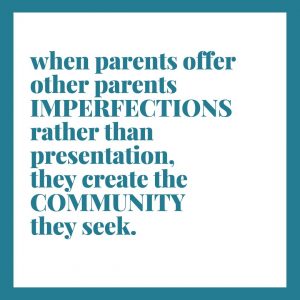
But we got to resist that. We have to open our hearts to friendships. But opening our hearts is probably a second struggle that we deal with as well, because, in order to have friendships sometimes, we have to admit that we’re not perfect or that we don’t have it all together. If we’re going to connect with someone, we have to let them see that we’re struggling, and sometimes it’s hard as a parent, especially to say, “We don’t have it all together in this area.” Or, “We’re struggling in this area with our kid,” but that’s the exact magic to creating friendships. When we open ourselves up and are vulnerable and say, “You know what? We don’t have it all together.” What happens is other parents are free to say, “You know what? We don’t have it all together too.” And you can connect over your imperfection rather than trying to show in display a false perfection.

The final struggle I wanted to talk to you about is one of the ones that, for me, is a very common struggle, and I’m hoping it might encourage you. That is sometimes we get confused in our relationships and friendships, and we think that our friend is one thing, but they really are another, and we just don’t know how to organize our relationships and understand what type of friendship we have.

You see, when I explained this to my boys, I usually tell them that there are friendship buckets. I have three that I use. One of them is acquaintances. The second bucket is I have friends, and the other bucket is I have close friends. Now, everybody I meet, almost everybody I meet, falls into one of those categories, and when I can put them in a bucket, I can understand how I need to relate to them.

Obviously, an acquaintance is someone that I know, but they’re not necessarily a friend, but they’re someone that I know and like, and I’m willing to greet and say, “Hello,” if I see him out in public. Maybe we’re Facebook friends or something like that.

A friend is someone who I have picked out of the crowd and said, “You know what? I want you in my world, but you might not be a 2:00 AM phone call for me. If I get stuck on the road at 2:00 AM, I’m probably not calling you, but you’re still one of my friends, and I’m here to help and offer you whatever I can.”

Then there’s that close friend bucket, and there’s not a lot of room for a ton of people in that bucket, but those are the people you do call it 2:00 AM and the people that you can depend on, and you’re really kind of doing life with, that term that we like to use.

Now, why do we need buckets? Well, because if we get these things out of order, sometimes if we have an acquaintance that we’re treating like a close friend, things get really weird, really fast. Or if we have a close friend that we need to, we realize it’s not very healthy for us. We might need to note that we need to move them to just be in a friend and maybe find a new close friend.

See, we have seasons in friendships, and we have shifted in relationships, and we need to learn for ourselves as parents that that’s okay. We teach that to our kids, but we need to embrace that for ourselves.

So listen, whether you’re resisting the temptation to just go it alone, whether you’re scared to share your heart with others that you don’t have it all together, or whether you’re confused about whether someone’s an acquaintance, a friend, or a close friend, I hope this helps you think and realize that you’re not alone, but friendships are worth it. So let’s work through these struggles together.

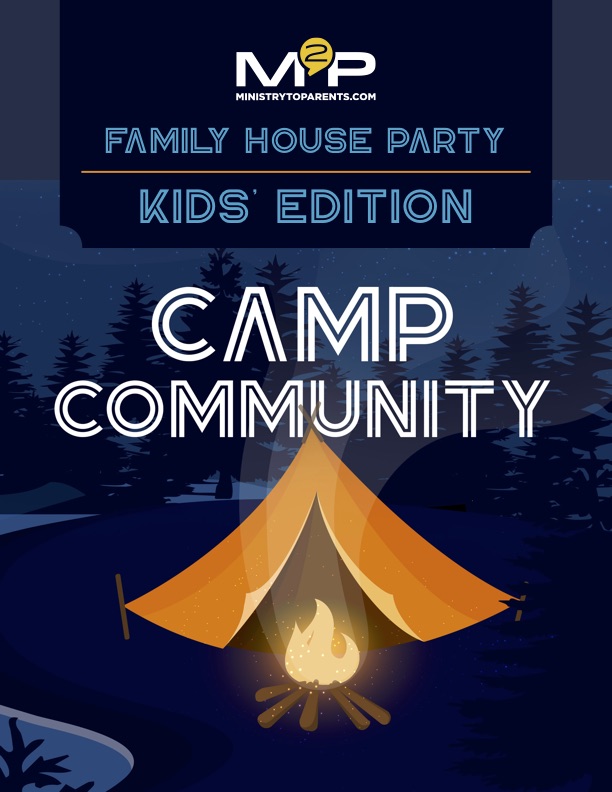
Camp Community: Family House Party

WHAT IS IT?

This resource is an all-in-one party kit to help families host a small gathering in their home as they slowly re-emerge into socializing. It gives parents creative ideas, organizational tools, links for budget-friendly items, and planning material. We also included a promotional graphic!

Whether it be their neighbors, friends, or parents from their kid’s soccer team, you can help your parents reconnect with their community while building and strengthening your parent ministry.

HOW DO I USE IT?

There are three ways to use this resource.

  1. Offer it to families as a creative way to reconnect with their community as restrictions lift.
  2. If you had to cancel camp this summer, encourage families to host their own “family camp” with others.
  3. Plan a small group event and ask a few families to host their Family House Party on a specific date, i.e., July 4 or July 15. Think of the event as a middle ground between a large parent event at church and a one-on-one coffee where parents can encourage one another in a comfortable environment.

To get started, download the two items below.

PROMOTIONAL GRAPHICS


FAMILY HOUSE PARTY

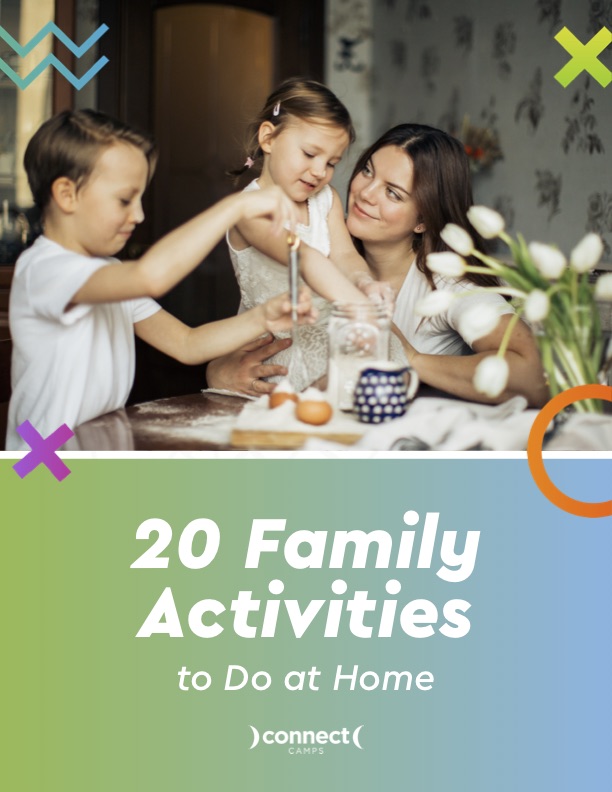
20 Family Activities To Do At Home

WHAT IS IT?

Is your church planning for new ways to reach families who are staying at home? We understand that it’s overwhelming as a church leader to adjust your ministry in these unique times. Here is an easy way to help families in your community!

Connect Ministries is giving all M2P Members “20 Family Activities to Do at Home” to download for free! A very BIG thank you to Connect!

HOW DO I USE IT?

1. Copy/paste the email copywriting below into your email software.

2. Click the image below and download the PDF and send fun activities to your families!

COPYWRITING FOR YOUR PARENT EMAIL

Is your family stuck at home? Are you desperate for new, fun activities that your whole family can do together? Download this free PDF to get 20 activities that your entire family will love! Everything from outdoor games, crafts, and science – this free guide has it all!

Simply click the link below to play while you stay!

https://www.ministrytoparents.com/wp-content/20%20At-Home%20Family%20Activities.pdf


Connect Ministries creates remarkable experiences that help churches meet new people. Their team has put on over a thousand weeks of camp across the country to serve well over 350,000 campers and more than 2,000 churches and communities. As the hosts of Centri-kid, Student Life for Kids, Crossings Ministries, and many other camps, they have a passion for connecting churches with their local community to make the name of Jesus known.

KEEPING YOUR FAMILY SAFE ONLINE: Copywriting, Video, Script, & Infographic

What Is It?

With COVID-19, school and after-school activities came to an abrupt stop, leaving students more time online. Since quarantine, there’s been an uptick in cyber-trafficking and online luring of kids. Mother-Daughter team, Tasha and Zoe Levert, partnered with the DOJ and Shield of North Carolina to create two family resources that help students stay safe online.

Tasha Levert, a licensed professional counselor, is in private practice where she provides face-to-face and online counseling at Broom Tree Counseling. Her daughter, Zoe, is a junior in high school. She is active in her youth group, and is passionate about keeping young people safe online.

How Do I Use It?

Copy/paste the copywriting below in an email, review the links and click send.


INFOGRAPHIC

 VIDEO

Video Script: The SHIELD UP Challenge!

“Have you ever gotten a creepy message from a stranger on social media? It’s happening more right now since we’re all online because of quarantine.

Here are some tips to keep you and your friends safe:

1. Think before you post. The pictures you post online are forever.

2. Be wise with what you share. Not everyone is who they say they are or what their picture is.

3. Set your accounts to private. Becoming a social media celebrity isn’t worth sacrificing your safety.

4. Speak up if you feel unsafe. If anyone ever pressures or blackmails you to send sexual images, call 1-800-843-5678 or go to report.cybertip.org.

5. Take your own #ShieldUp picture to help spread awareness to keep you and your friends safe online.”

COPYWRITING FOR EMAIL

Subject Line: Keep Your Family Safe Online

Parents,

With COVID-19, school and after-school activities came to an abrupt stop, leaving your students more time online. Since quarantine, there’s been an uptick in cyber-trafficking and online luring of kids.

Mother-Daughter team, Tasha and Zoe Levert, partnered with the DOJ and Shield of North Carolina to create two resources that help your family stay safe online.

Keeping Your Family Safe Online gives parents 5 action steps, including Safety Measures and Behavioral Changes.

In less than five minutes, the Shield Up Video gives students 5 ways to keep themselves safe online. Show this video over dinner and spark productive conversations about safety online.

Click the links below to get started!

Keeping Your Family Safe Online

Shield Up Challenge

If you need anything, we are here for you and your family.

{Insert Ministry Leader’s Name Here}

10 Parent Personalities: Volunteer Training

What Is It?

10 Parent Personalities is a training exercise for ministry volunteers to help them understand and engage the different types of parents, such as Outgoing Olivia or Know-It-All Natalie. Your leaders learn:

  • Different Types of Parents’ Personalities
  • The Value of Each One
  • The Challenge
  • Advice on How to Relate

How Do I Use It?

Option 1

Host a training event, online or in-person, where volunteers participate through the active learning technique of role-playing. This exercise brings LOTS of laughter!

Option 2

Email the PDF to ministry volunteers so they can empathize and understand parents.

CLICK HERE TO DOWNLOAD.


First Time on Technology

First Time on Technology: How to Talk to Your Kids

Email 1

Copy/Paste the email below.

Subject Line: First Time on Technology: How to Talk to Your Kids 

Dear (Insert name of parent(s),

Technology can be a scary word for parents of young kids but it’s something that needs to be addressed. Here are three ideas to help you be successful as you have conversations for the first time with your child. 

Just click the video link below to catch these ideas and put them into practice!

https://vimeo.com/parentministry/review/412411025/dd2d9f8454

If you have further questions, our ministry is here to help and support you as you walk through this new season.

(Insert Leaders Name)

Email 2

Copy/Paste the email below.

Subject Line: It’s Time to Talk about Technology

Dear (Insert name of parent(s),

Have you talked to your child about technology and how to use it?  Do they know what you expect?  Technology is something they’ll have for the rest of their lives.  It’s important to start out strong and clear about your expectations and strategies in regard to technology use.

The video link below gives you some great strategies on how to approach this conversation, when to have these conversations, and what to talk about.

https://vimeo.com/parentministry/review/412411025/dd2d9f8454

Regular conversations about technology help normalize the topic and make it easier in the long run. We are here to help you start off strong!

(Insert leader name)

Video

Video Script

Welcome to this month’s Online Parenting Class.  Today we’ll tackle an issue that many parents of young children have asked about, “How to talk to your kids about technology for the first time.”  Your children are digital natives, this means they have grown up using technology.  From the occasional “here’s my phone” at the restaurant to video games, or even computers; your kids have been surrounded by screens from a very young age.

However, now you find yourself with a child at an age where you may want to give more freedom or responsibility.  How do you talk to them about using it and what your expectations are surrounding technology?  Over the next few minutes, we want to give you a few ideas and tactics on how to do this well.

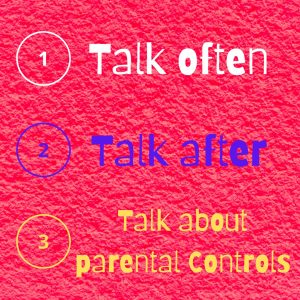
1. Talk Often

The first thing you want to do it to get into the habit of talking often about technology with your student.  The struggle parents with teenagers have is that they waited too long to begin talking to their student about technology and therefore parents often feel behind or inept to have a conversation about it.  Begin talking with them about what’s on the device, what they want to do on the device, and what they can do on the device.

Younger kids will listen and follow instructions if you give them clearly with confidence and from the beginning.  Tell them how you expect them to use it, when they can use it, and for how long.  Be sure not to shy away from ‘potential dangers’ but keep it age-appropriate.  No reason to terrify them but it is good to let them know that there may be ‘bad things’ depending on where they are going on their devices.

2. Talk After

If you have a child that has been given the freedom to be on their device ‘unsupervised’ be sure to make time to talk to them after they are finished.  A few questions to ask.

3. What did you do/play?

This question will help you know what they spent their time on and what they ‘care’ about while they are on the device.  Are they playing games?  Are they drawing? Are they connecting with people?  All of these are important things to know.

4. Did you connect with someone? If so, who?

Finding out who they are interacting with is also important.  Are they friends from school? Are they random people from a game? Do you know the parents of the kids?  If they are connecting with other people have a discussion about how much information to share and make sure you know who they are.

5. Did you have fun?  Did something go wrong?

This question helps your student know that you care about what they are doing while on their device.  Showing interest in the things your child shows interest in, even on the internet, is important!

Having post-device time conversations will help you know what is going on on the device without actually seeing it all.

6. Talk about Parental Controls

Being sure that the device is protected with an Internet filter and/or time controls is key.  There are a variety of options that are available. We have posted several resources that might help you make your mind. However, the bottom line is that whichever you choose be sure it will have the features you are looking for and you are able to use it.  You don’t want to have a program or system in place and you are unable to use it. 

This is something you should talk to your student about.  Making sure they understand your expectations and their limits is beneficial for them to grow in responsibility.  When they know they have a time limit or know that you have set-up filters helps them grow developmentally and know you care for them.  So discuss there are filters and/or settings to help keep them safe.

Having the technology talk with your student may be new to you but it’s a necessary one!  Letting them know you care, what they are doing, and that they are protected is going to set them up for the best possible experience.  And of course, as they get older some of these things will change but if you can start early with these conversations then the easier it will be when your kids get older!

Thank you again for joining us.  For other video training and other useful content check out MinistrytoParents.com

Social Media Swag


How do you talk to your kids about technology for the first time? Parents, check your inbox for more!


Parents, here are 3 of our 6 tips to help you talk to your kids about technology! Check your inbox for more.


How do you talk to your children about using technology? Have you set your expectations surrounding technology? Check your inbox for helpful tips.


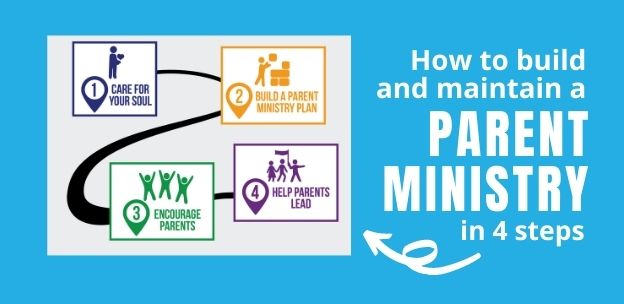
How To Build and Maintain a Parent Ministry in 4 Steps (Video: 39 minutes)


How To Build and Maintain a Parent Ministry in 4 Steps

In this training video, Elisabeth and Jeremy Lee give church leaders a clear strategy on how to build and maintain their own parent ministry through four simple steps. It’s also the process they use to create the content for Ministry to Parents. You can read more about each step HERE.