
Category Archives: Kids Parenting Class

New Families

New Families: How to Create a Community of Kindness

EMAIL 1

Copy/ Paste this email into a browser and send it to parents.

Subject Line: Welcome New Families

Dear Parents,

A perk in having a community and a church is that we belong somewhere. We are in an environment where we can put down roots if we choose to do so. 

As new families come to town, they are in a different space. They have just picked up roots and, like a new plant from the garden store, are ready to find a fresh spot and put down new ones. 

As we work to create a community of kindness within our church, we want to share a few ideas we can do as a church family. In today’s parent video, we give you three quick and easy ways to welcome families to your school, neighborhood, community, and church. 

To watch the brief video, click the link below.

https://vimeo.com/parentministry/review/639357184/b2d790c1c9

Thank you for the privilege of partnering with your family. If you have any questions, please don’t hesitate to reach out.

[INSERT LEADER’S SIGNATURE HERE]


EMAIL 2

Copy/ Paste this email into a browser and send it to parents.

Subject Line: A Community of Kindness

Dear Parents,

Our church is thankful to partner with our community in a variety of ways to make a difference. We believe in this city and the people who make up {INSERT THE NAME OF YOUR CITY HERE.}

One way we know we can make an impact is through the small gesture of kindness to new families. Moving isn’t easy, and the “new” can be overwhelming with a “new” home, pediatrician, schools, church, and more. 

In our parent video, we offer three creative ideas on how you can make a difference on the go in your everyday life. From PTO to neighborhood associations, you can create a community of kindness that will have our whole city talking.

To get started, click on the link below.

https://vimeo.com/parentministry/review/639357184/b2d790c1c9

As always, I enjoy partnering with your family. Please let me know if you have any questions.

Thank you,

[INSERT LEADER’S SIGNATURE HERE]


VIDEO


SOCIAL MEDIA SWAG
Have you lived in our town your whole life? What about the last ten years? Or even five? If so, then you know what it’s like to “have roots.” From the pediatricians to the playgrounds, we know our way around. So how can we help those that don’t? How can we welcome the new families in town? Check out our new parent video with 3 creative ways to welcome new families. Check your inbox for more!

It’s here! It’s here! Your new parent video is here! Check your inbox for more information.

Moving isn’t easy, and “new” can be overwhelming with a “new” home, doctors, schools, church, and more. So we want to give our church families 3 ideas on how you can easily and quickly make new families feel welcome! Check your email for more information.

We offer 3 creative ideas on how you can make a difference by welcoming new families from the PTO to neighborhood associations. Check your inbox for more information.

VIDEO SCRIPT

How to Create a Community of Kindness: New Families

Have you lived in the same town your whole life? What about the last ten years? Or even five? If so, then you know what it’s like to have roots. You have your favorite place to eat as a family and your go-to spot for ice cream. You have your pediatrician and dentist. Roots are a good thing. But sometimes, when we have roots, we can live amiss to a whole group of people who are in need. 

When we settle into a community, it becomes easy to get into our rhythm and enjoy life. We have playgrounds, restaurants, shopping, playdates, schools, church. We are on the go and busy yet unaware of the new family who arrived on the scene. Not because we’re mean or unkind, but simply because we’re unaware. 

But if we’ve ever been on the other side, where we’re the new family, we know what it’s like to move into a new city with no established pediatricians, dentists, friends, church. We know the “new” can be overwhelming. 

So how can we, regardless of how long we’ve lived in our town, help make a difference with new families? How can we meet a need for a small group of people with a simple act of kindness? 

In today’s video, we give you three quick and easy ways on how to welcome new families to your community. It will give you one small way you can contribute to help foster a community of kindness.

1. First, grab a few acquaintances or friends to put together a small team. For example, if you’re a part of an organization, such as the PTO, neighborhood committee, or a church group, ask your friends and neighbors to hop in for the next few months.  Once you have your dream team assembled, work together to dream up creative ways to welcome new families into the community. It always helps to have a few assigned people who are intentionally on the lookout for “newbies.” 

2. Second, create welcome packets for your neighborhood, school, church, residential building, or city. In a world where we live on auto-pilot and in the hustle of the day-to-day, it goes a long way when someone offers an act of kindness and receives nothing in return. For example, ask your child’s administrator if you can gather a few parents and put together a Welcome bag with some school swag and include information on the community.  Or ask your child’s church leader if you can help put together something for new kids that come to a church gathering. This small gesture of kindness will go a long to help new families, but it also helps the community you live in. Most likely, your child’s school administration will be shocked at the kindness and initiative. AND, it gives you a reason to get together with some friends or your kids’ friends and have some fun.

3. Third, create a relaxed event. If your organization, such as the PTO or church, has starts and stops based on the school year, look to set an event at the beginning of the year. From popsicles on the playground to Sundays on Saturday, create a fun and inviting environment for new families and kids. You give them time to meet each other and the leadership you’ve invited. This event would be a great time to bring the Welcome packets that you and your buddies created. 

As simple as these ideas may seem, these small gestures of kindness go a long way to welcoming new families into the community. And for the new family, they will seem like big acts of kindness. 

We hope these tips spark creativity giving birth to your own ideas. Plus, we hope you and your friends find yourself having so much fun creating a culture of kindness.


Leadership

Leadership: 3 Simple Ways Symbols Help You Lead Your Child Spiritually

EMAIL 1

Copy/ Paste this email into a browser and send it to parents.

Subject Line: 3 Simple Ways to Lead Your Child Spiritually

Dear Parents,

God has made a child’s mind concrete in their thinking, which means that they need to see, hear, and touch something to understand it. So creating symbols that have spiritual meaning is a great way to lead your child spiritually. It sends important messages to their hearts about the things that matter most in life. 

In our new parent video, we’re going to give you three simple examples of how you can use symbols around the house. To get started, click the link below.

https://vimeo.com/parentministry/review/579862271/8b41cebaf6

Thank you for the privilege of partnering with your family. If you have any questions, please feel free to reach out.

[INSERT LEADER’S SIGNATURE HERE]


EMAIL 2

Copy/ Paste this email into a browser and send it to parents.

Subject Line: Symbols

Dear Parents,

God is very active and present in your child’s life, and because He has made their minds concrete in their thinking, symbols become very important. When you teach abstract spiritual concepts to a child’s concrete-thinking mind, symbols, objects around the house become what they need to see, hear, and touch to understand. 

In our new parent video, we give you three simple ways to use symbols around these messages:

  • God Has Made You To Be…
  • Remember When…
  • My Prayer For You Is…

To get started, click the link below.

https://vimeo.com/parentministry/review/579862271/8b41cebaf6

As always, I enjoy partnering with your family. Please let me know if you have any questions.

Thank you,

[INSERT LEADER’S SIGNATURE HERE]


VIDEO


SOCIAL MEDIA SWAG

New Parent Video! Learn about three types of symbols you can give your child to help them see, learn, and understand what it looks like to follow God with your life. Check your inbox for more. 

Our new parent video will spark some creativity as we share three different symbols you can share with your child to teach them about following God.

Symbols are one way to send important messages to our hearts. Today you can learn 3 simple ways to encourage your child spiritually. Check your inbox for more information.

Learn how to use symbols in your home to send important messages to your kids’ hearts. Check your inbox for more information on our new parent video…How To Create Memorials With Your Children.

VIDEO SCRIPT

Symbols send important messages to our hearts about the things that matter most in life. Today we’re going to give you some examples of how you can use symbols to encourage your child spiritually.

Baby pictures, family heirlooms, and old letters from a loved one are just a few of the powerful symbols I might find in your home. A symbol is an object that has a significant meaning attached to it. If you only had a few moments to collect the most precious possessions you can’t replace, you will likely gather the important symbols that remind you of the people and moments in your life that matter most.

Creating symbols that have spiritual meaning is a great way to lead your child spiritually. God has made their minds to be concrete in their thinking which means that they need to see, hear, and touch something to understand it. This fact makes using symbols very important when you are trying to teach abstract spiritual concepts to a child’s concrete thinking mind.

Here are three types of symbols you can give your child to help them see, learn, and understand what it looks like to follow God with your life.

  1. God has made you to be…

A powerful message you can send to your child is when you share the ways you’ve noticed God has made them uniquely. The more we share these types of spiritual blessings with children, the more they are free to become more self-aware and appreciate God’s workmanship in their life. You can use a symbol to send that message. Here are a few examples: You can give your child a ceramic owl and tell them, “I believe God has made you to be wise. Every time you look at this owl, I want you to remember that God’s gifted you with wisdom.”

Another example would be you giving your child a piggy bank. Then you could say, “I’ve noticed that God has made you to be generous. This piggy bank is a symbol to remind you that this is unique and special, and God is going to use this gift of generosity to do great things for His Kingdom.”

Another type of symbol is…

2. Remember when…

These symbols help children remember the times they saw God do great things in their life. When they struggle with something, and God helps them through it, you can give them a symbol to remember it. When they face a great challenge and God gives them the courage to make it through, provide them with a symbol to remember it. When they have an intimate and personal experience with God, a symbol helps them remember it. Marking the moments where God was present and active in their life will help them grow their faith.

The final type of symbol is the prayer symbol…

3. My prayer for you…

It is so encouraging to know that someone is praying for us. One way you can send this message is through a symbol. You can give your child an object and say, “Every time you see this, I want you to remember that I’m praying for you.”

I hope that this video has sparked some creativity, and you’re beginning to come up with different types of symbols you can share with your child. Sending messages to them that God has made them uniquely, He’s present and active in their lives, and that people are praying for them will make a considerable impact and encourage them as they grow spiritually.

Body Image

Body Image: 3 Ways to Set a Solid Foundation About Body Image

EMAIL 1

Copy/ Paste this email in a browser and send to parents.

Subject Line: New Parent Video! Your Child’s Body Image Matters and What To Do About It

Dear Parents,

Even as adults, waking up and looking in the mirror can be a struggle. Sometimes we can be our own worst critics when it comes to body image and how we feel about the way we look. If that’s a challenge for us as adults, imagine what must be going through your older child’s mind.

We believe it’s possible to help build a solid foundation at this age, and parents are an essential component to doing so. Therefore, we want to equip you with how to set a solid foundation for your child’s body image in our new parent video. Here are three simple and easy tips you can do today!

To view the quick video, click the link below.

https://vimeo.com/parentministry/review/579862379/04d92308a3

Thank you for the privilege to partner with your family. If you have any questions or thoughts, please don’t hesitate to reach out.

[INSERT LEADER’S SIGNATURE HERE]


EMAIL 2

Copy/ Paste this email in a browser and send to parents. 

Subject Line: 3 Ways to Set a Solid Foundation About Body Image

Dear Parents,

As children receive messages about body image from endless sources, we want to ensure they receive a positive, solid message from the most influential one of them all…their parents! In our quick and encouraging video, we give you three ways you can set a solid foundation for body image. They are so simple that you can start today!

To view the video, click the link below.

https://vimeo.com/parentministry/review/579862379/04d92308a3

We are thankful for the privilege to partner with you. If you have any questions or thoughts, please don’t hesitate to reach out.

[INSERT LEADER’S SIGNATURE HERE]

VIDEO


SOCIAL MEDIA SWAG

We have a new parent video for you! Sometimes we can be our own worst critics when it comes to body image and how we feel about the way we look. So we want to help you learn how to set a solid foundation on body image *early!* Check your inbox for more!

It’s that time! We have a new parent video for you that is encouraging and inspiring. Check your inbox for more.

Even as adults, waking up and looking in the mirror can be a struggle. So how can we set a solid foundation around body image with our children? In our new parent video, we give you three easy and practical ways. Check your inbox for more information!

Want to learn how to set a solid foundation around body image with your child? Check your inbox for more information on our new parent video… 3 Ways to Set a Solid Foundation About Body Image.

VIDEO SCRIPT

Even as adults, waking up and looking in the mirror can be a struggle. Sometimes we can be our own worst critics when it comes to body image and how we feel about the way we look. If that’s a challenge for us as adults, imagine what must be going through your older child’s mind. As their mind and body prepare to transition from childhood to young adulthood, it’s easy for your child to begin to feel negatively about their body.

Having a good body image helps kids feel confident. It adds to their self-esteem. Children with a poor body image don’t feel good about their bodies or looks. A poor body image can take away from a child’s self-image and can lower self-esteem.

This is incredibly stressful for parents who want nothing more than for their kids to love how they look and walk through the world feeling secure in their body image. So how can we as parents help our kids feel good about the way they look? In today’s video, we give you three tips on setting a solid foundation about body image.

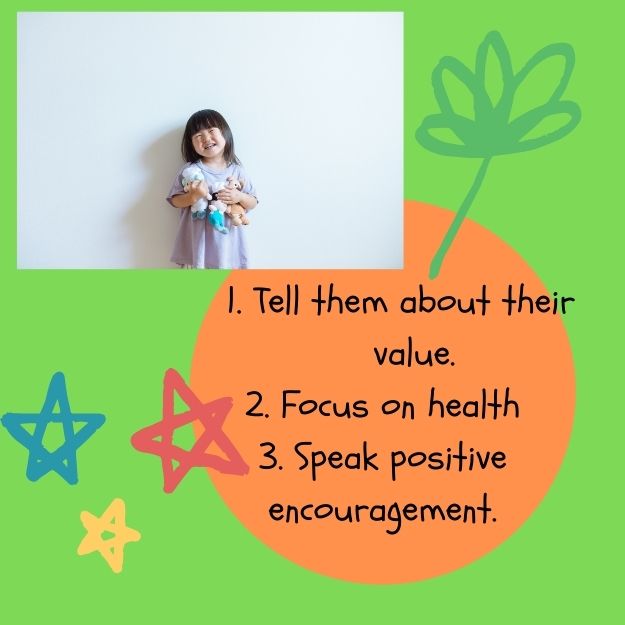
First, tell them about their value. The Bible has a lot to say about our values. And that value can directly inform body image. Just listen to what the Scriptures say in Psalm 139:

For you created my inmost being; you knit me together in my mother’s womb. I praise you because I am fearfully and wonderfully made; your works are wonderful, I know that full well!

The truth of God’s Word continues to speak positively of our value in Ephesians 2:10, “For we are God’s handiwork, created in Christ Jesus to do good works, which God prepared in advance for us to do.”

Second, focus on health. It’s easy to obsess over a scale or think in terms of being “fat” or “skinny,” but experts consistently encourage parents to focus on promoting health. Please don’t focus on how much your child weighs or how they look, but instead encourage them to be active daily and continue to practice a healthy diet. Help them understand that these are keys to living a healthy life. When this is the focus, children are free to develop habits without the stigma of manipulating the way they look.


Consider your body image….Like everything else we do in parenting, the most powerful way we can help our children in this area is to be willing to face it ourselves. Practicing a healthy body image and talk about how we’re doing that with our kids will help them see an example to follow. It doesn’t have to be a perfect example. In fact, it’s even better for you to share your authentic journey that includes mistakes and your response to the mistakes. This lets them know that they don’t have to be perfect to keep making progress.

Third, speak positive encouragement to them. When you are consistent with encouragement about how your child looks and how much you enjoy them, you set a foundation in their heart that what you’re saying is true. Children, by nature, believe what we say about them. This tool is powerful when it comes to our role in helping develop their body image.

For those who are families of faith, our values are established by God (including body image). In Genesis, it’s made clear…we were made in God’s image. So our body image can and should be founded in that truth. He made us, He loves us, and because of Him, we can walk confidently in this world, trusting that He created us to be “good” in every way.

Remember these three tips…tell them about their value, focus on health, and speak positive encouragement. Use them to start and continue a healthy conversation around body image to set a stage for what comes next in adolescence.

Teacher Troubles

Teacher Troubles:  4 Tips on How to Help Your Child

EMAIL 1

Copy/ Paste the email below.

Subject Line: Teacher Troubles

Parents,

At some point in your child’s education, you may run across a scenario where you or your son or daughter struggle with their teacher. When this moment occurs, how and what you do can often make or break a school year’s experience. 

So in today’s video, we give you four practical tips on how to help your child with teacher troubles, so you can create a new opportunity for your child to grow and learn. To watch this brief video that is less than five minutes, click the link below.

https://vimeo.com/parentministry/review/565927310/f86c936161

As always, it’s my pleasure to serve you and your family. If you need anything, please do not hesitate to call.

[INSERT SIGNATURE HERE]

EMAIL 2

Copy/ Paste the email below. 

Subject Line: 4 Tips on How to Help Your Child

Parents,

When a child is experiencing anxiety due to a teacher-related circumstance, the situation can feel long, powerless, and hopeless. We want to help ease some of the burdens by sharing four ways that you, as a parent, can do something about it. It is possible to come alongside your child and help them thrive, not just survive, as they struggle relationally with a teacher.

To view the brief, encouraging video, click:

https://vimeo.com/parentministry/review/565927310/f86c936161

VIDEO


SOCIAL MEDIA SWAG

Has your child ever experienced anxiety around a teacher? In our new parent video, learn 4 practical tips to help your child with teacher troubles. Check your inbox for more info.

Learn how to come alongside your child and support them. Check your inbox for more!

Parents, we have a new video for you that gives you simple tips to help your child relationally with their teacher. Check your inbox for more.

In our new parent video, 4 Tips to Help Your Child with Teacher Troubles, we give you practical and simple ways to help your child build people skills.


VIDEO SCRIPT

Many of us instantly remember a hard time we had with a teacher. So when your child has a similar experience, the memories start flooding back. How, in that moment, do you parent your child with wisdom? How can you help them navigate tension with their teacher? In today’s video, I give you four tips on helping your child with teacher troubles.

First, ask questions. They may not know how to say to you, “Hey dad, something’s going on in my classroom, or something’s off with my teacher, or I’m struggling, so…” But if something is happening at school, you may begin to notice something is a bit off with your child over a consistent period of time. Ask them some specific questions about their class…friends, school work, teachers. These questions help identify a possible struggle through the process of elimination. Because they may not be able to put words to how they feel, your questions help them open up and communicate what is going on inside. And once they speak to you, they can take the load off what they’re holding on inside. And now, you’re free to access the next best step to work towards a solution. 

Second, when there is tension is with a teacher, if age and situationally appropriate, ask your child to begin first by communicating to the teacher. This step does two things. They need to learn how to speak up for themselves and learn how to share. You can coach and practice with them at home by role-playing where you are the teacher. Use this time to speak courage into your child and ask them to practice standing up for themselves in a respectful way to a teacher. Give them places to practice communication through difficult times. If you do, you give your child confidence in themselves.

Now there are certain situations where you skip this step because your child needs an advocate. But use your judgment if that advocate needs to be them first or you. An adult-type scenario that is going on in the classroom needs an adult for an adult discussion. Use discernment to take the following steps, such as schedule a phone call, send an email, or make an appointment.

Third, offer empathy by sharing a story when you had a tough time with a teacher. Try to include descriptions such as the location of your desk or the look of the playground. When you give detailed descriptions in your stories, you invite your child into a moment where they experience it with you. Expand on your thoughts and feelings about how hard it was with your teacher, keeping it age-appropriate. Ask them about their thoughts and feelings. Use this time as a way to connect while encouraging your child that they are not alone.

Last, for older children, use this moment to explain how they are building people skills. One day, they may have a boss or co-worker with whom they disagree. Or they may struggle to communicate with their spouse. Each of these scenarios requires relationship skills, so the teacher troubles they face today can serve a bigger purpose than just “5th grade probs.” Help your child find the positive “relational” nugget by teaching them about how to work with people through tension.

Teacher troubles are not an easy path to navigate with your child, but they don’t have to “ruin the year.” It’s possible for the tension to create a new opportunity for your child to grow, learn, and mature. Remember to: ask questions/ if appropriate, ask your child to talk first/ offer empathy/ and connect it to building people skills. With these four tips, your child doesn’t just have to survive. They can thrive.

Transitions

Transitions: 5 Ways to Prepare Your Child for Kindergarten

EMAIL 1

Copy/Paste the email below.

Subject Line: 5 Ways to Prepare Your Child for Kindergarten

Parents,

Our role as the Church is to help support you spiritually, but another part of our role is to help emotionally, physically, and mentally. As the transition to Kindergarten soon approaches, we know you have lots on your mind. What school will they attend? Will they be okay? Will I be okay? 

To help bring a little comfort, we have a brief video for you on 5 ways you can prepare your child for the transition. These quick tips offer some direction and, most likely, will inspire even more ideas!

To view the video, click the link below.

https://vimeo.com/parentministry/review/565927258/62a96fe4ee

It is my privilege to join alongside you on this parenting journey. If you need anything or have any questions, please do not hesitate to reach out.

[INSERT SIGNATURE HERE]

EMAIL 2

Copy/Paste the email below.

Subject Line: How to Help Your Preschooler Get Ready for Kindergarten

Dear Parents,

The day is soon approaching where you will take your little one for the first day of Kindergarten, a transition that marks the beginning of an adventure. As excited or afraid as they may be, they know they have someone there to support them. Well, we like to think of ourselves as your support team, and one of those ways we do so is with a quick video: 5 Ways to Prepare Your Child for Kindergarten. From ideas on bedtime to building confidence, you can find inspiration and courage in less than five minutes!

To view the video, click the link below.

https://vimeo.com/parentministry/review/565927258/62a96fe4ee

Thank you for the opportunity to partner with your family. Please contact me if you need anything.

[INSERT SIGNATURE HERE]


VIDEO


SOCIAL MEDIA SWAG

5 Ways to Prepare You Child For Kindergarten

Parents, we have a new video for you! In less than five minutes, we give you quick and easy tips to help your son and daughter transition into one of the greatest adventures: Kindergarten! Check your inbox for more!

New Parent Video

*5 Ways to Prepare Your Child for Kindergarten* From bedtime routine to building confidence, this quick video will inspire you. Check your inbox for more information!

New Bedtime Routine. Building Confidence. Taking a Moment.

These ideas are just a few of the quick tips we have for parents. If you have a preschooler, we have the perfect video for you! Check your inbox for more.

How to Help Your Child Get Ready for...Kindergarten

 It’s not long before you take your son or daughter to their first day of school. To help ease your transition, we have a quick parent video that gives you 5 easy tips! Check your inbox for more information!


VIDEO SCRIPT

The time is coming. Your baby is heading off to Kindergarten. It’s hard to believe it seems just like yesterday you were bringing them home from the hospital, and this brand new baby entered your life. And now, just a few years later, they’re about to head off to one of the biggest adventures they’ve been through yet. And as exciting as that is, it can also be a little scary. In today’s video, we give you five tips to help you and your little one transition from preschooler to kindergartener.

The first is to plan a kindergarten visit. One of the gifts you can give your son or daughter is a visual of what is to come, and it’s a gift to yourself as well. If the school allows, ask for a visit to the library, cafeteria, classroom, and more. This tour gives your child a glimpse into a more relaxed, less-intense environment where they can observe without the extra pressure. These interactions can ease the tension and allow it to be a lot more smooth on the first day. 

The second is to establish the new “school” bedtime routine before school starts. When your son or daughter starts Kindergarten, they will need a consistent schedule to help them get ready for the big day. Decide the best routine for them and set it up at least a week before the big day, so they are prepared. For a little arts and crafts time, together write and draw out the schedule on the poster with lots of stickers and glitter. Hang the schedule near the bedtime area, so they can see it at any time.

The third is to prepare your son or daughter for time away from you. This moment may be the most time your child has ever spent apart from you, so it may be an adjustment. One way you can make it more smooth is to strategically plan outings the month before the big day where your Kindergartner spends some time apart from you. This practice gives them a chance to work the “muscle” they will need for the first day of Kindergarten.

The fourth step is to talk with your child from a place of confidence as the first day of Kindergarten approaches. Children reflect what they see in their parents, so share how you believe in them. Be specific in your examples. Pray with them and ask others you trust to speak to them as well. Say something like, “We see that you are growing up and are ready for Kindergarten. You are going to do a great job listening to your teacher because we see how you listen to us at home.” These messages are blessings to them that God has made them and prepared them for this moment. They give them confidence and help prepare them for this transition. 

The fifth is a step just for you. The first few days after you drop off your kindergartener may be filled with all sorts of thoughts and emotions. It’s a moment that is worth savoring, so plan and schedule some time to pull away and document along with a little self-care. Some couples take off work and go to breakfast together. Moms or dad meet up for lunch and share stories. Others take a day trip to an art museum or the zoo to slowly take in the joy and sadness with worship and gratitude.

Just like all transitions, the transition to Kindergarten might be a little messy. It may be clumsy for you and your kindergartner. We encourage you to give both grace and space to work through this together. Kindergarten is a huge transition, but there’s so much more of the journey left to enjoy as a parent, so try to enjoy the moment as much as possible for this beautiful journey.

Seasons of Change

Seasons of Change: 4 Conversations to Prepare Your Child for Middle School

EMAIL 1

Copy/Paste the email below.

Subject Line: 4 Conversations to Prepare Your Child for Middle School

Parents,

As your child enters the last few years of elementary school, we want to help you prepare them for junior high. Today, we give you four conversations to use during car rides that provide your son or daughter guidance for their middle school years.

To view the short video, click the link below.

https://vimeo.com/parentministry/review/551790539/4ad4330f25

It is my privilege to join alongside you on this parenting journey. If you need anything or have any questions, please do not hesitate to reach out.

[INSERT SIGNATURE HERE]

EMAIL 2

Copy/Paste the email below.

Subject Line: Seasons of Change

Dear Parents,

Some parents grow anxious when they think of sending their daughter or son into the halls of middle school. Other parents are afraid of what will when occur during the adolescent years. Today, we give you four conversations to have with your child during the elementary years to prepare them for what’s coming. It will ease your mind and theirs…just a little!

To watch the brief video, click the link below.

https://vimeo.com/parentministry/review/551790539/4ad4330f25

Thank you for the opportunity to partner with your family. Please contact me if you need anything.

[INSERT SIGNATURE HERE]


VIDEO


SOCIAL MEDIA SWAG

We have a new video that offers parents four conversations to help prepare their child for middle school. These discussions are perfect for car rides and road trips. Check your inbox for more.

Season of change is inevitable for parenthood. Our new video gives parents four conversations to have with their children during the elementary years to help prepare them for junior high. Check your inbox for more!

Start now by preparing your child for middle school with these four easy and encouraging conversations in our new parent video. Check your inbox for more!

Do you worry or fear about your child’s middle school years? In our new parent video, we give you four conversations that will help ease your child’s mind and heart as they (and you) think about the future. To view, check your inbox for more.


VIDEO SCRIPT

If I ask you to think back to your junior high years, what comes to mind? For many of us, we just cringed because those middle school years are not always the most fun. I use the term wonderfully awkward to describe this season. It’s actually a beautiful time where you transition from a child to a young man or woman, but in the transitions and shifts, we go from what is comfortable to what is awkward, uncertain, and clumsy. So today, here are a few conversations to prepare your child for this important transition.

First, discuss the term “developmentally appropriate.” You can use this term with your son or daughter throughout conversations over the years to help them understand the changes within their minds, hearts, and bodies. When you talk about this concept over and over, they eventually will believe the message, “I’m okay. This is uncertain what I’m going through, but I’m okay. I’m normal.” 

Second, discuss the topic of friendships. During the middle school years, friendships make a natural shift. Until this point, they were based on classes in elementary schools, parent’s friendships, or neighborhood locations. But when they move onto middle school, the connections are based on interests, likes, and dislikes, such as gaming, sports teams, or music. 

This transition contributes to the awkwardness of middle school because it can be tense and stressful at times. They may potentially go through sadness or grief. They also have to go through the nervousness of new friendships, or they may want to keep a friend from elementary years, and now they will need to work outside to maintain it. When tweens understand what is happening with friendships, it helps them feel okay.

Third, discuss the transition between child and adult. Let them know they will have one foot in childhood and develop one foot into adulthood. This time can be exciting because it means freedom and adventure are coming. But at times, they may be sad and miss their childhood years. Sometimes they might see a kids menu at a restaurant and realize, “I can’t order that anymore,” or they head to a playground and realize, “I’m too tall to play on the playground.” They may play with a childhood toy and feel embarrassed to play with it, wondering, “Should I want to do childlike things? I feel awkward.” 

This tension makes them feel like they don’t know who they are anymore. This moment is a great time to speak words into their hearts, saying something like, “You might be feeling this, and if you are, it’s okay. It’s normal and developmentally appropriate. You’re going to be okay. You still are very much a child, so it’s okay to play, and when you’re ready to put it up, then you can.”

Fourth, discuss the search for likes and dislikes. During the next few years, your son or daughter will be searching for their likes and dislikes. They once may have liked the color green, and now they hate it. They once wanted to eat meat, and now they’re vegan. It changes as quickly as the weather. Do they like surfing? Skating? Do they like hip hop or country music, or both? They may try all of these things. And if we aren’t preparing them for this desire to change, which is developmentally appropriate, they might begin to feel like something’s wrong. It’s developmentally appropriate that they’re supposed to try things, and if they don’t like it, they can move on to something else. 

These four conversations are just a few of the topics you can cover to help prepare your child for the middle school and junior high years. It may be awkward, but it can be wonderfully awkward. And thank you for your willingness to help prepare your child for these upcoming years.

Time Management

Time Management: 3 Ways to Teach Your Child About Managing Time
EMAIL 1

Copy/Paste the email below.

Subject Line: 3 Ways to Teach Your Child About Managing Time

Parents,

Some people may think that children are too young to learn how to manage time, but what if we started introducing the concept through practical and concrete ways, such as school and playtime. In today’s brief video, we give you three ways to use your child’s everyday world to introduce “time management concepts.” It’s easy and quick. To get started, click the link below.

https://vimeo.com/parentministry/review/537428433/afb7a39633

As always, it’s my pleasure to partner with you and your family. If you need anything, please feel free to contact me.

{INSERT SIGNATURE HERE}

EMAIL 2

Copy/Paste the email below.

Subject Line: How To Teach Your Child About Time Management

Parents,

Some of you may have heard about the three ways to manage money: give, save, spend. Well, time is similar…work (school), play, and rest. As children move between school, soccer fields, piano lessons, and church, you can have an ongoing conversation about their time and commitments. It creates the perfect opportunity to start the subject about why they do what they do.

Today, we give you a brief video that encourages you to have this conversation with your child.  Click the link below to view the video.

https://vimeo.com/parentministry/review/537428433/afb7a39633

The elementary years are an important time to lay the groundwork for much larger discussions coming down the road about time management. You can get a head start by doing some preparation now.

If you have any questions or want to discuss further, please do not hesitate to reach out.

{INSERT SIGNATURE HERE}

VIDEO


SOCIAL MEDIA SWAG


For a brief minute, let the continually rolling list of adult responsibilities take a break, and we focus only on one task at hand: playing with our children. When we play with them, we teach them the value of managing our time well. Learn more in our new parent video! Check your inbox for more.


When our children work, they are stewards and caretakers of their brains and bodies for a bigger purpose. As they grow up, school turns into a job. This job makes way for those gifts and talents for their provision and to bring God glory. Learn more in our new parent video. Check your inbox for more!


Some of you may teach your children the 3 ways to manage money: give, save, spend. Well, time is similar, but with work, play, and rest. In our new parent video, we quickly show you how to teach your child 3 ways to spend their time well.


We have a new parent video for you!!!! Check your inbox for more.


VIDEO SCRIPT

In today’s video, we give you 3 concrete ways to teach your child how to spend their time. It’s so easy to do that I bet you’re already doing it and didn’t even know it. Here are 3 God-intended ways to spend time: Work, Play, Rest.

Number one. Work. This principle is one that God created in the Garden of Eden. He intended us to work and not just sit around all day being fed grapes as people fan us. That’s not God’s goal for us. The ability to build something or create something with our hands and to do work is a gift from God. Even for children! 

One of the ways they spend time doing “work” is in school. Whether it be learning how to read, using a glue stick, or running on the playground, they go to school every day to “work,” similar to adults. When our children work, they are stewards and caretakers of their brains and bodies for a bigger purpose. As they grow up, school turns into a job. This job makes way for those gifts and talents for their provision and to bring God glory. 

Teach your child that school has a bigger purpose. God created for them and gave them work, which is one incredible way to spend their time. BUT… it’s not the only way.

The second way your child can spend their time is through play. It’s a child’s love language to play. And one of the best things a parent can do is to play with them. Playing means we choose some age-appropriate recreation with our children where we can laugh and enjoy ourselves. For a brief minute, let the continually rolling list of adult responsibilities take a break, and we focus only on one task at hand: playing with our children—no correcting or instructing, just connecting. And we share a hobby with our children. This use of time exemplifies to our children that “playing” is just as important as work—the two stay in balance with each other.

The third way is rest. We don’t just work and play, we also rest, which is a tweak on Play. Rest is a use of the time that God gives us to calm our minds and hearts. Resting was given to us by God when He talked about the Sabbath. He instructed us to set aside a window of time to stop everything, unplug from the noise, and plug into Him. We invite him in to fill us up, talk to us, and we to Him. It’s worship, whether in hiking through the woods, singing with our Church community, or reading a child’s devotion to our children. We allow God to reenergize and replenish, so we’re free to live fully. Like when the phone runs out of battery or the car out of gas.

God has designed us, including our children, to need to stop and rest. How can we provide these moments equally for our children as we do rest and play? Ask the Lord to show you what is best for your family? How can you schedule moments of rest with your 6-year-old or 9-year-old? Each age, personality, and family dynamic mean rest look different, so ask the Lord to show you how.  

Some of you may teach your children the 3 ways to manage money: give, save, spend. Time is similar. Teach your child the 3 ways of time management: work, play, or rest. Show them how to do it by modeling it for them, with your schedule, but more importantly, their schedule. As you schedule their activities throughout the elementary years, keep these three in mind. When you do, you follow time management the way God intended. And hopefully, as they become teenagers and adults, they will remember and repeat.

Personalized Faith

Personalized Faith: How to Help Kids Own Their Faith
EMAIL 1

Copy/Paste the email below.

Subject Line: How to Help Kids Own Their Faith

Dear Parents,

How to help kids own their faith outside of their parents can be a subject that seems intimidating at times. Other times, it may seem scary and uncertain because it means that if your child has a relationship with God, they’re going to have to form it outside of yours. They can’t just rely on your walk with God. So what are some next steps you can take?

In today’s short, encouraging video, we have 2 ways you can help your child start the journey towards owning their faith. Just click the link below to get started.

https://vimeo.com/parentministry/review/529808250/0ab80170f1

It is an honor and privilege to help support you in any way. Please do not hesitate to reach out if you need anything.

{INSERT SIGNATURE HERE}

EMAIL 2

Copy/Paste the email below.

Subject Line: What’s Within My Control?

Dear Parents,

Sometimes… it’s hard on parents as they try to lead their kids spiritually. Yes, parents are the greatest spiritual influence in a child’s life. They are a part of the process, but not the whole. They have a choice to accept it for themselves one day.  So what’s within our control? What’s not?

In today’s video, we give you two action steps that are within your control. Just click today’s video to get started.

https://vimeo.com/parentministry/review/529808250/0ab80170f1

{INSERT SIGNATURE HERE}

VIDEO


SOCIAL MEDIA SWAG


We have a new parent video for you with 2 ways to encourage your child to own their faith. Check your inbox for more!


Parents can teach their children about God’s invitation for a relationship, but they cannot control whether their children open their hearts to God and accept the invitation. That decision is theirs alone to own. Learn more in today’s brief and encouraging parent video.


Learn more about how to encourage your child to own their faith in our new parent video. Check your inbox for more.


What is within a parents control regarding their child’s faith? There are two things you can do as a child’s parent to encourage them to own their relationship with God. To learn more, check your inbox.


VIDEO SCRIPT

When I hear phrases like “kids can’t borrow their parents faith” or “God doesn’t have grandchildren,” they are about a complicated subject: how to help kids own their faith outside of their parents. This subject can seem intimidating because it means that if my child has a relationship with God, they’re going to have to form their relationship with God, outside of mine. They can’t just rely on my walk with God.

Many of you might have heard the statement: parents are the primary spiritual influence in a child’s life, which means we have a big say in their understanding of who God is. We can teach them about God’s invitation for a relationship. But as we influence them, we must accept we cannot control them. We’re not able to control whether our children open their hearts to God and accept the invitation. That decision is theirs alone to own.

For many parents, that can be scary because it feels like we don’t have control. It feels like, man, I wish I could choose for my child and force their heart open to God. I want them to have a relationship with Him, and I hope it grows like a garden in the spring. But it’s something parents are unable to control. They cannot control the uncontrollable. God created relationships as a choice, where every human being can decide for him or herself.

So where do parents fit it? What is within their control? Here are two things you can do as a child’s parent to help them own their relationship with God.

Number one. You can show them. You can show them what a relationship with God looks like…a real, honest, authentic friendship with God. And I want to emphasize one thing- show them what an “honest” relationship with God looks like. Sometimes there is a temptation to show them a perfect relationship with God with no mistakes, no admitting of sin, and every spiritual question answered.

So many parents think they should act like this for a variety of reasons. Some think they’ll disappoint their children if they’re honest. Others allow egos to lead, which means they think they should portray some sort of spiritual image to their kids. But what does this accomplish? It teaches our children that to have a relationship with God, we must be perfect, leading to performance because we all understand that perfection is impossible.

It’s much better when a parent reveals a man or woman following after God with dependence and surrender, including the stumbles, falls, and mistakes. When your children see how you do it, they’ll remember the vision of what it looks like to keep moving forward, how to get back up, asking God and others for forgiveness.

It’s good to show them when we’re confused and don’t have all the answers. It’s good to show them when we’re trying to study the Bible and are unsure of its meaning, so we look for trusted sources for answers. It’s good to show them the times we have seasons of doubt or feel like God is distant. It’s good to show them when we don’t understand why, yet choose to work through it and not check out on our relationship with God.

You see, that’s a real relationship… with ups and downs… when it’s beautiful and wonderful, but also messy at times. When we show them that kind of relationship, we show them something attainable. Real friendship with God versus a standard, perfection, and performance that’s impossible for them to meet. So the first thing we can do is “show them.”

The second thing we can do is to “share with them.” We can talk to them about our relationship, directly or indirectly. For some parents, showing might be easier than sharing because you may say, “They’re watching my life. They’ll see my example, but I am not comfortable talking.” But imagine if you combined your living example of faith with a verbal conversation. You see, a faith-based conversation is a proven method to help children own their faith. They can “see” it and “know” it. When you talk about it at home directly or on-the-go and talk indirectly, you’re making it familiar and easy to understand in everyday life. These conversations create moments for kids to latch on and catch what you’re talking about it.

Sometimes… we think it’s hard to lead our kids spiritually, but at the end of the day, if we live out a real example and talk about it, we do more than we could ever imagine helping our children own their faith. These two action steps are what is within our control. So let’s control what we can control.

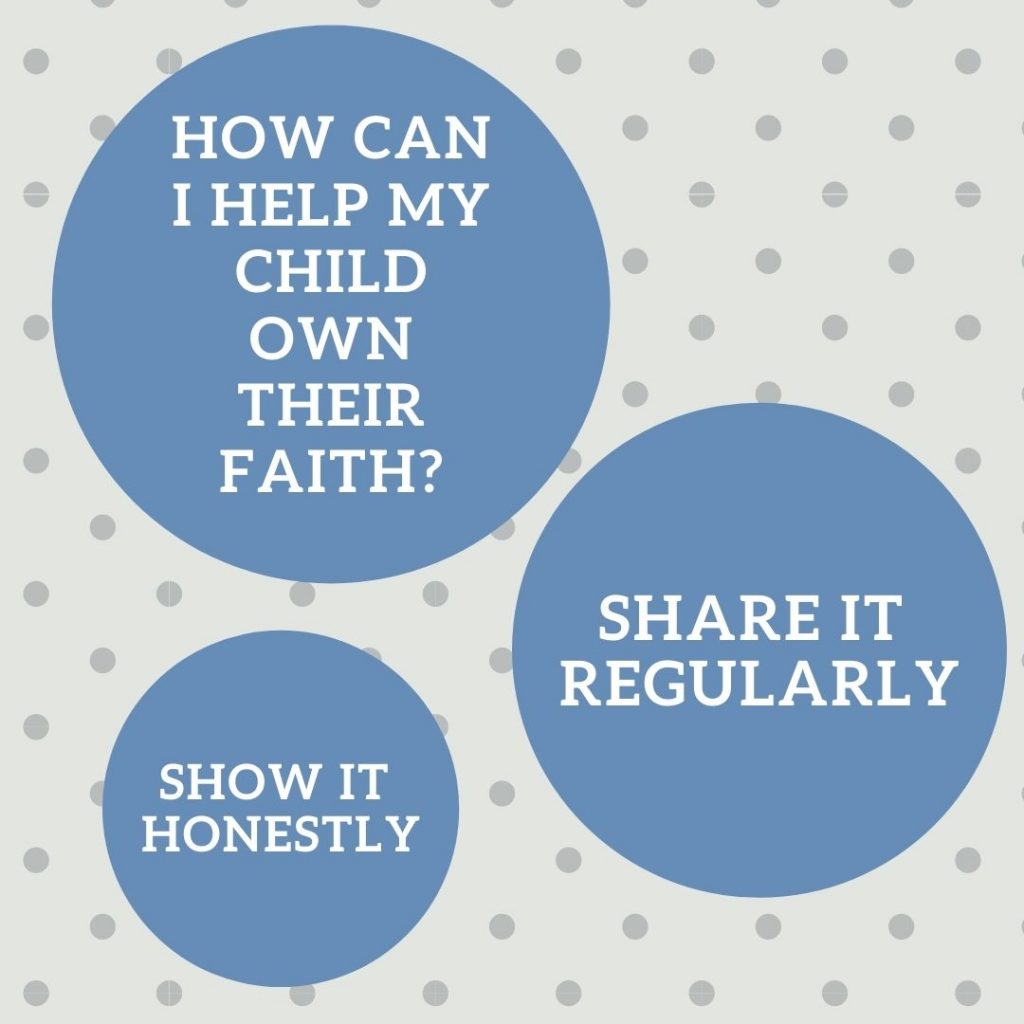
Show it honestly and share it regularly. When we do those two, we help our children own their faith.

Play

Play: 2 Ways to Build a Relationship with Your Child
EMAIL 1

Copy/Paste the email below.

Subject Line: Play: 2 Ways to Build a Relationship with Your Child

Dear Parents,

The parenting journey comes with lots of responsibilities, from financial to emotional. Every morning, you wake up with tasks and to-dos to take care of your family. In our new parent video, we have 2 creative ways you can connect with your child amidst the hustle and bustle of the week. It’s a different and unique way through PLAY.

To get started on the brief video, click the link below.

https://vimeo.com/parentministry/review/516711917/4c168e85b4

We are grateful to you and your family. If you have any questions, please do not hesitate to reach out.

{INSERT SIGNATURE HERE}

EMAIL 2

Copy/Paste the email below.

Subject Line: Playing With Our Children

Dear Parents,

Our new parent video gives you 2 unique ways to play with your children. It will require you to be a little silly, which can sometimes feel vulnerable and uncomfortable. We invite you to step into the moment with your child and show them what it looks like to have fun. To learn about these ideas, click the link below.

https://vimeo.com/parentministry/review/516711917/4c168e85b4

As always, it’s my pleasure to partner with your family.

{INSERT SIGNATURE HERE}

VIDEO


SOCIAL MEDIA SWAG


Parents, we have 2 practical, free, fun ideas for you to play with your child. Check your inbox for more!


Learn more about how to play with your child in this brief parenting video. Check your inbox for more!


Today’s video gives you 2 ways to build arelationship with your child through play. Check your inbox for more!


We give you 2 ways to build a relationship with your child. It’s free and it’s REALLY fun! Check out the brief parent video in your inbox.

VIDEO SCRIPT

Some children are used to having their parents help them with homework or drive them around. Guide them or correct them. But, as parents, we’re also called to play with our children, which is one way we can honor Ephesians 6, “Parents, do not overcorrect or provoke your children to anger.” One of the ways we can do that is to balance work and play.

So here are two simple and easy, and fun ways to play with your children. Number One, by the way, you can do either one of these on a school night. That’s right. Super easy. Number One, Handsfree Spaghetti.

If you’re willing to get just a little dirty, you can cook a pot of spaghetti and add some food coloring to make it red or green or whatever color you like to do, and then lay out saran wrap over your dining room table once the spaghetti has cooked.

If your kids like sauce, go ahead and add some sauce to it. If not, leave it plain, chop it up to make sure it’s just short enough so where they can eat it. And then when it’s warm enough, put it on the table, then invite your kids and say, “Guess what, guys? Tonight we have hands-free spaghetti, and mom and dad or guardian or grandparent, we’re going first.” And you can have so much fun when they see you’re willing to get just a little messy.

Another thing that you can do with the Handsfree Spaghetti is, that morning say, “Hey, guys, tonight I want to invite you to dinner. All you’re going to know about it is you have to wear a shirt, be willing to get dirty. Then just let the mystery build all day long. Clean up is simple. Just gather together the saran wrap and throw it away in the trash can.

Number Two is Family Band. This was one of our family’s favorite activities. You can get some pots and pans and do this after dinner after you’ve thrown the hands-free spaghetti away. And if you don’t want your kids to play with the pots and pans you have, run to the dollar store or pick up a small little pan, just like this, and get a fun spatula of some kind and then say, “Guys, tonight we’re going to do a family band.” Let them pick their favorite songs.

Let’s say they pick Frozen’s Let It Go. And then you just all begin to bang and have fun, and you can march around the house and just let them see you play. Let them see you be silly.

Now, you would think that the hardest piece would be the loud noise, or how am I going to keep this from getting crazy or out of control. But sometimes, the hardest part of playing with our kids is stepping into the vulnerability of just being silly. Because you and I both know as parents, we have a lot of “adult things” going on. We’re paying the bills, and we’re making sure things are taken care of, and we’re guiding our children.

We have so many responsibilities that sometimes we forget to play. And that is the beautiful part about having children in our lives. We have a chance to be silly, and we have a chance to be playful with them. And at the same time, it helps us from provoking our children or overcorrecting them because it gives us a chance to build connection.

So Handsfree Spaghetti and Family Band are just two ways that you can pass down your faith, because when you’re kids, who have seen over and over what you’re about, also see that you can smile and you can play, and you can get on their level, and you can be with them as they are. It’s passing down faith because you’re showing them the way Jesus feels about them and the way Jesus feels about you.

Parents of Athletes

Parents of Athletes: How to Prepare Your Student for Middle School Athletics
EMAIL 1

Copy/Paste the email below.

Subject Line: How to Prepare Your Student for Middle School Athletics

Dear Parents,

As your child uncovers new interests and hobbies, some of them might discover they like sports. From t-ball to soccer to cheer, sports give students a chance to learn teamwork, character, and exercise.  As they develop, they may want to keep going in middle school.

But sometimes, parents aren’t sure of how to prepare them for the next level, athletically and spiritually. Our latest parent video gives you very specific steps to help your child in a good direction. Just click the link below to get started.

https://vimeo.com/parentministry/review/504848321/bfbec28d0a

As your church, we are thankful your family is in the community taking God’s light and love! We are praying for you and continue to support you. Please let me know if you ever need anything.

(Insert Signature Here)


EMAIL 2

Copy/Paste the email below.

Subject Line: For Parents of Athletes

Today’s video is for a specific group of parents- raising children who play sports. Proverbs 16:3 asks us to “Commit to the Lord whatever you do, and he will establish your plans.” Did you know God cares about you and your family? As your child discovers what they like and dislike, you may discover God gave your child the ability to play sports. 

Because He is loving and kind, He doesn’t ever force Himself into our lives. We have the privilege to invite Him into all areas of our lives, including sports. To learn how to do this, we have a brief video that shows how sports is more than a game. Click the link below to get started.

https://vimeo.com/parentministry/review/504848321/bfbec28d0a

As your church, we continue to support you through the parenting journey. Please let me know if you ever need anything.

(Insert Signature Here)


VIDEO

SOCIAL MEDIA SWAG


Parents, if you have a child in sports, we have a quick and encouraging video for you! Learn how to prepare your child for middle school sports starting now! Check your inbox for more.

If your child is involved in sports, your family can make a difference in the community. In less than five minutes, learn how in our new parent video. Check your inbox for more.

Calling on all parents of athletes! Sports of any kind can be more than competition and ribbons. We have an encouraging and inspiring brief video to show you how. Check your inbox for more!

If you have a child in elementary school who is interested in playing for their middle school, our new parent video offers 3 practical steps to encourage them in a good direction. Check your inbox for more.

VIDEO SCRIPT

If you have a son or daughter that loves to play sports, then you know about the games, and you know about the intensity and the hard work and the competition. First, it starts out when they’re three, four, and five, and they’re super cute little jerseys, and they’re on the soccer field, and they’re just running all over the place. And it’s like herding cats, or they might be the little boy that’s out in the center field who’s way more interested in a wildflower than he is in the baseball that just rolled by.

But eventually, they move from that super cute little age into the recreational leagues. And at that point, it gets a little more intense. The parents get a little louder, the coaches get a little stronger, and the competition gets a little thicker, and you have the recreational leagues. And then after that, they can sometimes move into the travel leagues. And that’s when you begin to cut very large checks, and the competition gets super intense, and the parents get really loud.

And so, as a parent of an athlete, one of the things we wanted to give you today was how you can begin to prepare your student for middle school?  So we’re going to give you three things you can do today to prepare.

One, research. Look into the middle school that your child plans on attending. Go check out their program, check out, and say, “Hey, what does it look like? What’s the level of competition? Do I know any parents who are there?” Attend a ball game and talk to the parents and say, “Hey, how does this work here at this program and at this level?”

Because here’s what you want to avoid. One day your daughter wakes up, and she says, “Mom, tomorrow is middle school soccer tryouts.” Oh, you respond, “Great. I’m so happy for you. You’re so excited, and you celebrate with her, and then you roll into the tryout, proud of her for going for it.

But you roll up into a tryout where all these other girls have been doing soccer, traveling together for three and four years, and you just didn’t know.

And so you have to tell your daughter, “I’m so sorry, I didn’t know. So one of the ways, as a parent of an athlete, if your child is beginning to express an interest in sports, is to begin to research the middle school program and where they’re planning on attending.

The second is support. If your child makes the team begin to decide as a family, how are we going to support this coach? How are we going to support this program?

Because as Christ-followers, one of the things you and I are called to do is we’re called to be in the world, not of it, but definitely in it. And he leaves us here because we have the ability to have influence and make a difference and offer love. And so decide as a family, if your child makes the team, how are we going to support this program, decide before you ever get there?

And third is next, make a decision. What kind of parent am I going to be among the other parents? Am I going to be the parent that constantly complains that my kid’s not getting enough playing time? Am I going to be the parent that talks about other parents’ players? Am I going to be the parent that is constantly encouraging even if my kid’s getting playing time or not playing? Am I going to be the parent that speaks positivity into this culture and into this environment? And this matters as parents of athletes, how we as Christ-followers handle ourselves, because in Galatians Chapter Five verse Twenty-two and Twenty-Three, it says, “The fruit of the spirit is love and joy and peace and patience and kindness and goodness and faithfulness and gentleness and self-control.”

So I want you to imagine with me the bigger picture that if we as parents of athletes are able to walk into these environments that are intense and competitive, navigate a lot of emotional intelligence and social skills, which is a lot of hard work. It’s teaching our student-athletes some incredible discipline. So if you can imagine Christ-followers showing up into these arenas and offering the fruit of the spirit, offering the love that we’ve been given from Christ, that we have a chance to come in and offer to them.

We have a chance to make a difference in our communities because God has chosen to give your child talent and athletic ability. And if he is fortunate or she’s fortunate enough to make the team, then now your family has a chance to go in, to spend some time researching, spend some time deciding how you want to support the program, and then spend some time deciding how you want to be a parent, among other parents. And as a parent of an athlete, it’s just another great way for you to be able to pass down your faith on the go.