
Category Archives: Kids Parenting Class

Setting Goals

Setting Goals: How to Help Young Children Set Goals
EMAIL 1

Copy/Paste the email below.

Subject Line: Setting Goals: How to Help Young Children Set Goals

Dear Parents,

Setting goals may seem to be an activity only for adults or teens, but did you know children can learn to set goals too? Even though they don’t have the abstract muscle yet to understand the full concept, they can start small with a few disciplines.

In less than five minutes, learn how to help your child take baby steps to build the confidence they need in themselves. Click the link below to view the video.

https://vimeo.com/parentministry/review/495600202/30ab64437a

If you and your child have success in this area, please let us know! We would love to celebrate with you.

If you ever need anything, please do not hesitate to reach out.

(Insert Signature Here)


EMAIL 2

Copy/Paste the email below.

Subject Line: Did you know your children can set goals?

Did you know children have the ability to do incredible things? They can even learn how to set goals as young as the age of five. Using the old school paper chain, help your child build confidence in himself or herself. To learn more, click the link below.

https://vimeo.com/parentministry/review/495600202/30ab64437a

As your church, we continue to support you through the parenting journey. Please let me know if you ever need anything.

(Insert Signature Here)


VIDEO

SOCIAL MEDIA SWAG



Setting goals isn’t just for adults or college students! Young children can learn too. Check your inbox for more.



Children, as early as 5 & 6, can learn the small habits of setting goals. Learn more in our new parent video!



Does your child need confidence? Teach them how to set a small, measurable goal, then encourage them along the way. Learn more in our new parent video.

 

We have a new parent video for parents of young children. Using the old school paper chain, learn how to inspire confidence in your child. Check your inbox for more.

VIDEO SCRIPT

Talking about goals with young children can almost seem impossible because they are so young and are unable to process an abstract concept. But at the same time, setting goals is proven to help young children develop confidence in themselves. So today, I give you two practical ways to help teach children- young children- how to set goals so that they can feel good and confident about themselves.

Number one is you want to help them think through one wish or goal and make sure this is realistic and attainable for younger children like five or six-year-olds.

It might be… “I want to learn how to brush my teeth on my own without my parents reminding me.” Or for older kids, like a fifth-grader heading into middle school, might be, “I would like to try out for my middle school volleyball team or basketball team.”

So help them think through one attainable wish or goal. To do that, have them take some construction paper and write it out on a sheet of paper, have a marker, and write out that one goal.

The second step is to help them think through the steps it will take to achieve the goal. So if they want to brush their teeth on their own, the first step might be…we need to put your toothbrush and toothpaste right beside each other in a drawer where you can reach. This is Step One. Then take a little scratch sheet of paper, and you make the old school paper chain. Begin to take it, and put it together. Write down to put the toothbrush and toothpaste together in a drawer. And that is Step One.

Now make step two. Well, let’s set a little reminder by your bed like a picture or a chart. You make this a step and create it a paper chain, too.

Eventually, make this paper chain, and as they reach each step, they get to take the paper chain off, and you celebrate with them. You did it, Step One! And then when they get to step two, you did it (!) and then step three (!).

When they’re finally doing it on their own, and they’ve reached their goal, you celebrate as a family with your child. Even at the young age of five and six, you can teach your children how to set goals.

As they do this, you want to start small so that it’s attainable for them and it’s realistic. But then, as they get older, you begin to put the wishes and goals up just a little bit further. What you’re doing at this point, as a parent, is you’re training them on how to build confidence in themselves so that they can do it and they can accept responsibility.

You know this as a parent that when they get into middle school and high school, they can’t control whether or not they make their middle school team. They can’t control whether or not they got the role in the play. But what they can control is the fact that they took steps to achieve the availability and access to shoot for the bigger goals and the bigger wishes and the bigger dreams.

When you help young children set goals, you’re laying a foundation for what they can do in middle school and high school. I’ll leave you with this verse. In Proverbs 16:9, it says, “We can make our plans, but the Lord determines our steps.”

So imagine as you’re raising your young children, if you begin to teach them, “Hey, let’s set our goals, but let’s hold them loosely because we want to be able to support you as a child, to go for your goals, your dreams, your wishes. But we must always remember that we hold on to them and we can make our plans. But the Lord determines our steps.” These two concrete ways are how you can help your children set goals. It’s just one more way on how you can pass down your faith to your children.


Christmas

Christmas: 3 Ways to Pass Down Your Faith Through the Birth of Jesus

EMAIL 1

Copy/Paste the email below.

Subject Line: Christmas: 3 Ways to Pass Down Your Faith Through the Birth of Jesus

Dear (Insert Parent Name Here),

Christmas provides many opportunities for parents to pass down their faith. One unique way is to discuss the birth of Jesus.

God could have chosen to send the Messiah as a King with an army out of the sky, but He decided on a baby- a helpless child dependent upon God for life. Jesus’ birth reveals dependency as one of the ways to relate with God.

To learn how to share this beautiful revelation with your child, watch our brief parent video. In less than 5 minutes, you can discuss the meaning of Christmas in a whole new way.

To view, click the link:

https://vimeo.com/parentministry/review/473853101/363266b281

I hope you and your family have a wonderful holiday. As always, I am here to support you in the parenting journey. If you need anything, please do not hesitate to reach out.

Merry Christmas.

(Insert Signature Here)

EMAIL 2

Copy/Paste the email below.

Subject Line: Discuss the meaning of Christmas in a whole new way!

Dear (Insert Parent Name Here),

Matthew 5:3 says, “Blessed are the poor in spirit, for theirs is the kingdom of heaven.” The term, poor in spirit, means “needy.” In other words, people have permission to be needy in their relationship with God. As a parent, you have the opportunity to profoundly impact your child by teaching them a fundamental truth- we have permission to be needy and ask God for help.

Because God chose to send His Rescuer in the form of an infant, He modeled by example how to interact with God- always in need of Him. What a way to view the birth of Jesus! To share this with your child, here is a brief parent video to guide you.

To view the video, click the link below.

https://vimeo.com/parentministry/review/473853101/363266b281

May you and your family have a Merry Christmas. If you have any questions or thoughts, please do not hesitate to reach out.

(Insert Signature Here)

VIDEO

SOCIAL MEDIA SWAG

We have a new parent goodie just in time for Christmas! Teach your child about the birth of Jesus in a new and unique way. Check your inbox for more!

The Christmas season creates the perfect learning lab to teach dependency on God. Our short video gives you 3 easy ways to discuss faith with your child. It’s the gift that keeps on giving!

Check your inbox for a brief, encouraging video that will help you pass down your faith in 3 simple ways: Look, Ask, Believe.

Christmas is the perfect time to have conversations about your faith on-the-go. Check your inbox for a brief, encouraging video just for parents.

VIDEO SCRIPT

Christmas is a very special time where families get to gather together and enjoy the holiday season. It’s an incredible time to celebrate and pass down your faith to your children. And this is a holiday that is celebrated all around the world in many cultures. Coming together to celebrate the birth of Jesus in the birth of Jesus is so unique because it’s an event unlike any other that has ever occurred because this is the way that God chose to send his rescuer for all peoples.

Now, he could have chosen to send an army straight out of the sky and say, I’ve come to save you all. But he chose to send his rescuer as a baby, a helpless dependent, dependent upon the very people he was called to save. It’s quite unique, and it’s unlike any other.

And so this holiday season is a very special time to teach your children about this birth and to pass down your faith in a very unique way. I’m going to give you three practical ways that you can teach your kids on how to celebrate the birth of Jesus in a learning lab.

First is it’s going to be LOOK. And what you’re going to look for is when your kids are in that moment when they’re struggling to do something that they can’t quite accomplish. And maybe it’s there in third grade, and they’re really struggling with a friend on the playground. Look for that moment and in that moment say, “Hey, you know what, I see that you’re struggling.” Give them some good practical advice, but then talk to them about how it’s OK to ask God for help in that moment, that it’s OK to be needy and helpless and dependent upon him, and then teach them about the birth of Jesus in this Christmas season.

So first, look for that opportunity to talk to your child and then second- teach them to ASK. Now, I know this is simple, but in actuality, it’s really hard for human beings to think that God would have the time to listen to us, to hear from us, that our needs would matter to him. So when you teach your children at a very young age that it’s OK- that they have permission to ask for help from God, you begin to teach them a great practice that can become a habit that they’re going to, as adults say, “Hey, this is normal, that it’s OK for me to talk to God.”

Because Matthew 5:3 says, “Blessed are the poor in spirit, for theirs is the kingdom of heaven.” And that term, poor in spirit, is needy, that it’s OK. You have permission as a parent to be needy, and your child has permission to be needy and to ask God for help.

So first is look for that opportunity to talk to them. The second is to askHere’s a simple statement you can say, “Would you say, God, I have a big problem? It is fill in the blank. Would you help me, please?” If they’re struggling with a friend on the playground, you could say to your child, “God, I have a big problem. And it is with Sarah. We’re fighting on the playground, and I don’t know what to do. Would you please help me?”

Then begin to teach them how to do that on a regular basis. So use this learning lab to say it’s OK to be needy and to talk to God. James 1:5 says, “If you need wisdom, ask our generous God, and he will give it to you.”

So first is look, second is ask, and third is believe.

Teach your child. “OK, now we’re going to act as if it’s done. We don’t know when he will answer it, but we are guaranteed he will. So let’s act as if it’s done.”

So look, ask and believe. This is the learning lab that you can teach your children as they began to study about the Christmas season as they learn about it and celebrate it, and you talk to them about the birth of Jesus.

This is an incredible time to point out, look how helpless he is like a baby, and this is how God chose to send his rescuer.

How much more are we given permission to be OK, to be helpless and dependent, and to ask for help? So this Christmas season, use this opportunity as a parent to pass down your faith through the learning lab of life. Look, Ask, and Believe.

Thanksgiving

THANKSGIVING: 3 PRACTICAL KIDS’ ACTIVITIES ON GRATITUDE

EMAIL 1

Copy/Paste the email below.

Subject Line: Thanksgiving is on its way! Here are 3 Activities to Teach Your Kids Gratitude

Dear (Insert Parent Name Here),

Thanksgiving is soon approaching, and this U.S. holiday is an incredible season for parents to be able to pass down their faith. In 1 Thessalonians 5:18, it says, “Be thankful in all circumstances for this is God’s will for you, for those who belong to Christ Jesus.” So we have a short video with 3 easy, practical activities you can do with your children to teach gratitude.

To view the video, click the link below.

https://vimeo.com/parentministry/review/473860365/8af097c551

As always, I am here to support you as parents. If you need anything, please do not hesitate to reach out.

(Insert Signature Here)

EMAIL 2

Copy/Paste the email below.

Subject Line: Gratitude Activities for On-The-Go, At-The-Table, and Outdoors 

Dear (Insert Parent Name Here),

This holiday season, find a few minutes to walk outside with your kids and practice the Outdoor Gratitude Activity from this video. In one quick walk with your child, you can teach them how to practice gratitude, which is a part of our faith that we pass down to our children (I Thessalonians 5:18).

To view the video, click the link below.

https://vimeo.com/parentministry/review/473860365/8af097c551

If you have any questions or thoughts, please email me. I am grateful for you.

Cheering you on,

(Insert Signature Here)

VIDEO

SOCIAL MEDIA SWAG


Check your inbox for more information on this short video!


3 Practical Kids Activities On Gratitude! Check your inbox for a brief, encouraging video just for parents.


Thanksgiving is the perfect time to pass down your faith. Check your inbox for a brief, encouraging video just for parents.


We have a new goodie for you just in time for Thanksgiving! Look in your inbox for more information!

VIDEO SCRIPT

The U.S. holiday of Thanksgiving is soon approaching. It’s full of fall leaves, turkeys, and lots and lots of pumpkin. This is an incredible season for parents to be able to pass down their faith because in 1 Thessalonians 5:18, it says, “Be thankful in all circumstances for this is God’s will for you, for those who belong to Christ Jesus.”

So what an incredible opportunity to be able to pair Thanksgiving with a chance to pass down your faith. So here are three ways that you can involve your kids and activities to teach gratitude.

One is activity on-the-go, which is an activity that you can do at the table. Two is an activity you can do at the table, and three is an activity you can do outside.

First is the one that you can do on-the-go. This is a twist of “would you rather” so you could ask, would you prefer this or that? While you’re driving in your car and you have your kids, you could say, hey, do you prefer math or science? Do you prefer P.E. or lunch? Do you prefer Minecraft or fortnight? You can think about the shows that they like or the movies, the apps that they play. And you can begin to pair them up and think, do you like this or that? And as you’re driving- what you’re doing or the purpose of this is that you’re teaching them how to discover what they really like. And then once you teach them what they really like, then they can practice gratitude. For example, are you grateful you get to get to play the game of Minecraft? What do you enjoy about it? And you begin to teach them how to be grateful.

Second, the activity that you can do at the table for Thanksgiving is to pick up some brown paper, maybe at a moving store, at your local moving store and wrap your table with that brown paper, then throw out some markers and begin to ask your kids to name something they’re grateful for. You can also begin to do something more specific like grab a can of beans, take a Sharpie, draw circles all around it on the paper, and then write mom or dad or the name of their sibling or church or school, and then ask them in that circle to write one specific thing they’re grateful for, about their mom or about their sibling or about their church. Last, they can color all over the paper.

The third activity is something you can do outside. Have them go walk around and pick up some leaves, whether it be red, yellow, orange. Just pick up some sticks, collect just a few items.

If you live in an area where you don’t have fall leaves, run to the dollar store and pick up a few leaves, different colors, and then spread them out around for your kids. Ask them to pick up the ones that are red.

The red leaf represents a person. Is there one person in their life that they’re grateful for? The yellow can represent an event. Is there something that happened this year in their first-grade class that they’re really grateful for? And orange can be a place, green can be themselves, and brown can be any kind of item they’re grateful for. Maybe it’s their love or their stuffed dog.

So it teaches your kids practical ways to be grateful because this is an incredible season, an incredible time to practically involve your kids in gratitude for 1 Thessalonians 5:18 says, “Be thankful in all circumstances for this is God’s will for you who belong to Christ Jesus.” And Thanksgiving is an incredible time where you can pass down your faith to your children by teaching gratitude.

Anxiety

ANXIETY: COPING MECHANISMS FOR CHILDREN WHO STRUGGLE WITH ANXIETY

EMAIL 1

Copy/Paste the email below.

Subject Line: Are your children struggling with anxiety?

Dear (Insert Parent Name Here),

Due to a global pandemic experience, anxiety is on the rise in children of all ages. Some occasionally experience anxiety, while others are daily. To help introduce the topic, we have a brand new, encouraging, (and short!) video for you that includes some basic starting points on how to help your child.

To view the video, click the link below.

https://vimeo.com/parentministry/review/463193419/bf72d1825d

As always, I am here to support you as parents. If you need anything, please do not hesitate to reach out.

(Insert Signature Here)

EMAIL 2

Copy/Paste the email below.

Subject Line: Ideas on how to help anxious children

Dear (Insert Parent Name Here),

If your child struggles with anxiety on any level,  you are not alone. Anxiety has increased among children, especially since the global pandemic. As some of your biggest fans, we want to support you in the parent journeying.

We have a short, encouraging video that includes a few simple ideas on how to help a child with anxiety. To view the video, click the link below.

https://vimeo.com/parentministry/review/463193419/bf72d1825d

If you have any questions, thoughts, or want to talk further about the subject, please reach out.

Cheering you on,

(Insert Signature Here)

VIDEO

SOCIAL MEDIA SWAG

Anyone struggle with anxiety in your family? Check your inbox for a short, encouraging parent video to help!

Learn more from our new parent video on anxiety. Parents, check your inbox for more!

Anxiety can create a loop of worry and fearful thoughts in your child’s head. Learn more in our brief parent video. Check your inbox for more.

ANXIETY: Coping Mechanisms for Children who Struggle with Anxiety. Parents, check your inbox for our new, brief, encouraging video!

VIDEO SCRIPT

If your child struggles with anxiety, you know that this is probably something you need to seek professional help because it is no joke. We all understand that we have some level of anxiety. But for some of us, the anxiety is so real. You know that really annoying song we used to sing? “This is the song that never ends. It just goes on and on, my friends.” And you just keep singing that over and over again, having that same song in your head over, and over, and over, and over? Yeah. That’s what anxiety can become for our kids, this never-ending song in their heads. But instead of the lyrics of a cheesy song, it’s a fear or a worry that they just simply can’t stop thinking about. And it quite literally grinds their brain down. If you’re a parent of a kid with anxiety, I don’t have to explain any further. You live it almost on a daily basis.

And yes, as I said earlier, professional help is probably something you’ll need to check out to see how they can find some coping mechanisms to help them. Here are some of the things you might discover if you went and sought help. You might discover that you can name that worry and anxiety and separate it from yourself. What that means is for your child, especially when they go through some crisis or some big, huge life moment, your child can help separate my stress, worry, and fear from who I am. It’s so important to separate that from their identity. I am a person, and I am here, and God is with me. And yes, also, there is a loop of worried and fearful thoughts in my head. And I can name those, and they are there, and I can deal with them.

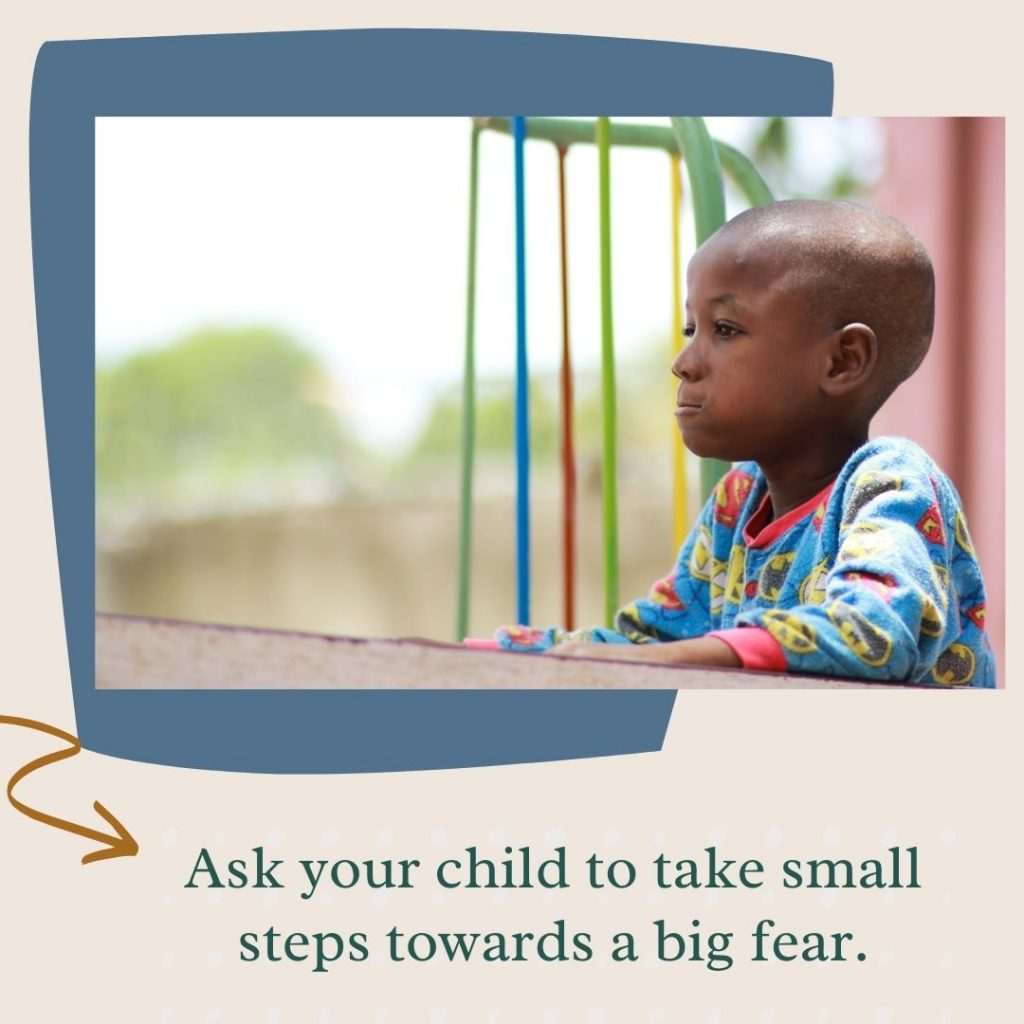
But I am dealing with them; they aren’t dealing with me. The next thing to think through that a licensed professional might help you process with your child is to teach them how to take small steps towards a big fear. One of the things we sometimes do when we have fears is we say, “Conquer your fear, attack your fear.” But for those who struggle with anxiety, the fear is like a huge giant, and telling them to conquer it is like telling someone to charge hell with a water pistol, right? It feels impossible. And that is the reason why we can cope by saying, “Hey, if you have a huge fear of going on our family vacation across the country, then why don’t we take small steps towards that? And maybe this weekend, let’s just drive 30 minutes to go somewhere that’s new. And let’s experience that and build that muscle and help grow towards this thing that we’re afraid of.” You see, there’s a lot of great ways that professionals can help you and your child think through anxiety, especially after crisis.

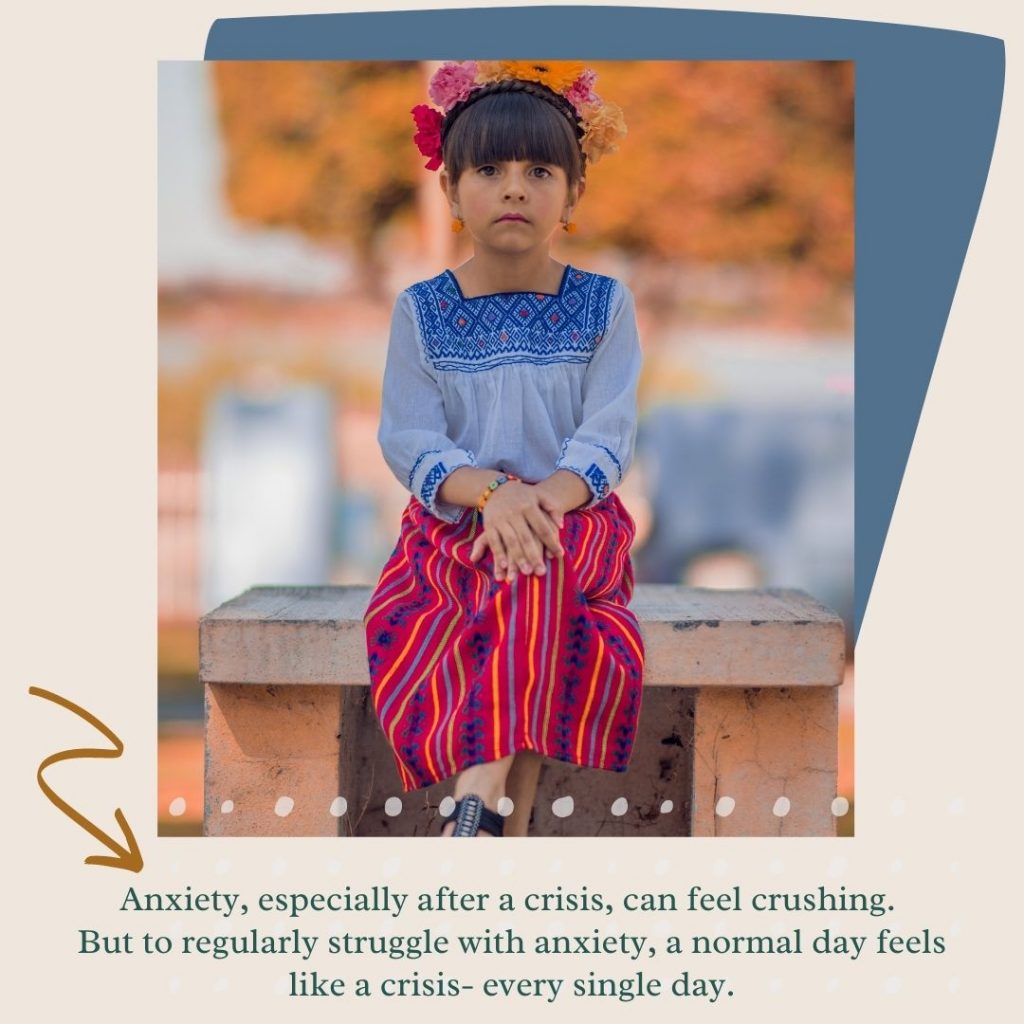
One of my favorites is for you to be able to insert faith into that, for your child to begin to be able to, like the scripture says, “Be anxious about nothing, but with prayer and petition, present your worries to God.” That idea of leveraging prayer as a way to separate those anxious thoughts and worries and giving them somewhere. One coping mechanism could be that they would literally write them down to get them out of their head and put them somewhere else. But our faith allows us to say those to God, and say, “God, I want to give them to you.” Anxiety, especially after crisis, can feel crushing. But if you struggle with anxiety, a normal day can feel like a crisis every single day. So whether you’re going through crisis or whether you’re just struggling with anxiety, you can find hope when you go seek out those professionals and allow God to use them in the life of your child, to help them bring peace in the midst of all of that crazy anxiety.

Building Relationship

BUILDING RELATIONSHIP: 2 UNIQUE WAYS TO COMMUNICATE WITH YOUR CHILD

EMAIL 1

Copy/Paste the email below.

Subject Line: Building an Emotional Relationship with your Child

Dear (Insert Parent Name Here),

When your child goes to elementary school, it feels like they grow up overnight. Where did the little toddler go with the messy spaghetti on their face?

As your child develops physically, so does their language, and with it, conversation. At this moment, you have a chance to build an emotional relationship with them. Today, I give you a brief, encouraging video with 2 easy, on-the-go tips to help you learn how to communicate in such a way that you can connect with your child emotionally.

To view the video, click the link below.

https://vimeo.com/parentministry/review/451261208/368f6cf39d

As always, I am here to support you as parents. If you need anything, please do not hesitate to reach out.

(Insert Signature Here)

EMAIL 2

Copy/Paste the email below.

Subject Line: How to Communicate with your Child

Dear (Insert Parent Name Here),

As your child develops over the elementary years, they make lots of discoveries…friends, school subjects, extra-curricular activities, and more. The calendar fills up, car rides begin, and so does the conversation from the back seat. 🙂

If you find yourself in this place, I have an encouraging (short) video for you on how to communicate with your child to build an emotional relationship.

To view the video, click the link below.

https://vimeo.com/parentministry/review/451261208/368f6cf39d

If you have any questions or thoughts, please email me.

Cheering you on,

(Insert Signature Here)

VIDEO

SOCIAL MEDIA SWAG

Two simple ways to build a relationship with your child! Check your inbox for a brief, encouraging video just for parents.

2 practical, on-the-go tips to better communicate with your child! Check your inbox for more information on this short video!

Check out our brief, encouraging parent video. Look in your inbox for more information!

Want to build a relationship with your child? Check your inbox for a brief, encouraging video just for parents.

VIDEO SCRIPT

Have you ever heard this statement, children should be seen and not heard? That statement often implies that children should not speak unless someone speaks to them, especially around adults.

One of the things that I love about Jesus was when he came and walked upon this earth that he brought about God’s kingdom. Meaning he came and walked in human form and taught us what God thinks, and feels, and how God sees the world that he created. And one of those that he began to teach on was how he viewed children.

This truth was recorded in the book of Matthew, and I want to read it to you. It says, “One day some parents brought their children to Jesus so he could lay his hands on them and pray for them. But the disciples scolded the parents for bothering Jesus. But Jesus said, ‘Let the children come to me. Don’t stop them, for the kingdom of heaven belongs to those who are like these children.'” I love this because what Jesus did at this moment, in the setting that he is in because he was seen as what’s called a Rabbi. So, he’s known as a teacher. And he is a teacher that’s respected by his peers. And he is saying, hey, if you want to know how God views children, he respects them. He values them. And this was like turning everything upside down because, in this setting, children were viewed as second class citizens. They were to be seen and not heard. They didn’t matter. They weren’t valued. They were second class citizens. And Jesus came in and said, God values children. I value children. This moment reflects God’s kingdom.

So as your child moves through 1st grade, 2nd, or 3rd, now is the time to develop communication and listening skills. Because children actually do have something to say. Even at that young age, they do have hearts, and they have souls, and they have things they want to share.

So, I want to give you two simple tips on how to talk with your child through the lens of how God treats them.

One is, be available. And what I mean by that is, as parents, we’re constantly providing, preparing, and doing for them. And sometimes we can be so busy doing for them that we forget to be with them. One of the ways we can show our children respect is just to be with them. Not necessarily be doing their laundry, cooking them meals, or running them to school and back, but it’s climbing on the floor and playing Legos-those Legos that we have stepped on so many times it just hurts. Right? And we’re more about pick up the Legos than just sitting down and playing with the Legos. But being with them is how you build a relationship.

This leads me to the second tip, which is actively listening. Listening is an art form, and it requires active listening, which means we listen wholeheartedly, fully-focused on what they might be saying. Now, they might be talking about Minecraft or something we have no clue what they’re saying, but we actively listen.

We seek to understand our children because we’re showing them respect. And that might seem a little weird, right, for a son or a daughter who is a first-grader or a second-grader who might be talking about what’s on the TV show they just saw or a YouTube channel.

But one of the things that Jesus taught us as parents – I value children. And just because they’re young doesn’t mean that we need to dismiss what they have to say. We can show them respect, just like he did.

And so, I especially love, in this text, the role of the parents- when it says, “parents brought their children to Jesus.” And that’s ultimately what we’re called to do is we want to take them to him. And, by being available and by actively listening, we begin to build a relationship with them.
As parents, we have so much going on. If I could write a job description for us, it would be cruise director, CEO, CFO, chef, Uber driver, peacekeeper at the UN, PE coach, teacher, and so much more. It’s a serious job description, being a parent. It’s no joke.

But, in all the good that we do for our kids, the greatest thing we can do is to be with them, build a relationship with them so they can see what it’s like to interact with someone who loves them completely and wholeheartedly. Because ultimately, that’ll point them to how Jesus feels about them, that he loves them, that he is willing to listen to them, that they’re worth being heard.

So, I hope these two tips help you be effective in how you talk with them. Communication to a relationship is like oxygen to the soul, so when you begin to communicate with your children effectively, you are bringing life into the parent-child relationship.

Spiritual Blessing

SPIRITUAL BLESSING: WHAT IS IT AND HOW TO GIVE IT

EMAIL 1

Copy/Paste the email below.

Subject Line: Spiritual Blessings and How to Give One

Dear (Insert Parent Name Here),

A spiritual blessing is one of the most powerful tools of a parent. What is it? How do you give it? In our brief parent video, we give you practical tips on what to do, even if you didn’t receive one yourself.

To view the video, click the link below.

https://vimeo.com/parentministry/review/443203878/0356a8de8d

If you need anything or have any questions, please do not hesitate to contact me.

(Insert Signature Here)

EMAIL 2

Copy/Paste the email below.

Subject Line: How To Speak A Spiritual Blessing Over Your Child

Dear (Insert Parent Name Here),

A spiritual blessing is when a parent or a significant person in your life offers to be a mirror to your soul, where they show you who you are based on how God made you. They give you an idea of what it looks like when God looks at you.

Blessings are a powerful and significant tool for a parent. To learn more, check out our brief, encouraging video just for you.

To view, click the link below.

https://vimeo.com/parentministry/review/443203878/0356a8de8d

We, as a church, are here to support you in the parenting journey. If you have any questions, please feel free to reach out.

(Insert Signature Here)

VIDEO

SOCIAL MEDIA SWAG


We have a new parent video for you! Check your inbox for more information!


Why are spiritual blessings for children important? Check your inbox for a brief, encouraging video just for parents.


We have a powerful and inspiring parent video for you. Just check your inbox for more information on how to spiritually bless your child.


If you didn’t receive a spiritual blessing, but you want to give one to your children, check out our brief, encouraging parent video. Look in your inbox for more information!

VIDEO SCRIPT

When I was a kid, when people would talk about a blessing, I thought that was something that we said before we ate our dinner or something like that. But as I’ve moved forward in my faith journey, people began to teach me about a spiritual blessing and just how important it is to have the blessing, not only of God but of your parents. But as I begin to teach that to other parents, I was shocked to learn that a lot of folks that were considering giving their spiritual blessing to their kids felt like they were paralyzed. Like they couldn’t give their blessing away to their kids. In fact, I remember one dad introduced this to me in a real way. He said, “Listen, Jeremy, I never received the blessing of my parents. I never received a spiritual blessing from them. How can I give to my son or my daughter something that I never received?”

I wonder if that might be a place where you find yourself. Well, first of all, let me teach you what a spiritual blessing is. You might not even know whether or not you received it because you don’t know what it is yet. So let’s talk about that. A spiritual blessing is when a parent or a significant person in your life that you trust offers you like a mirror to your soul, where they show you who you are based on how God made you. They give you an idea of what it looks like when God looks at you. You see, the power and central idea of a blessing is when someone that you trust looks at you and says, “God made you to be …” And then fill in the blank. And whatever that uniqueness is that God made you to be. If it’s from someone that you trust like a parent, it really begins to become a part of your identity because you see it’s powered by God when it’s connected to God.
So what that means is, as parents, we have something akin to a spiritual superpower that we can offer our kids. It’s one of the best things we can do for them is to give them our blessing. And that’s not just blessing their performance. Like you’re a really good basketball player, or you’re a really good cheerleader, or you play the trumpet really well. It’s not that. It’s blessing their identity. It’s more about this is who God has made you to be. This is your purpose. This is what life is all about. And by giving you my blessing, I’m unleashing you with not just my approval, but with saying, “God will be with you as you go into this world and what he has made you to be and what he has called you to do, you can do with his power and not your own.”
You see how wonderful that is. A lot of you know exactly how wonderful it is because it was given to you by your parents. Some of you, though, you may not have received it like that. And you would love to give it, but you didn’t receive it. Well, let me go back to that dad who kind of presented that problem to me after a parent seminar, I was doing. And he said, “I’ve never been blessed before. How am I going to bless my kids?”
You know what? A few weeks later, he solved his own problem. He gathered a few people that were significant in his life, and he just said, “Hey, would y’all come have dinner at my house. And would you just, all I’m going to ask is for you to just fill in this sentence, God, we see that God has made you to be. Then answer that question with a unique characteristic that you see in me that God has made in me.” He did that. The folks who loved him came and did that. And when I saw him again, his face was beaming, and he was filled. You could just see with that desire to not only live out the blessing that was given to him but to share that with his kids.
Now, if you find yourself in a place where you don’t really know how to give a spiritual blessing, maybe because you didn’t receive it, it’s not too late to ask some of the people in your life, maybe to write it in a note or an email or even a text, or maybe come and like that gentleman share a dinner, either way. Maybe you might want to ask others to bless you so that you feel more free to bless your own kids. I promise you this- the blessing of God funneled through parents into the hearts of kids is one of the most powerful privileges we get to have in this journey of parenting.

Spiritual Discussions

SPIRITUAL DISCUSSIONS: HOW TO START A CONVERSATION ABOUT THE BIBLE

EMAIL 1

Dear Parents,

As you begin your spiritual conversations with your child, we have 3 simple tips to help you start those discussions. From the “big picture” to practical resources, in less than five minutes, you receive a basic starter kit for a spiritual dialogue with your child.

Click the link below to view.

https://vimeo.com/parentministry/review/433835008/45cd823342

We believe in you and your family. If you ever need anything, please let us know.

[INSERT SIGNATURE HERE]

EMAIL 2

Dear Parents,

Have you ever wanted to start a conversation with your child, but don’t know where to start? Do you wonder what you need to know?

We have a brief parent video that gives 3 simple tips on a basic understanding of the Bible. With these foundations in place, step into those spiritual conversations with God-confidence. Just click the link to get started.

https://vimeo.com/parentministry/review/433835008/45cd823342

If you have any questions, please do not hesitate to reach out.

[INSERT SIGNATURE HERE]


VIDEO

SOCIAL MEDIA SWAG


Have you ever wanted to start a conversation with your child, but don’t know where to begin? Parents, we have a brief video that gives 3 simple tips to help you get started. Check your inbox for more!


Parents! It’s that time!!! We have your new Video!!! Check your inbox for more information.


As you think about spiritual conversations with your child, we have 3 tips to help get you started. Check your inbox for more!


Spiritual discussions are most effective at home. Prepare for the parenting journey with these 3 simple tips. Check your inbox for more!

VIDEO SCRIPT

Have you ever wanted to talk to your kids about the Bible, but you don’t know where to start? Do you look at your Bible and think I’m so confused, or I am so overwhelmed and you know what, I’ll just leave this to the professionals, or I need a degree to understand this. And if you think that way, I want you to know you’re not alone. The majority of parents struggle in knowing how to read and study the Bible and then how to pass that down to their children. And one of the things in God’s love story, the scriptures in the book of Deuteronomy chapter six, he asked parents to pass it down to their children. And so many parents long and want to know how to do that, but they just don’t know how to get started. So today, I’m going to give you three simple steps to get you started in understanding the Bible.

And think about it like kindling, my husband and I, the other day, we’re trying to start a fire. And as we were trying to get the fire going in our fire pit, one of the things that occurred was we needed a lot of kindling to get going, to get the fire set and so that we could begin to start our smores process. Well, think about it like this. These three tips will help you get started, very basic.

So number one, the whole Scripture is a love story. It is God’s love story of how he is pursuing mankind. Started in the Garden of Eden, he created human beings, and he wanted to build a relationship with them. Then when the fall occurred, and they began to choose what they thought was the better way, a separation occurred. And then God began to put a love story, a rescue story in place. He said, “I’m going to send my son Jesus to save them so that we can come back into a relationship together.” And the scriptures tell of this story, and that is the overview. There’s a lot of other sub-themes to it, but the main theme is that it’s a love story. It is a love story of how God loves you about how God loves your children.

Number two, it’s important to know the context of the verses that you study. Here’s what I mean by that. Have you ever had someone repeat what you said, and they took it out of context? There’s nothing more annoying in the whole world, right? Because you’re like, “Come on. That is not what I meant to say.” Well, that’s a lot like the scriptures. It is said within the context of a love story. So it’s important to know the context of when it was written, how it was written, who wrote it and why they wrote it. And that’s why you see people engaging Bible study tools. It’s one of the reasons why people engage paraphrases, like The Message or the Jesus Storybook Bible. And another reason why it’s important to know the context is because sometimes there are others who can bring in what I call spiritual misrepresentation, and they can begin to use the scriptures out of context. And so for you to be equipped, to know when that is occurring when you study the context of the scriptures, you can also teach your children this. They can recognize when someone is misusing those scriptures.

And third, the first was, know that it’s a love story. Two, know that it’s important to understand the context, and three, know that it’s written from a different time period and in a different language other than English. So because of that, if you feel like it’s like trying to understand Shakespeare, you’re okay. That is a normal thought- that sometimes the “thee’s” and “thou’s” and the words that have five syllables- can feel so overwhelming.

And you got to think; I want you to be kind to yourself for a little bit, because if I plop down a poetry book, which much of the Bible’s in poetry, Book of Psalms especially. If I pop down a poetry book in front of you, it might help if you had a poetry teacher come and teach you about poetry. This is why it’s important to help find someone who can maybe teach you a little bit about the Bible, to teach you about the context, to teach you about the time period, and to teach you about the language in which it was written. It doesn’t mean that you don’t know and that something’s wrong with you; it actually just is you taking a step of faith into studying the love story. You’re pursuing this love story that God wrote for you.

So I hope that today, in this brief little time together, that you are encouraged because you’re not alone if you feel that passing down God’s scripture can be frustrating. But I want to encourage you for a second. If you’re watching this video, that means you have the heart behind it. That means you want to do it, and that’s half the battle. And so I just want to say,  Good Job”. And so these are your first three steps to get you started. Know it’s a love story, know that it’s important to understand the context and spend some time with someone that they can help you understand the language and the time period in which it’s written. And I hope and encourage you as you seek to pass down God’s love story to your children.

Adult Friendships

ADULT FRIENDSHIPS: COMMON STRUGGLES TO BUILDING FRIENDSHIPS WITH OTHER PARENTS

EMAIL 1

Copy/paste the email below.

Subject Line: Adult Friendships: Common Struggles to Building Friendships with Other Parents

Dear (Insert Name of Parent),

Many of you talk to your children about how to make friends in elementary school. But do you ever find yourself struggling to understand your friendships? Have they changed since high school or college?

If you find yourself struggling to make sense of your friendships, you are normal! Today, we give you a brief video that explains 3 common struggles of parents as they build friendships with other parents.

Click here to watch:

https://vimeo.com/parentministry/review/424287225/1ee3325bd0

My role as a children’s leader is not just to support your children. I am here to support you and your family. I hope this video does just that.

If you need anything, please do not hesitate to reach out.

(Insert Leader’s Name Here)

EMAIL 2

Copy/paste the email below.

Subject Line: Adult Friendships: Common Struggles to Building Friendships with Other Parents

Dear (Insert Name of Parent),

In the elementary years, your child is learning how to make and be a friend. Whether in 1st grade or 5th grade, the classroom and extra-curricular activities provide valuable opportunities for children to develop relationships.

Parents have the same opportunities but in different learning laboratories, from the office to church groups. So how do you intentionally make and be a friend?  We have a brief video that explains 3 common struggles of parents as they build friendships with other parents.

Click here to watch:

https://vimeo.com/parentministry/review/424287225/1ee3325bd0

As you guide your child in friendships, I hope this video gives you the tools you need. Most importantly, I want this video to inspire you to develop friendships for yourself. You are worth it.

It is an honor to support you and your family,

(Insert Leader’s Name Here)

VIDEO

SOCIAL MEDIA SWAG


Do you struggle to find friendships with other parents? If so, you’re not alone. For more info, check your email for our short parent video. 


We have some parent encouragement for you! Check your email for our short parent video. 


Check your inbox for a powerful, short video on finding friends as parents.


Learn more about how to understand friendships in our short and encouraging parent video. Check your inbox for more.


Friendships are worth the work. Check your inbox for a brief, encouraging video.

VIDEO SCRIPT

It’s easy to talk to our kids about their friendships and give them encouragement about how they need to make new friends or if they get into a fight with their friend, how they need to make it better or how they need to put themselves out there and be open to new friendships.

It’s easy for us to do that for our kids, but what about when it comes to us as parents? You know, they say it takes a village, and that is true. We need our own village, but maybe instead of a village, maybe I’ll insert community and community comes and is built and is the foundation of community is friendships. But there are some struggles that we find as parents trying to build friendships specifically with other parents.

First of all, sometimes it’s easier to just kind of ride alone. I know I feel that sometimes because it’s kind of hard to put yourself out there with other parents, but also you’re dealing with your own lives, your own kids, there’s all this other stuff going on. It’s sometimes easier to just get wrapped up in your kid’s life than to try to pursue a life of your own.

But we got to resist that. We have to open our hearts to friendships. But opening our hearts is probably a second struggle that we deal with as well, because, in order to have friendships sometimes, we have to admit that we’re not perfect or that we don’t have it all together. If we’re going to connect with someone, we have to let them see that we’re struggling, and sometimes it’s hard as a parent, especially to say, “We don’t have it all together in this area.” Or, “We’re struggling in this area with our kid,” but that’s the exact magic to creating friendships. When we open ourselves up and are vulnerable and say, “You know what? We don’t have it all together.” What happens is other parents are free to say, “You know what? We don’t have it all together too.” And you can connect over your imperfection rather than trying to show in display a false perfection.

The final struggle I wanted to talk to you about is one of the ones that, for me, is a very common struggle, and I’m hoping it might encourage you. That is sometimes we get confused in our relationships and friendships, and we think that our friend is one thing, but they really are another, and we just don’t know how to organize our relationships and understand what type of friendship we have.

You see, when I explained this to my boys, I usually tell them that there are friendship buckets. I have three that I use. One of them is acquaintances. The second bucket is I have friends, and the other bucket is I have close friends. Now, everybody I meet, almost everybody I meet, falls into one of those categories, and when I can put them in a bucket, I can understand how I need to relate to them.

Obviously, an acquaintance is someone that I know, but they’re not necessarily a friend, but they’re someone that I know and like, and I’m willing to greet and say, “Hello,” if I see him out in public. Maybe we’re Facebook friends or something like that.

A friend is someone who I have picked out of the crowd and said, “You know what? I want you in my world, but you might not be a 2:00 AM phone call for me. If I get stuck on the road at 2:00 AM, I’m probably not calling you, but you’re still one of my friends, and I’m here to help and offer you whatever I can.”

Then there’s that close friend bucket, and there’s not a lot of room for a ton of people in that bucket, but those are the people you do call it 2:00 AM and the people that you can depend on, and you’re really kind of doing life with, that term that we like to use.

Now, why do we need buckets? Well, because if we get these things out of order, sometimes if we have an acquaintance that we’re treating like a close friend, things get really weird, really fast. Or if we have a close friend that we need to, we realize it’s not very healthy for us. We might need to note that we need to move them to just be in a friend and maybe find a new close friend.

See, we have seasons in friendships, and we have shifted in relationships, and we need to learn for ourselves as parents that that’s okay. We teach that to our kids, but we need to embrace that for ourselves.

So listen, whether you’re resisting the temptation to just go it alone, whether you’re scared to share your heart with others that you don’t have it all together, or whether you’re confused about whether someone’s an acquaintance, a friend, or a close friend, I hope this helps you think and realize that you’re not alone, but friendships are worth it. So let’s work through these struggles together.

First Time on Technology

First Time on Technology: How to Talk to Your Kids

Email 1

Copy/Paste the email below.

Subject Line: First Time on Technology: How to Talk to Your Kids 

Dear (Insert name of parent(s),

Technology can be a scary word for parents of young kids but it’s something that needs to be addressed. Here are three ideas to help you be successful as you have conversations for the first time with your child. 

Just click the video link below to catch these ideas and put them into practice!

https://vimeo.com/parentministry/review/412411025/dd2d9f8454

If you have further questions, our ministry is here to help and support you as you walk through this new season.

(Insert Leaders Name)

Email 2

Copy/Paste the email below.

Subject Line: It’s Time to Talk about Technology

Dear (Insert name of parent(s),

Have you talked to your child about technology and how to use it?  Do they know what you expect?  Technology is something they’ll have for the rest of their lives.  It’s important to start out strong and clear about your expectations and strategies in regard to technology use.

The video link below gives you some great strategies on how to approach this conversation, when to have these conversations, and what to talk about.

https://vimeo.com/parentministry/review/412411025/dd2d9f8454

Regular conversations about technology help normalize the topic and make it easier in the long run. We are here to help you start off strong!

(Insert leader name)

Video

Video Script

Welcome to this month’s Online Parenting Class.  Today we’ll tackle an issue that many parents of young children have asked about, “How to talk to your kids about technology for the first time.”  Your children are digital natives, this means they have grown up using technology.  From the occasional “here’s my phone” at the restaurant to video games, or even computers; your kids have been surrounded by screens from a very young age.

However, now you find yourself with a child at an age where you may want to give more freedom or responsibility.  How do you talk to them about using it and what your expectations are surrounding technology?  Over the next few minutes, we want to give you a few ideas and tactics on how to do this well.

1. Talk Often

The first thing you want to do it to get into the habit of talking often about technology with your student.  The struggle parents with teenagers have is that they waited too long to begin talking to their student about technology and therefore parents often feel behind or inept to have a conversation about it.  Begin talking with them about what’s on the device, what they want to do on the device, and what they can do on the device.

Younger kids will listen and follow instructions if you give them clearly with confidence and from the beginning.  Tell them how you expect them to use it, when they can use it, and for how long.  Be sure not to shy away from ‘potential dangers’ but keep it age-appropriate.  No reason to terrify them but it is good to let them know that there may be ‘bad things’ depending on where they are going on their devices.

2. Talk After

If you have a child that has been given the freedom to be on their device ‘unsupervised’ be sure to make time to talk to them after they are finished.  A few questions to ask.

3. What did you do/play?

This question will help you know what they spent their time on and what they ‘care’ about while they are on the device.  Are they playing games?  Are they drawing? Are they connecting with people?  All of these are important things to know.

4. Did you connect with someone? If so, who?

Finding out who they are interacting with is also important.  Are they friends from school? Are they random people from a game? Do you know the parents of the kids?  If they are connecting with other people have a discussion about how much information to share and make sure you know who they are.

5. Did you have fun?  Did something go wrong?

This question helps your student know that you care about what they are doing while on their device.  Showing interest in the things your child shows interest in, even on the internet, is important!

Having post-device time conversations will help you know what is going on on the device without actually seeing it all.

6. Talk about Parental Controls

Being sure that the device is protected with an Internet filter and/or time controls is key.  There are a variety of options that are available. We have posted several resources that might help you make your mind. However, the bottom line is that whichever you choose be sure it will have the features you are looking for and you are able to use it.  You don’t want to have a program or system in place and you are unable to use it. 

This is something you should talk to your student about.  Making sure they understand your expectations and their limits is beneficial for them to grow in responsibility.  When they know they have a time limit or know that you have set-up filters helps them grow developmentally and know you care for them.  So discuss there are filters and/or settings to help keep them safe.

Having the technology talk with your student may be new to you but it’s a necessary one!  Letting them know you care, what they are doing, and that they are protected is going to set them up for the best possible experience.  And of course, as they get older some of these things will change but if you can start early with these conversations then the easier it will be when your kids get older!

Thank you again for joining us.  For other video training and other useful content check out MinistrytoParents.com

Social Media Swag


How do you talk to your kids about technology for the first time? Parents, check your inbox for more!


Parents, here are 3 of our 6 tips to help you talk to your kids about technology! Check your inbox for more.


How do you talk to your children about using technology? Have you set your expectations surrounding technology? Check your inbox for helpful tips.


Prayer

A Guided, Online Prayer for Parents of Children*

*At the point of release for this OPC, COVID-19 has affected the world. We included an additional done-for-you email if you choose to address COVID-19. Cheering you on ministry leaders!

COVID-19 Copywriting (Optional)

Parents,

You are navigating a new world by parenting your children through a pandemic. Please know you are not alone. Parents are deliberating the countless ways to discuss this topic with their child while fighting fear about finances and security.

We have a few resources we would like to recommend. Here are 8 recommended articles and a resource on fear.

Last, we offer you a brief online video to guide you as you pray for your children. It’s like you have your very own tour guide to help you pray during this time!

The video covers six words: Shepherd, Freedom, Grace, God-confidence, Character, and Heritage. You can check it out at:

https://vimeo.com/parentministry/review/402578672/d6210d3d91

I hope this encourages you as a parent.

Partnering with you,

(Insert leader’s name)

Email 1

Copy/ paste the email below.

Subject Line: A Guided, Online Prayer for Parents of Children

Dear (Insert name of parent),

Because prayer involves asking human beings to interact with a supernatural being, it sometimes feels confusing, ambiguous, and elusive. So guess what? We have a brief online video that guides you through praying for your children. It’s like you have your very own prayer tour guide!

It covers six words: Shepherd, Freedom, Grace, God-confidence, Character, and Heritage. You can check it out at:

https://vimeo.com/parentministry/review/402578672/d6210d3d91

I hope this encourages you as a parent.

Partnering with you,

(Insert leader’s name)

Email 2

Copy/ paste the email below.

Subject Line: A Guided, Online Prayer for Parents of Children

Dear (Insert name of parent),

The Lord is all-knowing, all-powerful, and good. He doesn’t make mistakes. So when He choose to create your child, He had a choice. He could have picked September 19, 1603, or May 13, 2025. Yet, He chose their birthdate and…YOU as the parent/guardian.

God chose you to be their parent, and HE DOESN’T MAKE MISTAKES. In other words, with His help, you can do this. To encourage you, we have an online guided prayer for you. Check it out at:

https://vimeo.com/parentministry/review/402578672/d6210d3d91

Also, this week, we have #6daysofprayer, where we offer you a prayer each day leading up to Sunday. Check us out at [INSERT SOCIAL MEDIA HERE] and follow it as a daily reminder on how to pray for your child.

We believe in you,

(Insert leader’s name)

Video

Video Script

Kid Video Script April 2020

Title: A Guided, Online Prayer for Children

Welcome to today’s online parenting class! Last class, we gave you tips on how to prepare your child for life. If you missed it, ask your Director or Minister to send it to you.

Today, we are going to do something a little different, and offer you a guided, online prayer time for your child. So rather than tell you how to go and pray, we thought we could do it with you. I will simply lead you in prayer, and you can follow as you feel led.

Six words based on Scripture. Let’s get started.

I will share the Scripture in case you want to write it down, then pray a few words over my children and then give you a few minutes of silence for you to speak out loud the prayer. Don’t fret if it isn’t the same. The goal is to offer our needs before the Lord together.

Word #1 Shepherd

Psalm 127:3 & Psalm 23:1-2 Thank you Lord for giving me ___________. You gave them to me as an inheritance, and they are a special gift. You love my children and are their Shepherd. Please comfort them as a kind Shepherd would to His sheep. Settle their souls by meeting all their needs today. Now your turn. (Pause- Silence)

Psalm 23:4 Encourage my heart that I may believe they will not fear the darkest of evils because your Comforting Presence is so real to them. As I look towards their teenage years, help me not fear, but trust and listen for Your plan to prepare. Your turn. (Pause)

Word #2 Freedom

Ephesians 3:19 Jesus, I ask that you dispatch angels to stand guard around them. Consecrate the ground they walk on with your Holiness. Silence the voices of your enemy so they may see, hear, and know your love. Open their hearts so that they can receive your love, and as they interact with other children, help them give out that love. (Pause)

John 17:15 & John 3:16 Jesus, our mission is to live in the world, not hide from it. Show our family what it means to live in this world, and love it as you do.  (Pause)

Word #3 Grace

I John 2:1-2 As they fall short of your Standard with their fleshly desires, Jesus, be their Advocate and Helper and Lawyer in the Spirit world. Thank you for appeasing any wrath and bringing reconciliation for them. (Pause)

Romans 2:4 Thank you for not condemning them but offering them kindness and mercy. Remind them of this truth when they choose to condemn themselves and when others, or I, choose to judge them. (Pause)

#4 God-Confidence

Psalm 139:15 You made this child, and they are your idea. I did nothing to bring them forth. You creatively pieced them together during the womb and never made a mistake. Open their eyes, ears, mind, and heart to uncover their God-given uniqueness. Silence the beating drum of culture and the pretense of social media so they may receive the words of encouragement from you and me.  Help them embrace the way they are made and help them to be kind to themselves, help them avoid the comparison trap, and help them be wise stewards of their gifts and talents.

#5 Character

Romans 5:2-4 Would you grow them to be people of character? Guide, nurture, and parent me so I may teach them about responsibility, limits, resilience, and grit. Help me, Father, know how to create an environment where this is fostered. Would you grant them, adults and peers, along the way who strive for these values also? May the presence of hard times and trials be a call to intimacy with you rather than shame or defeat. (Pause)

#6 Heritage (Past, Present, and Future)

Exodus 14:14 Lord, thank you for the spiritual groundwork you are laying in our family. You fight for us.  (Pause)

Exodus 20:5 If there are any spiritual strongholds we and the past generations have knowingly or unknowingly allowed in, expose them, and so it ends with us. (Pause)

2 Corinthians 10:3-5 May truth and grace be declared over the unbelief. Thank you for gifting us your powerful weapons so we can offer a spiritual inheritance to our children and their children. (Pause)

Joshua 24:15 As for me and my house, we will choose to follow you. (Pause)

Thank you for joining in with us on this special Online Parenting Class. If you think another parent would benefit from this encouragement, please share what you have learned. It has been a true honor to partner with you today.

Social Media Swag


Parents! We have a brief online video that guides you through six words to pray over your children: Shepherd, Freedom, Grace, God-confidence, Character, and Heritage. Check it out at [INSERT DIRECTIONS HERE]. 


DAY ONE: SHEPHERD Thank you, Lord, for giving me [INSERT YOUR CHILD’S NAME HERE]. You gave them to me as an inheritance, and they are a special gift. You love my children and are their Shepherd. Please comfort them as a kind Shepherd would to His sheep. Settle their souls by meeting all their needs today. (Psalm 127:3 & Psalm 23:1-2) #6daysofprayer


DAY TWO: FREEDOM Jesus, I ask that you dispatch angels to stand guard around them. Consecrate the ground they walk on with your Holiness. Silence the voices of your enemy so they may see, hear, and know your love. Open their hearts so that they can receive your love, and as they interact with other children, help them give out that love. (Ephesians 3:19) #6daysofprayer


DAY THREE: GRACE Thank you for not condemning them but offering them kindness and mercy. Remind them of this truth when they choose to condemn themselves and when others, or I, choose to judge them. (Romans 2:4) #6daysofprayer


DAY FOUR: GOD-CONFIDENCE You made this child, and they are your idea. I did nothing to bring them forth. You creatively pieced them together during the womb and never made a mistake. Open their eyes, ears, mind, and heart to uncover their God-given uniqueness. Silence the beating drum of culture and the pretense of social media so they may receive the words of encouragement from you and me. (Psalm 139:15) #6daysofprayer


DAY FIVE: CHARACTER

Would you grow them to be people of character? Guide, nurture and parent me so I may teach them about responsibility, limits, resilience, and grit. Help me, Father, know how to create an environment where this is fostered. Would you grant them, adults and peers, along the way who strive for these values also? May the presence of hard times and trials be a call to intimacy with you rather than shame or defeat. (Romans 5:2-4) #6daysofprayer


DAY SIX: HERITAGE

If there are any spiritual strongholds we and the past generations have knowingly or unknowingly allowed in, expose them, and so it ends with us. (Exodus 20:5) #6daysofprayer