Author Archives: Jeremy Lee

Helping Parents Create Spiritual Milestones

Our coaching director, Jeremy Lee, recently led a training that taught the importance of helping parents create spiritual milestones.  This session took place during the quarantine of COVID-19, so Jeremy also gave some tips on how parents can lead spiritually through that as well.

More about Jeremy Lee:

Jeremy Lee is the founder of Ministry to Parents, co-author of Pass It On, and has more than twenty-four years of ministry experience. He is passionate about helping ministers create strategic plans for connecting with the parents in their church. He lives outside Nashville, Tn with his wife Elisabeth and two sons. You can contact Jeremy at www.ministrytoparents.com.

Take Your Parent Ministry To The Next Level!

This is easily one of our most popular coaching sessions where our coaching director, Jeremy Lee, gives practical and transferable tips that you can do right away to improve your Ministry to Parents.

Here are just some of the things you’ll learn in this session:

Ideas on how to help Parents Unleash their Blessing

* Why your Pastor Doesn’t Support Your Parent Ministry

* How to Connect with the Parking Lot Parent

* How to spend Less $$ and make More Impact at your Next Event

We hope you enjoy this session that is full of helpful tips for church leaders:

More about Jeremy Lee:

Jeremy Lee is the founder of Ministry to Parents, co-author of Pass It On, and has more than twenty-four years of ministry experience. He is passionate about helping ministers create strategic plans for connecting with the parents in their church. He lives outside Nashville, Tn with his wife Elisabeth and two sons. You can contact Jeremy at www.ministrytoparents.com.


Difficult Parents: How To Support Parents Who Don’t Support You

Not all parents love and support their church leaders.  Sometimes there can be frustration, anger, bitterness, and a lack of trust between parents and their youth minister.  So how do we support parents when they don’t want to support us?

This session from our coaching director, Jeremy Lee, is full of practical tips and advice to help you navigate this issue:

The resources offered in this webinar are included in the Ministry Toolbox or you can just grab them here.

More about Jeremy Lee:

Jeremy Lee is the founder of Ministry to Parents, co-author of Pass It On, and has more than twenty-four years of ministry experience. He is passionate about helping ministers create strategic plans for connecting with the parents in their church. He lives outside Nashville, Tn with his wife Elisabeth and two sons. You can contact Jeremy at www.ministrytoparents.com.


How To Give Parents Advice On Fortnite

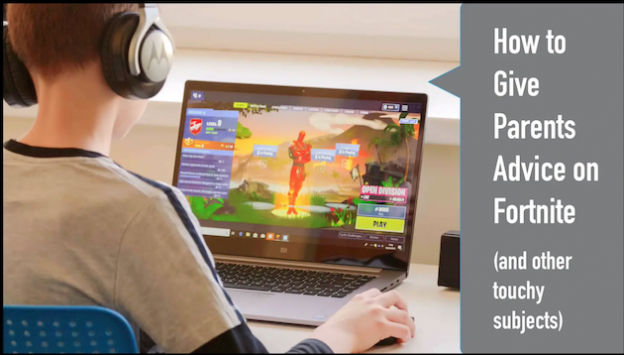
You would think that this coaching session would be just about Fortnite, but it’s really about how to address controversial subjects with parents.

Long after the popularity of Fortnite fades, the problem of talking about polarizing subjects with parents will still be an issue.  You can replace fortnite with curfews, whether teens should date, screen time, or whatever current hot topic is trending.  At some point we need to address these issues.  How do we handle it?

That’s what this coaching session covers from our coaching director, Jeremy Lee.

This session is an exclusive replay of a webinar, and the free resources mentioned in the webinar can be found in the minister toolbox or you can just go here.

More about Jeremy Lee:

Jeremy Lee is the founder of Ministry to Parents, co-author of Pass It On, and has more than twenty-four years of ministry experience. He is passionate about helping ministers create strategic plans for connecting with the parents in their church. He lives outside Nashville, Tn with his wife Elisabeth and two sons. You can contact Jeremy at www.ministrytoparents.com.


Inside The Teenage Brain (w/ Mark Oestreicher)

Do you ever wonder just what’s going on inside a teenager’s brain?  Well, we invited one of the smartest guys in youth ministry to help us understand the mind of a teenager.  Mark Oestreicher aka “Marko” founded the Youth Cartel and has authored or contributed to more than 60 books.

His session on mental adolescent development will not only encourage church leaders but parents as well.

More About Mark:

Mark Oestreicher has been involved in church ministry his whole life, particularly with teenagers and youth workers. Marko has had a broad experience working in churches in roles ranging from Junior High Pastor to Executive Pastor. For 11 years, Marko was at Youth Specialties in San Diego, an organization that trains and equips church youth workers – the last 8 of those years as president. Concurrently, Marko was also a part of the leadership team of Zondervan (Grand Rapids, MI).

Marko has authored or contributed to more than 60 books, including the much-talked-about Youth Ministry 3.0. Marko is a partner in The Youth Cartel, providing resources, training and coaching for church youth workers.

THE PROCESS OF PLANNING AN EVENT

MEMBERS ONLY ZOOM CALL- September 2019

We had a GREAT time the other day on the M2P Member Zoom Call!!

We talked about all things events, answered some really great questions and gave some exciting updates.

I’ve included a timestamp list below to help you skip to the parts that interest you:

1:20— We get things rolling and get the party started!

4:35— Jeremy starts the teaching part of the call on the “Event Planning Process”

5:27— Explanation of the “Task Dump”

8:27— Building an “Event Timeline” and practicing “Back Dating”

12:13— What are Milestones and why are they important?

14:56— Cheat Sheet: Summary of the teaching

16:17— Member Q and A

17:28— How do I get the video link for the Family Experiences? How do I use the Magic Button Site?

21:54— What’s the M2P Member FB Group?

23:18— How to roll out the Family Experiences in your church using a launch event.

31:09— How do I handle calling parents about Family Experiences without guilting them?

35:00— Why don’t you have a Baby Dedication milestone?

37:56— The parents in my ministry are busy and don’t want to hear from me, what do I do?

48:50— How to deal with the challenges of parents realizing it is their responsibility to spiritually lead their kids.

57:51— News and updates about M2P Member 🙂

Month 12

Helping Our Kids Play Well With Others

Email 1

Copy/Paste the following email:

Email 2

Copy/Paste the following email:

Video Script

As parents, we all think that our kids are amazing. However, I bet you can all think of a moment that your child had a meltdown at a playgroup or was less than charming in a moment you really needed them to behave. What can we do to encourage good behavior with other people? This month’s online parenting class is on playing well with others.

I dare you to think of a single playgroup you have been to when a child hasn’t come away crying. You can’t do it. Kids at this age, or any age for that matter, are just going to have disagreements and have trouble getting along. I can think of one time in particular that I had to leave a playgroup early with my child because the kids were arguing over toys more than they were playing. They just could not seem to get along no matter what we did. As a parent, these moments are mortifying. We see and know how good our kids can be at times and it is so frustrating to see them behaving badly with other children. We have all been there. However, don’t cancel all future playdates and rip up the preschool application. It is crucial for kids to have interaction with others. Studies have shown that social skills are a very important part of growing up. These days children are socialized very early in daycare or preschool. Playdates have become the norm in our society.

As parents, it is our job to teach our children how to interact with others. Children are naturally ego-centric. They are the center of their own little world. The preschool age is especially difficult because they haven’t yet learned what is appropriate behavior. Children this age have trouble playing well with others. By the age of two, it is common for children to act selfishly and to view the world exclusively through their own needs. Toddlers have very little self control or awareness of the feelings of others or the consequences of their actions towards others. At this age it is more common to see children playing alongside each other instead of truly interacting with each other. This is also the stage that acting out physically is normal. Pushing, hitting and snatching items from each other, usually followed by a scream or cry seems to be par for the course. Toddlers will respond with physical acts without realizing that they are hurting their friends. By the age of three, you will see more instances of playing together and pretend play. You will also get a more vocal reaction. This is the point that hurtful words will become common and you may have to diffuse arguments between kids. Their personalities are developed and it is easy to spot the natural leaders and the followers.

So how can parents help their children develop healthy social skills? Children need all sorts of play. They need play with parents, independent play and play with others. Kids must learn to interact with others in a healthy, positive and productive manner. Studies have shown that social development builds off of a child’s primary relationship, that being their parent or guardian. Children learn from what they are immersed in. They will model the type of behavior that they are most familiar with and see often. Loving, sensitive parents can be ideal social tutors. Kids will learn crucial skills just from playing with their parents. Research suggests that children whose parents frequently play with them have more advanced social skills and get along better with their peers. While playing you can model the kinds of behaviors you want them to show. Modeling positive social skills includes showing confidence when we relate to others: being friendly to strangers, offering to help others and treating others with respect. Teach your child that people are important. Don’t let them, intentionally or not, disrespect or belittle another person. Playing alongside your child also allows you to monitor how they play. You can get a sense of what their strengths and weaknesses are. You may realize that your child can tend to be a little bossy or naturally waits for others to initiate play. Knowing this about your child can help you to teach them what they can do to make social situations easier for them.

Be watching for our next parent email. We will give some usable examples of play situations you can implement at home and ways to diffuse those awkward social moments!

Weekly tweets from you to parents:

TIP: Choose a hashtag for your tweets and use it consistently. That will tell Twitter to store a list of your tweets on one place for later reference.

Tweet one: Children are naturally ego-centric. They need to learn to think about others as well. #urchurchparentministry

Tweet two: Romans 12:18 “If possible, so far as it depends on you, live peaceably with all”. #urchurchparentministry

Tweet three: Teach your child that people are important. #urchurchparentministry

Tweet four: Playing with others is an important way to learn social skills. How is your child playing? #urchurchparentministry

Tweet five: Kids need to play: Independently, with parents and with others. #urchurchparentministry

Tweet six: Model the behavior you want your kids to show. They are watching you for guidance. #urchurchparentministry

Tweet seven: Philippians 2:4 “Let each of you look not only to his own interests, but also to the interests of others”. #urchurchparentministry

Tweet eight: Don’t let your child’s behavior discourage you from setting up times for them to play with others. #urchurchparentministry

Tweet nine: Loving, sensitive parents can be ideal social tutors for your child. #urchurchparentministry

Tweet ten: Preschoolers have trouble separating feelings from actions. We must teach them appropriate responses to their feelings. #urchurchparentministry


Discipline

Dealing with a Rebellious Child

Email 1

Copy/Paste the following email:

Email 2

Copy/Paste the following email:

Video Script

Were you a rebellious child growing up? Did you talk back to your parents when they asked you to do something or set a new rule in place? Do you remember pushing back on your parents? We all would answer yes to one or all of these questions. We can all look back and think of a time when we were rebellious. If we can all remember a time when we were rebellious why do we enter parent freak out mode as soon as we sense our own kids being rebellious? Every child is going to go through seasons of rebellion so this month we want to help you know how to handle a rebellious child. Breathe deep, we are going to help you think through this issue and form a plan for helping your child!

When our kids are acting out in disobedience we often forget how much we love them and move quickly to try to fix them. Even though your child may be driving you crazy with their behavior, rebellious kids don’t need to be fixed, they need to be led. Dealing with outright disobedience is the parenting job we dread most. In part because most of us have no idea how to handle it, but also because decades of advice from parenting experts have both confused us and left us scared that we’ll somehow compromise our darlings’ burgeoning self-esteem if we react in the wrong way. But take heart. The fact is, dealing swiftly with a child’s misbehavior or rebellion—and doing so consistently—matters more than the details of your response. Confronting rebellion with consistency and consequences is the key to leading your child to a better place in following your leadership as a parent. You probably don’t connect leadership and parenting often but never forget you are the most influential leader in your child’s life and they will rise to the standard and expectations you set.

When you look at the stories of parents in the Bible you will be encouraged by your own parenting skills because many parents in the Bible were pretty miserable. There is one book of the Bible called Proverbs and it contains many wise sayings shared by a King named Solomon. One of those sayings is…

Proverbs 22:6 // “Train up a child in the way he should go: and when he is old, he will not turn from it.”

This is one of those moments where it’s clear that it is wise for Parents to lead their children. For all children, the way they should go is toward God but also they should follow our leadership because God has placed us in their life. The problem is most of the time kids will choose to push against us. We have to lead them to follow us. You do have to fight for a heart connection with your child, but you also have to choose to lead them because children need to be shown what matters in life.

The honest truth is that helping your child move away from a rebellious heart will not happen unless you lead them that way. There is no other way to guide a child in a new direction unless they are lovingly led that way. If this is an issue in your house get ready for more conflict before you have less conflict. The good news is that every child is waiting to be led and every child desperately needs boundaries because deep in their hearts they just need you to lead them.

Most parents I talk to think that rebellion is a season that will pass and that is just not true. A rebellious child who is allowed to reject their parent’s authority will continue to become more and more isolated and rebellious. This is not a season. This is a issue that you can lovingly guide your child through. Before we end this session let me give you a few ideas that we have found helpful…

    1. Pray for God to help you lead and help your child follow. // You don’t need to try to confront this issue alone. Why not invite God into the situation to help. Praying for your children is one of the greatest gifts you can give to your child. When things are difficult prayer will help center you on trusting God!
    2. Set boundaries and communicate them clearly and frequently. // You have to identify where the rebellion is most frequent and figure out what kind of behavior you expect from your child. You also have to communicate these expectations clearly and it may take several times to get your point across.
    3. Follow through. // This is the hardest part. Do what you say you are going to do and do not back down. Make your punishment for rebellious behavior something you will consistently follow through on, even when it’s not convenient.
    4. Stay calm and be consistent. // Try to remember that this is a process and also lead, don’t nag! Nagging is evidence that consistency is lacking. Don’t nag, say it once and enact consequences.

Ok, this is a start! Later in the month you will receive a follow up email giving you more practical advice on dealing with a rebellious child. Thanks for taking time to watch this online parenting class and know we are praying for you as you invest in your family!

Weekly tweets from you to parents

TIP: Choose a hashtag for your tweets and use it consistently. That will tell twitter to store a list of your tweets in one place for later reference.

TWEET #1-Why do we enter parent freak out mode when our children rebel? Did you ever rebel?! #itsnaturalpeople #urchurchparentministry
TWEET #2-Prov. 22:6 Train up a child in the way he should go: and when he is old he will not turn from it. #urchurchparentministry
TWEET #3-Kids want to be their own individual. Help them figure out how to do that sans rebellion. #urchurchparentministry
TWEET #4 –Rebellious kids don’t need to be fixed, they need to be led. #urchurchparentministry
TWEET #5-Nagging is evidence that discipline consistency is lacking. #don’tnag! #urchurchparentministry
TWEET #6-There’s no way to guide a child in a new direction unless they’re lovingly led there. #urchurchparentministry
TWEET #7-Discipline isn’t just changing behavior, it’s changing the heart. #urchurchparentministry
TWEET #8-Pray for God to help you lead courageously and your child to willingly follow. #urchurchparentministry
TWEET #9- Confronting rebellion with consistency and consequences will lead your child away from rebellion. #urchurchparentministry
TWEET #10- Praying for your children is one of the best gifts you can give your child. #bestgifts #urchurchparentministry

Character

Allowing Your Kid To Struggle

Email 1

Copy/Paste the following email:

Email 2

Copy/Paste the following email:

Video Script

I will go ahead and have a time of parenting confession. At times I am an overprotective parent.

I feel better just getting that out there, so now let me connect with other over protective parents watching this!

Anytime we take our kids hiking, camping, or to the lake with our family I am the parent looking out for all of the dangerous things that could possibly hurt one of our kids. I am the “be careful” police of our family and the honest truth is I have to be so very careful to not let that tendency bleed over into how I parent on a day to day basis. This month in our Online Parenting Class we are going to talk about how we can let our kids fail. I know you don’t read many book on this subject and maybe fail is too hard of a word but this month we hope we can all link arms together and find the freedom to at least not solve all of our kids problems and allow them to struggle!

Parents today are obsessed with affirmation and success when it comes to how they parent. We want our children to be encouraged, and we want them to succeed. Think about the culture our children are surrounded by. Every kid on the soccer or baseball team get’s a trophy just for trying. Every kid gets a ribbon at field day for just showing up. As parents we are fine with this because we do our best to help our kids succeed and feel affirmed. The question we have to wrestle with this month is when do we allow our children to feel the sting of failure while we are in their life to coach them through it?

Our generation of parents has created two new “kinds of parents” helicopter parents (those who hover around and swoop in at the first sign of trouble) and lawnmower parents (seek to smooth out every situation that could cause stress). We have all seen these parents but the reality is that we often give in to the trap of overprotection because we see everyone else going that direction.

I was reading a blog post on the Huffington Post recently and a writer was talking about this very issue. They said…

”There’s an old Chinese saying, “Failure is the mother of success.” You don’t have to look far in our culture to find celebrated examples of this very notion: Einstein is rumored to have flunked math for years; Steve Jobs was fired from the company he started, only to return a few years later and take Apple to new heights; Walt Disney himself was fired early in his career by a newspaper editor who told him that he “had no imagination and no good ideas.”

Failure can be a good thing in the life of your child because failure pushes kids to learn not to shape their identity and worth around their accomplishments. Failure pushes us to learn. Failure pushes us to seek advice from trusted voices. Failure even pushes us to trust God. Sounds crazy but listen to what one person from the Bible says in the book of Psalms…

Psalm 46:1 (NLT) God is our refuge and strength, always ready to help in times of trouble.
That is what failure is for our kids…it’s trouble…and God is there to help. I will never forget when my oldest daughter was struggling at school to run her timed mile in PE. She stressed over it. She cried. She was angry at that stop watch. She failed two times. Everything in me wanted to go to the school and step in for her but I didn’t. We prayed and she tried harder and she finally got it. I could have derailed a teachable moment by stepping in! Our tendency is to step in too early.

This month your assignment is simple. Evaluate your parenting and process if you are overprotecting your kids from failure. Later this month we will send you some practical advice on how to help your child fail well. But until then look for an opportunity this week to step back and not solve a problem for your child. We are praying for you as you work hard to be a better parent! You can do this!

Weekly tweets from you to parents:

TIP: Choose a hashtag for your tweets and use it consistently. That will tell twitter to store a list of your tweets in one place for later reference.

TWEET #1- When do we allow our children to feel the sting of failure while we are in their life to coach them through it? #urchurchparentministry
TWEET #2- Failure pushes kids to learn to shape their identity and worth around their accomplishments #urchurchparentministry
TWEET #3-Can children really BE anything they want to BE? #createdforpurpose #urchurchparentministry
TWEET #4 –A helicopter parent is one who constantly hovers around their child and swoops in at the first sign of trouble. #urchurchparentministry
TWEET #5- Have you had an opportunity this week to NOT save your child from failure? #urchurchparentministry
TWEET #6-A lawnmower parent is one who always wants to smooth things over so their children don’t experience the rough parts of life. #urchurchparentministry
TWEET #7-Jesus said HIS strength is made perfect in weakness, and Paul concluded he would boast in His weakness. #urchurchparentministry
TWEET #8-Famous old Chinese proverb, Failure is the mother of success. Parents, allow failure! #urchurchparentministry
TWEET #9- Success isn’t final, failure isn’t fatal; it is the courage to continue that counts-Winston Churchill#urchurchparentministry
TWEET #10-Are we content with hardships and failure, allowing to be strong in weakness? 2 Corinthians 12:10 #urchurchparentministry