Author Archives: Jeremy Lee

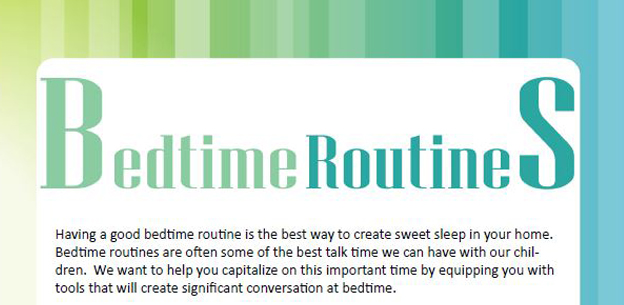
Bedtime Routines

What is It?

Bedtime Routines is a pdf document that gives parents some creative ways to pour in to their kids and cultivate a relationship with them as their kids get ready for bed. It teaches them ways to spiritually lead their child and to start great routines that center around Jesus.

How do I use it?

This is a pdf document that you can email out to your parents, upload it to your website so they can download it, or print if off for the low-tech parents in your ministry. Or you can even use this as a teaching point to have a class on ways to spiritually invest in your children for your parents. However you choose to use it, I am sure that your parents will be encouraged by some new ideas and ways to spiritually lead their children.

Download Now

Month 11

Helping Our Kids Deal With Emotions

Email 1

Copy/Paste the following email:

Email 2

Copy/Paste the following email:

Video Script

There is a song that says “into each life a little rain must fall”. It is inevitable that we have bad days to go along with the good and unfortunately, this holds true for our kids as well. As adults, we can have a hard time dealing with our emotions and finding healthy ways to express our feelings. It is even more difficult for children to deal with these things. Our parenting class this month is on helping our child deal with their emotions.

No matter how protective of our children as we may be, our kids will experience pain, sadness, frustration and anger. Working through different emotions can be hard or scary for a child who isn’t sure what they are feeling. It is our job as parents to help our child to navigate the waters of emotion regulation, which is being able to think about how to cope with feelings. Even at a young age, we can help our child to understand what different emotions are and what are the best ways to express these feelings. Emotion regulation is essential for children’s overall well being. We want our kids to have feelings, but to not be overwhelmed by them and unfortunately, mood swings are just a part of growing up.

The preschool age is tough because they are beginning to understand different emotions but they have difficulty regulating them and using the appropriate labels to describe what they are feeling. This age also has difficulty separating feelings from actions. If they feel something, they express it. If they want something that someone else has, they try to take it. If they feel anger, they may resort to hitting. It is very common for preschoolers to use physical means instead of using their words. Teaching children appropriate ways to express their emotions is an important milestone in their development.

One of the first things that you can do to help your child is to teach them how to identify feelings. Teach them the names of emotions. Tell them, “You are feeling scared right now.” or “I know that you are very angry.” Use appropriate labels like happy, excited, sad, mad. This will allow them to identify emotions later. Simply telling a child to calm down or stop crying is not an effective way to help them through emotional stress. You must acknowledge what they are feeling, no matter how unreasonable it may seem in the moment! No matter what, do not belittle your child or make light of their feelings. This will only embarrass your
child and build a wall between you.

Teach your child to use their words. Once you name their feelings, give them the chance to tell you what they are feeling. The situation may seem silly to you, but to them at that moment, it is very real and serious. Studies have shown that kids whose parents talk to them about emotions have better social skills as they get older. You are opening the door for communication between you and your child. If they feel comfortable coming to you and expressing themselves from an early age, the more likely they are to continue that as they grow older. Giving your child permission to feel and express their emotions helps them to feel safe and secure. Think about when you are going through a rough time. Sometimes it makes a world of difference to be validated and know that someone else has been where you are. It is no different for our kids. It helps to know that we aren’t alone in what we are feeling.

Books are a great tool in helping to deal with our feelings. When reading with your child, point out the different emotions that are happening in the story. Show them examples of positive and negative ways the characters are dealing with feelings. Maybe your child would feel comfortable drawing a picture of how they feel. These are ways to start communication, even at an early age.

Growing up is tough. there is something new every day that our kids experience and learn. Starting at the preschool age, showing them good ways to deal with their feelings, will only be beneficial for them as they get older. Be watching for our next parent email. We will talk about different emotions that children experience and some good ways to help them deal with those feelings.

Weekly tweets from you to parents:

TIP: Choose a hashtag for your tweets and use it consistently. That will tell Twitter to store a list of your tweets on one place for later reference.

Tweet one: Validate your child’s feelings. Let them know they are not alone. #urchurchparentministry

Tweet two: 1 Peter 5:7 Give all your worries and cares to God, for He cares about you. #urchurchparentministry

Tweet three: Emotion regulation is essential for a child’s well being. How does your family deal with emotions? #urchurchparentministry

Tweet four: Be a positive role model on how to express emotion. They will model what we show them. #urchurchparentministry

Tweet five: Incorporate daily prayer time with your child. Show them how to talk to God about their daily blessings and sorrows. #urchurchparentministry

Tweet six: Use appropriate labels for emotions that your child will understand. #urchurchparentministry

Tweet seven: By the age of three, children understand the emotions they are feeling, but not how to control them. #urchurchparentministry

Tweet eight: Don’t wait for traumatic events to happen to begin talking with your child about their feelings. #urchurchparentministry

Tweet nine: James 1:19 Understand this, my dear brothers and sisters: You must all be quick to listen, slow to speak and slow to get angry. #urchurchparentministry

Tweet ten: Preschoolers have trouble separating feelings from actions. We must teach them appropriate responses to their feelings. #urchurchparentministry

Bedtime

How to Handle Bed Time without a Fight

Email 1

Copy/Paste the following email:

Email 2

Copy/Paste the following email:

Video Script

When we think of bed time we usually think of preschoolers and bed time stories and all of the horror stories that come with trying to convince our 2 year old they need to stay in their bed. What we have found over the years as our children have grown older is that fight to get kids to get the sleep they need is an ongoing battle for most parents. It’s been a struggle in my family and I bet it’s been the same in your home because the excuses get even more complicated in 3rd grade. This month we want to help your family face the battle of bed time without a fight.

As parents we never go through sleep training. Fighting the bed time battle is something every family tends to tackle on their own while secretly Googling advice online every night. No matter your routine it’s important to first understand that God created us to sleep. Slow down and think about that. God created you to spend almost one third of your life with your eyes closed and your mind shut off for the world so that you could be prepared for the two thirds of your life you are awake. There is a modern theologian you may have heard of named John Piper and he wrote an article called the Theology of Sleep on his blog and I want to share a section of it with you as you think about the importance of sleep for your child…Dr. Piper says…

We sleep a third of our lives. Just think of it: a third of our lives spent like dead men. Just think of everything being left undone that could be done had God not designed us to need sleep. There is surely no doubt that he could have created us with no need for sleep. Psalm 127:2 says, “It is in vain that you rise up early and go late to rest, eating the bread of anxious toil; for he gives to his beloved in his sleep.” According to this text sleep is a gift of love, and the gift is often spurned by anxious toil. Peaceful sleep is the opposite of anxiety. God does not want his children to be anxious, but to trust him. Therefore I conclude that God made sleep as a continual reminder that we should not be anxious but should rest in him.

With parents working long hours, schedules packed with school, after-school activities, and other lifestyle factors, naps are missed, bedtimes are pushed back, mornings start earlier and nights may be anything but peaceful. Many times the only reason they are out of control is we have never made them a priority in our homes. Rest is not something we see as a value in our society so in our homes we tend to push it to the background. Changing that rhythm in your home starts with embracing the reality that God created sleep and gives us permission to make it very important in our homes.

If bed time is filled with tension in your home we want to help you find peace in that part of your life this month. Good parenting starts with intentional planning and changes so start with thinking about these concepts for bed time.

Structure Leads to Security
The structure of bedtime routines also associates the bedroom with good feelings and provides a sense of security and control. Your bed time routine has the potential to remind your child every night they matter and God is with them!

Routines Eliminate Stress
Routines can take the stress out of bedtime and help make it a special time, especially if you have more than one child. Less bed time drama also helps you parent better because you are not tense because you have quiet time coming when the kids are in bed. Routine is also your reward!

Consistency & Boundaries Matter
Kids will always have that one last thing — kisses, hugs, a drink of water, using the bathroom. They can be quite inventive. Do your best to anticipate all this and get it done before getting in bed. And let your child know that once they are in bed, they have to stay in bed.

If you want to set your child up for success then leverage bed time and sleep in your home. Later this month we will send you part 2 of this online parenting class with some helpful practice to take the fight out of bed time. Don’t “sleep” on this value in your home and know we are praying for you as your parent your child this month!

Weekly tweets from you to parents:

TIP: Choose a hashtag for your tweets and use it consistently. That will tell twitter to store a list of your tweets in one place for later reference.

TWEET #1-God created us to spend 1/3 of our life asleep. Rest is good for the soul. #urchurchparentministry
TWEET #2- Sleeping well increases brain power just as weight lifting builds stronger muscles. #urchurchparentministry
TWEET #3-For another bedtime routine idea check out Parenting with Love and Logic. #urchurchparentministry
TWEET #4 –A healthy view of sleep embraces the reality that God created sleep & gives us permission to make it important in our homes. #urchurchparentministry
TWEET #5- Light from TVs and other devices interferes with the production of melatonin, turn off devices 2 hours before bedtime. #urchurchparentministry
TWEET #6-Psalm 127:2 God grants sleep to those He loves. #urchurchparentministry
TWEET #7- What steps are you taking to develop a bed-time routine in your home? #urchurchparentministry
TWEET #8-Sleep is just as important as nutrition and exercise. SLEEP WELL! #urchurchparentministry
TWEET #9-What are you doing to take the battle out of bedtime? #urchurchparentministry
TWEET #10- Shakespeare: We are such stuff as dreams are made on, and our little life is rounded with a sleep. #urchurchparentministry

Month 10

Tips to Help Single Parents

Email 1

Copy/Paste the following email:

Email 2

Copy/Paste the following email:

Video Script

We all know how difficult parenting can be. Articles and the pros will tell you how important it is for parents to work together and be a team. But what about those parents who do it alone? This month we are going to talk about the difficulties of being a single parent.

Now, you may be happily married and think, “I don’t need to hear this because this topic doesn’t apply to me”. Take a moment and think about your family and friends. Chances are, there is a person who comes to mind who is parenting on their own. Maybe, your child’s best friend only lives with one parent or your next-door neighbor is a single parent. Ultimately, we are all touched by this topic. Studies have shown that there are 13.7 million single parents in the United States and those parents are responsible for raising over 22 million children. Half of those families are due to divorce, but another increasingly large group live with single parents who were never married or involved in a long-term relationship. A smaller number of children have widowed parents. Whatever the cause, there is a higher number of single parent families in our country than ever before and that means all of us are touched by it in one way or another.

Single parenthood is not easy, for parents or children. It can mean less income to support the family. If you can’t arrange or afford childcare, keeping a steady job can become difficult. Single parents can feel isolated and alone without another person to share the daily tasks of raising a child and maintaining a home. Parents can easily become tired and distracted to be as consistent with discipline and rules as they need to or would like to be. Any of these sound familiar? We would like to offer some suggestions that may help you meet some of your needs while still providing your child with what they need as well.

Take advantage of all the resources you can in finding childcare for your child. Ask around with people you trust. What did they do? Do they have any recommendations? 6 out of 10 families use a day care center. Ask lots of questions about their practices. What are their goals, requirements for staff, class ratios, costs? Ask to tour their facility. First impressions can tell you a lot. Take care of yourself, for your sake as well as your child. I’m not saying regular days at the spa, but just see to basic needs. See a doctor regularly, pay attention to what you are putting in your body, and attempt to get plenty of sleep. You are also setting the standard of what your child thinks is healthy behavior.

Set firm but reasonable limits and rules for your children and don’t be afraid to enforce them. Having clear rules to follow help children to know exactly what is expected of them and what behavior will not be tolerated. Do what you can to create a support system for yourself. Do you have family nearby? Friends from work or church? These are your support system people. You cannot be afraid or unwilling to accept or ask for help. If someone offers to help, take them up on it! If nothing else, you need someone you can call if an emergency comes up.

As overwhelming as it can be at times, there can be some benefits to being single. You can raise your child according to your own beliefs, principles and rules. Single parents often develop extremely close bonds with their children. Many children in single parent households may become more independent and mature because they have more responsibility within the family. Don’t let yourself get caught up in couple envy thinking that things would be better or easier with a partner. This could be true in some instances, but the truth is that there are problems with married couples too! The current divorce rate is proof of that. Maybe you aren’t a single parent, but often a solo parent. These are the parents whose partner travels often for work, works odd hours or is in the middle of a military deployment. Some of these suggestions can also hold true for you.

Isaiah 41:10 says “Fear not for I am with you; be not dismayed, for I am your God; I will strengthen you, I will help you, I will uphold you with my Righteous right hand.” Cover your family in prayer and ask people you trust to pray for you and your family. Don’t
neglect your spiritual walk in the middle of your busyness.

Be watching for our next email. We will dig deeper into these suggestions with practical tips and also give suggestions about how you can reach out and help single parents you may know in your life. After all, we all need to work together.

Weekly tweets from you to parents:

TIP: Choose a hashtag for your tweets and use it consistently. That will tell Twitter to store a list of your tweets on one place for later reference.

Tweet one: Building a community can provide emotional support and a sense of belonging. #urchurchparentministry

Tweet two: Jeremiah 29:11 says, “For I know the plans I have for you, declares the Lord, plans to prosper you and not to harm you, plans to give you hope and a future.” #urchurchparentministry

Tweet three: There are nearly 14 million single parents in the U.S. How does it affect you? #urchurchparentministry

Tweet four: Seek out positive role models to have around your children. They can benefit from these people in their lives. #urchurchparentministry

Tweet five: Find time each day for your child. Make sure they know they are your top priority. #urchurchparentministry

Tweet six: Ask people you trust to pray for you and your child. #urchurchparentministry

Tweet seven: Set aside one night a week for no chores or work and focus on yourself. We all need a little ”me time” to make us better parents! #urchurchparentministry

Tweet eight: Learn to say no. Do not over-extend yourself to the detriment of your family. #urchurchparentministry

Tweet nine: Join forces with other families in similar situations to yours. They know what life is like for you. #urchurchparentministry

Tweet ten: Be willing to accept help. No one can do everything all by themselves! #urchurchparentministry


Technology

Keeping Our Children Safe Online

Email 1

Copy/Paste the following email:

Email 2

Copy/Paste the following email:

Video Script

Parenting has always been hard, but parenting in the digital age where we are all connected brings a whole different level of challenge. For the first time in history the world is as close as our kids’ iPod touch, thanks to the internet. This month’s online parenting class is one every parent in America needs because this month we are going to process how we can keep our kids safe online. We’re not just talking about the computer anymore. Online safety reaches all the way from the laptop kids can take to their rooms, to the Nintendo DS, Playstation, Xbox, and tablet they have to occupy their time when you travel. You can’t hide from the online threats that are out there facing your family even if they come through the online access your kids’ friends have.

There is a tendency for us as parents to see a threat and then try to shield our children from harm or shut it out of their lives. The problem with protecting your kids online and shutting that threat out is that our lives are intertwined with it. Our internet bill at home is just as critical as our water bill…we use it all the time. Our children need it in almost every aspect of their education, even if you homeschool. Protecting your child online means that you choose to guide them toward healthy use of the internet and you have to guide them.

Right now let’s start with why protecting your child online matters. I know Jesus did not face this issue, but he reveals a principle that can help us with this issue. What we see, hear, and experience shapes how we think and the choices we make, and the internet is a primary path of learning for us now. Even as adults when we have a problem we run to YouTube for help videos. What kids see online shapes their hearts and here is what Jesus had to say about the heart. This passage is a little intense, but I want to share it with you. Jesus knew we had to guard our hearts, and He told His followers…

Matthew 15:18-19 (NLT)
18 But the words you speak come from the heart—that’s what defiles you.
19 For from the heart come evil thoughts, murder, adultery, all sexual immorality, theft, lying, and slander.

That’s intense, but let’s connect the dots here. If bad things can flow from the heart then good things can also flow from the heart. Jesus taught that before we choose a bad action, that bad action brews in our heart first. The choices we make are shaped by what our heart has been shaped by. If we could just sit down and have coffee with Jesus I know he would push us as parents to make sure we protect what our kids’ hearts are exposed to because that is going to shape the choices they make. The pressure comes in the reality that you are the guardian of your child’s heart.

This week your job is to ask yourself this simple question. What steps are you taking to protect your child online? This month we will follow up with some practical advice on how to make that happen. Some of you might ask what am I protecting them from. Well, WebMD has already helped us some here. Recently they shared 4 big potential online threats to all our kids. These threats were

  1. Cyberbullying – so many times our kids are being bullied behind a screen and sometimes our kids are the bullies!
  2. Sexual Predators- people who would like nothing more than to harm our kids have access to our kids when we don’t help protect them online.
  3. Pornography- We always think this will impact some other kid, but it’s a threat to every child! The typical child with no online guidance is experiencing pornography by the age of 8.
  4. Damaged reputations- We have to help them THINK BEFORE they post. Once it’s on the web it’s freely accessible. Kids with no guidance share things they should not share.

We know this topic is difficult but we believe you are called to help guide your kids to healthy online lives. In the coming weeks look for part 2 of our online parenting class with some practical tips of what to do next!

Weekly tweets from you to parents:

TIP: Choose a hashtag for your tweets and use it consistently. That will tell twitter to store a list of your tweets in one place for later reference.

TWEET #1- Protecting your child online means that you choose to guide them toward healthy use of the Internet. #urchurchparentministry
TWEET #2-Begin the process of discussing online safety with your child as soon as they start using the Internet. #startearly #urchurchparentministry
TWEET #3-Your child’s first line of defense when it comes to online safety is YOU! #urchurchparentministry
TWEET #4-When it comes to online safety, you are the guardian of your child’s heart. #urchurchparentministry
TWEET #5-Good piece of online advice, if you wouldn’t do it face to face, don’t do it online. #urchurchparentministry
TWEET #6- Galatians 5:16, Walk by the Spirit and you will not gratify the desires of the flesh. #urchurchparentministry
TWEET #7-Dave King, CEO of Digitalis says of allowing children on the Internet, “Never, under any circumstances browse unaccompanied.” #urchurchparentministry
TWEET #8-1 in 8 online searches is for erotic content. Know what your child is looking at online. #urchurchparentministry
TWEET #9-79% of youth’s unwanted exposure to pornography takes place in the home, safeguard your home. #urchurchparentministry
TWEET #10-Most people don’t really want freedom, because freedom involves responsibility, and most people are frightened by responsibility.#urchurchparentministry

Word For The Year

What is It?

This is an activity for families to do together to give purpose to their year. Families choose a word that represents what kind of family they want to be for the year. It is a great way for families to find purpose and mission for their family.

How do I use it?

This is a pdf that you can give away to your families for them to do as a family. You can send it as an email attachment, post it to your webpage as a download, or print them off and hand them out on a Sunday morning. I hope they will be blessed by this activity!

Download Now

Month 9

Help your child to form healthy habits for the New Year!

Email 1

Copy/Paste the following email:

Email 2

Copy/Paste the following email:

Video Script

Happy New Year! Hopefully by now you have recovered from the holidays and are ready to start 2015 off with a bang! Anytime you hear about the New Year it is almost inevitable that you will hear something about New Year’s Resolutions. Television and magazines are full of articles and reports about losing weight, quitting smoking or having a new attitude about money. All of these things are great, but we want to encourage you to include something else this year. Make a promise to yourself to help your children establish healthy habits too. Now, your little one may be a bit small to be making resolutions, but it is never to early to help set the standard for them.

Early childhood is a time when habits can be formed that can affect them for the rest of their lives. As their parents, it is our responsibility to teach children how to lead healthy lives. We can do everything for them for only a little while. So what are some lessons that we can teach our preschoolers about being healthy? Sometimes it feels like kids this age always have some kind of cold or bug going around. This is a great time to teach about washing your hands. If you wash correctly, you can reduce the number of cold, flu and other infections by around 50%! That’s a lot of runny noses and coughs! Teach your kids to wash hands several times a day but especially before eating, and after playing outside, sneezing or coughing and especially after going potty. Another easy way to keep germs at bay is to show kids how to cover their mouth when they cough and to sneeze into their elbow. 80% of germs are transferred by touch when they have been spewed out into the air.

Let’s talk about food for a minute. I have yet to meet a child this age who isn’t somewhat of a picky eater. It is hard to get children to eat healthy when all they want is chicken nuggets and macaroni and cheese! Plan your dinners out in advance. Many times the question of “what’s for dinner?” can lead to less than nutritious last-minute meals. Planning them out can take lots of stress off us parents. Make sure that you don’t forget about breakfast. That helps set the tone for our whole day. You can’t expect your kids to make it through their day on an empty tank. Your kid won’t touch veggies? Experiment with different dips. Dressing, hummus or salsa can make plain vegetables much more interesting. Cut back on the amount of junk food in your home. You are in charge of what kinds of food come into your house. If you don’t want your kids to eat it, don’t buy it!

It may seem like at this age that our little ones never slow down. However, we still need to show them the importance of being physically active. Television isn’t a bad thing, in moderation. The last thing you want is a preschool couch potato! Limit the amount of tv your kids are watching and encourage them to play. Regular exercise leads to strong muscles and bones, better sleep patterns and helps to manage weight. Introduce them to a variety of different activities so they can find a favorite. It will be much harder to get them moving when they are older if you don’t do it now.

These are only a couple of the many ways we can teach our children to set healthy habits in their life. Above all, be a positive role model for your child. You can’t expect them to try things that you aren’t willing to do yourself! Don’t be a hypocrite. Your kids will notice if you are being physically active and what you are eating. They want to be just like you.

Be watching out later this month for our next parent email. We will share more tips for kicking off the New Year in a healthy way!

Weekly tweets from you to parents:

TIP: Choose a hashtag for your tweets and use it consistently. That will tell twitter to store a list of your tweets in one place for later reference.
Tweet One: Habits formed during childhood can affect them throughout their lives. Help them form healthy habits. #urchurchparentministry
Tweet Two: Proverbs 22:6 Train up a child in the way he should go and when he is old, he will not depart from it. #urchurchparentministry
Tweet Three: Help your child understand why healthy habits are important. If they understand why they should do something, the more likely they are to do it.#urchurchparentministry
Tweet Four: 70% of obese children grow up to have weight issues as adults. Is your child equipped to make healthy food choices?#urchurchparentministry
Tweet Five: The AMA recommends that children ages 2 and older have at least 60 minutes of moderate intensity physical activity a day.#urchurchparentministry
Tweet Six: Your children will pick up your habits, both good and bad.#urchurchparentministry
Tweet Seven: Be a model. Show your children what they should do.#urchurchparentministry
Tweet Eight: Enjoy regular dinners as a family. It will help strengthen the family bond and encourage positive relationships. #urchurchparentministry
Tweet Nine: Choose rewards for your child that match the habits you want to form. #urchurchparentministry
Tweet Ten: It takes 21 days of doing something continuously to make it a habit. What healthy habits can you make? #urchurchparentministry