
Author Archives: Jeremy Lee
Shame
Combating Shame
Email 1
Copy/Paste the following email:
Subject Line: Combating Shame, Part One
Hello!
As Christian parents, I’m sure one of your goals is to raise children who can stand firm in a world that is surrounded by darkness. But it’s tough! Let’s face it. The world is, quite simply, not nice. People are lost, and lost people are raising kids. These kids are in your kids’ social circles. And sometimes this means they will act in a way that does not build up other children, including your children.
Your work is cut out for you.
We are here to help. This month’s Online Parenting Class video is about Combating Shame. If you think your child is believing the lie that they are a failure, are not good enough, or are a “bad person,” don’t wait to intervene. Phrases you might hear sound like, “I’m no good at anything,” or “I’m such a bad girl.” One of the most important jobs you have as a parent is to be in tune to your kids’ emotions and to step in when something is awry.
Intently listen to where these false beliefs might be stemming from, and take appropriate steps to address those who might be speaking untruths to your child. Then, make sure to constantly and consistently “fight back” by lovingly teaching your child truth. Help them to understand that sometimes they might not choose the best behavior, but that doesn’t mean they are a bad person.
I’m praying for you and trusting God is meeting you each day as you strive to “train up [your] child in the way he should go” (Psalm 22:6). Press on!
https://vimeo.com/parentministry/review/224799007/8e4b7fdef6
Your partner in parenting,
Children’s Pastor
Email 2
Copy/Paste the following email:
Subject Line: Combating Shame, Part 2
Hi there!
We are talking about Combating Shame in this month’s Online Parenting Class video.
Consider the following. Mitch Abblett writes, “A 2011 study in Psychological Bulletin by researchers at Syracuse University and St. John Fisher College indicated a link between peoples’ experience of shame and symptoms of major depression and a stronger link for shame than for guilt. Pervasive negative emotions like shame have also been associated with inflammatory conditions such as coronary artery disease. Shame not only hurts, but it also damages.”
For this reason, it’s critical that parents learn to discern if their child is experiencing shame, even at an early age. Pay attention to their demeanor. Has their personality changed? Have they grown quiet? Do they complain about headaches or tummy aches? Perhaps the root of the problem could be that they are experiencing the powerful emotion of shame.
This feeling of shame could be coming from how your child’s peers talk and relate to your son or daughter. Or—and this takes a willingness to evaluate yourself—it could be the way you talk to and discipline your kids.
Be honest with yourself. Ask yourself how you talk to your kids. Notice the difference between the following two corrective sentences:
1. Sue, how could you write on the table with a sharpie? You clearly weren’t using your head!
2. Sue, sharpies leave permanent marks. If you want to color, let’s choose a pen that won’t stay on wood forever.
The first phrase demeans the child as a person. Hearing these words might make the child feel like they are a dumb person. However, the second phrase teaches the child about the permanence of Sharpie markers to help them make a better choice the next time they want to color. Yes, you might have to swallow the fact that your new table is ruined. However, speaking this way does not attack who the child is as a person.
Above all, ask God to help guard your words. Ask Him to help you pause before speaking to your child when disciplining with your words. The psalmist wrote, “Set a guard over my mouth, LORD; keep watch over the door of my lips” (Psalm 141:3).
Press on in your work in parenting. I know it’s not easy! My prayer for you is that you do not feel alone in your parenting. I’m available if you have questions or need support as you continue on this journey of parenting—a high calling from God!
Standing firm with you,
Children’s Pastor
Video Script
Combating Shame
On one especially tough day, I was putting my son who has been diagnosed with ADHD to bed. I can not count the number of times I had to tell him “No.” “Stop That.” “Please Don’t Do That.” We were all exhausted. When I went to put him back in bed for the second time that night, he was in tears and I was angry. I was so done with this day. So done. But my son needed me. I needed the couch and some hot coco and a show to veg on. But he needed me. I stood in the doorway of his room and I knew I had two choices. I could kiss him goodnight and go to my couch or I could sit with him, and ask him some questions about what he was thinking. The latter was the more difficult. It required parenting I did not want to give after a long day. But it was also, the choice that would open my eyes to the shame he was feeling and the power I had as his mom to speak truth to it.
Many of us have seen this scenario play out in our children. They have failed and they are remorseful and they turn their remorse into themselves. They hear a critical voice in their head that tells them they are a “Screw Up.” “They can’t do anything right.” “They will never succeed.” “They are not loveable.” These voices are not foreign ones. Many of us as parents hear them as well. How do we fight these inner voices in our children that lie about their value and steal their joy? How do we help our children who are steeped in shame, come out of self-pity and into spiritual and emotional growth?
First and foremost I do not say this lightly but I am asking you to Pray. Pray and ask the spirit to guide you as you seek to uncover what is going on in your child’s heart and mind. This is something that can not be forced or pushed but when we are given a window and we are willing to risk ourselves and our pride, the Lord can do powerful things in combating lies in our children’s hearts about their worth and value.
Second, when you feel the desire to pull away. To not deal. To hide or to sweep things under the rug, instead, lean in. Breath. If you must, take a minute to collect your thoughts but lean in. Do not ignore it. Don’t shove your feelings down. Don’t excuse yourself or them. Lean In. Ask questions. Make space for communication. Give them space and time as well but make yourself present. Available. All Ears. All In. Ask questions. Ask Jesus to give you good questions to ask. You can not fight lies in your child’s head if you don’t know they are there, and nine times out of 10 they will not tell you unless you ask. They sometimes don’t even know at first and it isn’t until the conversation begins to unravel that they figure it out.
Third. Give your children words for how they think and feel. My kids are younger so they may need this more than older children but we have described “The Inner Voice” as the Voice of the enemy who wants them to believe lies about themselves. That God wants them to know and believe Truth about themselves and that when they believe Truth they have the Power over the pain inside of them. If they are older, you might want to see how much they know and understand about the word “Shame” and how that plays out in their own life and relationship with God and other people.
These are hard things. They require us to be intimate with our children. What I mean by that is, it requires us to sacrifice our desire to run from pain and instead embrace it with our children. This is Empathy and it is a tool, a weapon God has given us to combat Shame. It also requires us to share with our Children our own pain, fear and tendency to hear our own “Inner Voice” that tells us lies about who we are. I have told my children that although I know it isn’t true, I often hear the voice that I am not a good mom, and I have to tell someone I trust about the voice I hear, and that someone reminds me of the truth about myself and what God says about me.
In this way we model for our children, Transparency, Vulnerability and Empathy. We model that its ok to admit we fear, and it takes courage to voice that fear, and we have the power to choose truth over fear.
You are not alone in these things. The spirit is with you. It is also important to find people around us who are also walking this path. People we can trust not to judge us, but to listen and pray for us, as we seek to be instruments of healing for our children. May the Spirit reward you greatly as you do this work Parent Warriors.
Texts/Tweets
TIP: Choose a hashtag for your tweets and use it consistently. That will tell Twitter to store a list of your tweets on one place for later reference.
Tweet One: Don’t attack your child as a person; discipline the behavior. #shamedamages #fightback
Tweet Two: Love your child enough to critique your parenting. #shamedamages #fightback
Tweet Three: Shame not only hurts; it damages. #shamedamages #fightback
Tweet Four: Are your words demeaning your child? #shamedamages #fightback
Tweet Five: Tune in to your kids’ emotions and to step in when something is awry. #shamedamages #fightback
Tweet Six: Your child’s mistakes do not define them. Do they know that? #shamedamages #fightback
Tweet Seven: Grace means that your child’s mistakes serve a purpose; they do not serve shame. #shamedamages #fightback
Tweet Eight: Jesus does not shame . . . nor should we. #shamedamages #fightback
Tweet Nine: Set a guard over my mouth, LORD; keep watch over the door of my lips. — Psalm 141:3 #shamedamages #fightback
Tweet Ten: Let grace abound in your parenting (Romans 5:20). #shamedamages #fightback
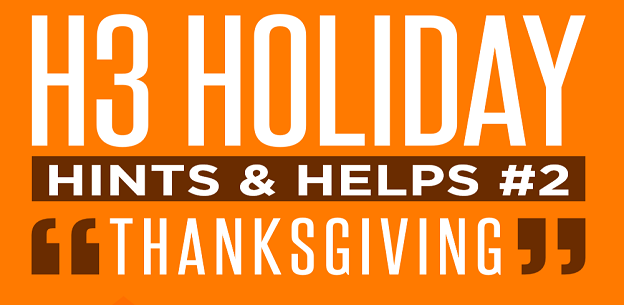
Holiday Hints & Helps: Thanksgiving
What is It?
This toolbox resources is a guide to help parents connect with their child during a special holiday season. It provides ideas for them to use that focus on building their relationship with their child by utilizing these helpful and easy to implement ideas.
How do I use it?
This is a pdf so you can:
- distribute it to your parents how you normally do through email
- download or print it and hand it out to your parents
- distribute in a small group setting
Download Now
The Teen’s Guide to Social Media & Mobile Devices by Jonathan McKee
Emotional Health
Parenting Yourself
Email 1
Copy/Paste the following email:
Subject Line: Parenting Yourself, Part One
Hi there!
This month’s parenting video features a unique topic: Parenting Yourself so that you can be a better parent to your kids. Does it seem a little strange to receive information on how to parent yourself? The truth is, we never stop learning and growing, and sometimes parents need to be “parented” a little—especially because no parent was parented perfectly themselves.
Above all, it’s important to know that though you might sometimes fail as a parent, you have the perfect Father in heaven who has always been good to you. He loves you and fights for you, and has good plans for you. Consider just a few Scriptures that speak to this indescribable love:
A Father to the fatherless, a defender of widows, is God in his holy dwelling. God sets the lonely in families, he leads forth the prisoners with singing.
— Psalm 68:5-6)
O Lord you are our Father. We are the clay, you are the potter; we are the work of your hands.
— Isaiah 64:8
Look at the birds of the air; they do not sow or reap or store away in barns, and yet your Heavenly Father feeds them. Are you not much more valuable than they?
— Matthew 6:26
If you then, though you are evil, know how to give good gifts to your children, how much more will your Father in heaven give good gifts to those who ask him!
— Matthew 7:11
In these four verses we learn some profound aspects of God the Father’s love. He defends those who are defenseless. If you came from a family where you were fatherless, God is not unaware. He is your Father, and He will defend you. God is also the potter, the One who is intimately aware of your life, your family, your struggles, and your joys. He is creating something beautiful in you and will use you for a profound purpose. God the Father is your provider. He cares for the birds—and how much more valuable are you than a bird! And finally, when you approach Him with your needs—for parenting, for provision, for protection—He will answer.
What is the lesson from these verses? Before you worry about how to parent your kids, seek the Father and allow Him to be your parent, your loving Father who provides, protects, plans, and gives generously. When you know God in this way, you will be better able to parent your child in a godly way that reflects the Father.
We sure hope this Online Parenting class has been helpful and thought provoking (Heb. 4:16). In the next email, I’ll offer some practical suggestions for how to “parent yourself.” I’m here to help you, too! Don’t hesitate to email!
https://vimeo.com/parentministry/review/224799648/2d053d7a41
Your partner in parenting,
Children’s Pastor
Email 2
Copy/Paste the following email:
Subject Line: Parenting Yourself, Part 2
Hi there!
We’ve been talking in this month’s Online Parenting Class about Parenting Yourself so you can be a better parent to your child.
Bryant McGill wrote in his book Simple Reminders: Inspiration for Living Your Best Life, “Taking care of yourself is the most powerful way to begin to take care of others.” What a powerful statement!
Commit to taking care of yourself, so you can be the happy, patient, encouraging parent your child deserves. That means integrating daily self-nurturing into your life. The following are just a few ideas of how to do this:
• Go to bed earlier so you’re better rested. This is probably one of the hardest things to be disciplined about, especially when you have young children. However, research has shown the direct connection between sleep and good health—not to mention, the ability to think clearly and calmly.
• Eat healthy to maintain your mood. Like sleep, the food you choose to eat can either help your moods, attitudes, and energy level, or deplete them.
• Commit to managing yourself. When your emotions are dysregulated, you’re in fight or flight mode, and your child looks like the enemy. Calm yourself before you engage with your child.
• Slow down your pace. Say “no thanks” when you are asked to take on one more commitment when you are already overwhelmed (and leave guilt at the door). If you need to slow down, listen to yourself and your body and pull away from the chaos.
• Take a time out. There will be days when you just feel down, angry, overwhelmed, even anxious. It’s okay to go to your room, close the door, lay on the bed, and take a personal time out. Just like our kids sometimes need to be removed from a situation to settle down, so do we.
Hopefully, this Online Parenting Class has equipped you with a few tips for how to parent yourself so you can be a better parent to your child. We understand how difficult parenting is and are ready with resources and advice when you need it. We are praying for you!
Praying for you and your child,
Children’s Pastor
Video Script
Parenting Yourself
I was at the library when my son was around 2. We were at a train table and my son walked over to another boy, grabbed his train and wacked him over the head with it. The other boy’s mother looked at me incredulously. I felt immediate shame, as I perceived judgment from the other parents. I shouted at my son, smacked his hand and picked him up quickly as we headed out of the library and back to the car. All of this occurred in a matter of 3 short minutes. As I strapped my son in the car, I felt a sense of guilt wash over me. I over reacted. Feelings of shame overtook my sense of self, and my ability to process the situation. I acted impulsively in anger. Truth be told, my anger was more about being perceived as a bad parent, than it was about my child’s behavior. This reaction can happen at any age, and it can especially rear itself when our children are in the teenage years.
We can fight impulsive over reactive parenting by first learning to parent ourselves. What do I mean by “Parent Yourself?” Have you ever flown on an airline where the flight attendant tells you before take off, that in case of an emergency; you should put the oxygen mask on yourself before you place one on your child? Why? Because if you are not breathing, you will not be able to help them breathe. We are fallen human beings and live in a fallen world, we were not parented perfectly. Most of us had parents who did some things well and some things “Not So Well.” We have an opportunity to study the things we want to do differently now that we are parents. We can also go back to those childhood experiences that may have scared us and ask the Lord to heal those places. Whether you acknowledge them or not, those broken memories in childhood of painful experiences, can come out while you are parenting. They do this as my counselor says by “coming out sideways.” This means we don’t actually know this is happening, we just find ourselves angry and out of control sometimes when dealing with the discipline of our children in certain situations. Sometimes our anger and fear is misplaced and not actually about the scenario at hand.
If you find yourself feeling angry and overreacting at times while parenting, these are normal behaviors. However, if you choose to, you can seek some emotional health for yourself that will impact your child. We don’t want our children growing up with the same sense of shame that we may have experienced as a child. Practice some self care today. If you are not already, seek counsel and education for the broken areas that may be fueling your anger and lack of self-control, your anxiety or your depression.
We will not parent perfectly. That is not our goal. Our goal is to parent ourselves in order to better parent our children. Do you have an inner child that needs a little attention? Seek to nurture your own pain so that you may better nurture your child’s pain. When we accept God’s grace for ourselves we better offer it to those around us. Scripture says, “Love your neighbor as yourself.” This assumes we will love and care for ourselves not just physically but emotionally and spiritually as well. This will not only make you a better parent, but also make you more whole as a person. In doing this, you teach your child that they are important; because you have modeled that YOU are important. Christ desires us to know who we are in Him. Once we do that, we can disciple our Children to do that as well.
Texts/Tweets
TIP: Choose a hashtag for your tweets and use it consistently. That will tell Twitter to store a list of your tweets on one place for later reference.
Tweet One: Taking care of yourself is the most powerful way to begin to take care of others. — Bryant McGill #takecareofyourself #parentbetter
Tweet Two: Integrate daily self-nurturing into your life. #takecareofyourself #parentbetter #staysane
Tweet Three: Parents sometimes need a time-out for their mental, spiritual, and physical health. #takecareofyourself #parentbetter #staysane
Tweet Four: O Lord you are our Father. We are the clay, you are the potter; we are the work of your hands. — Is. 64:8 #takecareofyourself
Tweet Five: Sometimes parents need to be “parented” a little. #takecareofyourself #parentbetter #staysane
Tweet Six: Look at the birds of the air…. Are you not much more valuable than they? — Matt. 6:26
Tweet Seven: Commit to taking care of yourself so you can be the happy, patient, encouraging parent your child deserves. #takecareofyourself
Tweet Eight: Slow down your pace; it will benefit you and others. #takecareofyourself #parentbetter #staysane
Tweet Nine: There is no such thing as a perfect parent. So be a real one. — Sue Atkins #takecareofyourself #parentbetter #staysane
Tweet Ten: It’s not only children who grow. Parents do too. — Joyce Maynard #takecareofyourself #parentbetter #staysane
Lead Your Family Like Jesus by Ken Blanchard, Phil Hodges, & Tricia Goyer
Emotional Health
Do I Parent Using Shame?
Email 1
Copy/Paste the following email:
Subject Line: Do I Parent Using Shame?, Part One
Hi there!
This month’s parenting video features a sensitive topic: Do I Parent Using Shame? This is one of those topics where we ask you to critique yourself, and be brutally honest. Parenting is not easy, and we want you to be encouraged as you work through areas you might not be strong in. You are growing right along with your child in their development!
If you watched the video and think you might be parenting using shame, consider whether you might be dealing with shame yourself. Ask yourself if you believe false ideas that life should be fair, that you should be perfect, or that your child should have capabilities beyond their developmental abilities. Often, these un-truths lead to the emergence of a parent’s own sense of shame.
When parents carry lethal shame through counterfeit concepts of how life is supposed to be, or because their parents parented them with shame, they often unwittingly dump their own shame on their kids. The child becomes their “secondary receptacle for it.”
Spend some time alone, perhaps with your Bible and a journal, and ask yourself if you may be using shame as a method of disciplining and parenting. God is a God of restoration and redemption, and He will help you replace this need for worth, peace, and safety with Him—which will overflow in how you parent.
We sure hope this Online Parenting class has been helpful and thought provoking (Heb. 4:16). In the next email, I’ll offer some practical suggestions for steps you can take against shame-based parenting.
https://vimeo.com/parentministry/review/224800399/ba844fd3d6
Your cheerleader in raising your kids,
Children’s Pastor
Email 2
Copy/Paste the following email:
Subject Line: Do I Parent Using Shame?, Part 2
Hi there!
We’ve been asking you to ask yourself the question in this month’s Online Parenting Class: Do I Parent Using Shame?
It’s always good to self-evaluate, and critique your parenting so that you can be the best parent you can be. To help you identify whether you are using shame to parent, ask yourself the following questions:
• Do you use negative or shaming comments about what your child is doing or who your child is, instead of parenting them in a way that sees their worth through Jesus’ eyes?
• Do you ridicule, guilt trip, or shame in small ways that seem “harmless”?
• Do you find yourself judging or criticizing your child for behavior, like losing a toy or a jacket, rather than empathizing with them?
• Do you model shaming? For example, do you indulge in being critical and yelling, and wonder why your child is critical of others or yells?
• Do you punish your child for things that are impulses, rather than redirecting and setting a limit to help them learn to control their impulses and learn right from wrong?
Lynne Namka writes that “Harsh, critical parental behavior produces shame-prone, perfectionistic children who then pass the family bad habit down to their children.” Let’s commit to stopping the cycle of shame-based parenting, and instead model our parenting after the only perfect parent—God the father—who parents with patience, love, and grace.
Hopefully, this Online Parenting Class has equipped you with a few tips for dealing with this issue of parenting using shame so you can be a better parent to your child. We understand how difficult parenting is, and are ready with resources and advice when you need it. We are praying for you!
Praying for you and your child,
Children’s Pastor
Video Script
Do I Parent Using Shame?
Our family vacationed at a cabin nearby one weekend. My son, who has ADHD and is a highly sensitive child, was a little overwhelmed with his new surroundings and was quote “bouncing off the walls.” He could hardly contain himself as he ran up and down the stairs, asked the same questions over and over, and was incessantly picking on his younger sister. I had, had enough and exasperated, I asked the question, “What is wrong with you?!?!?”
Have you ever done this? Have you ever used these words or something like them? Many of us have, we may not do it intentionally, but when we are pushed to our limit we can easily fall into making an unwanted behavior our child is expressing, about them personally, and not about the behavior itself. Shame seeks to harm, not guide the child in correcting the behavior. This is actually not effective in getting them to change their behavior, and can do harm to their identity.
The problem for most of us is, we don’t necessary recognize when we are “shaming” our children in our effort to discipline them. If we can become aware of our propensity to shame, then we can take steps to use other tools when disciplining. Here are some symptoms of shame-based parenting that might help you decide if this is a repetitive issue for you. Here are a few questions you may ask yourself.
1. Did I grow up in a “Toxic Shame” environment? Studies show that if you have been raised in an environment where your parents used “shaming” to parent you, you will unintentionally do the same thing. None of us were born with a parenting manual so we use the tools of experience and environment until we educate ourselves with other options. If you have suffered abuse as a child in any capacity, or had parents who struggled with addiction, it is highly likely you suffered shame based parenting as well.
2. Do you withdraw when you are hurt? Many times we as parents will hear a voice inside our heads that speaks to our insecurities. A constant critic ready to berate us at every turn for every decision made. If this sounds familiar to you, odds are these feelings may come out as anger in relationship to disciplining your children. We do not live in a vacuum. What we believe about ourselves will affect how our children view themselves.
3. Is your discipline mostly consistent? When children are criticized for a behavior one day and the same behavior is ignored the next day, it tells the child that it is not the behavior that is “wrong” but that “they” are wrong.
Parenting is hard. I don’t have to say this to you, I’m guessing you already know this, but let me say it again anyway, It .Is. Hard. We long so desperately to do it right and we are fallen human beings who get it wrong in some way, every day. This can feel overwhelming at times. Know that becoming aware of your parenting tendencies can lead you out of shame, and into an empowerment that you can actually DO something to change. Shame based parenting can be learned but it can be unlearned as well. There is hope for us and if we are willing to confess our struggles we can become more emotionally healthy parents and raise more emotionally healthy children.
Texts/Tweets
TIP: Choose a hashtag for your tweets and use it consistently. That will tell Twitter to store a list of your tweets on one place for later reference.
Tweet One: Harsh, critical parental behavior produces shame-prone perfectionistic children. — Lynn Namka #parentingwithoutshame #stopthecycle
Tweet Two: Stop the shame cycle. #parentingwithoutshame #stopthecycle
Tweet Three: God parents using love and grace, not shame. #parentingwithoutshame #stopthecycle
Tweet Four: But the Lord God helps me; therefore I have not been disgraced— Isaiah 50:7 #parentingwithoutshame #stopthecycle
Tweet Five: Looking to Jesus…who for the joy that was set before him endured the cross, despising the shame… Heb 12:2 #parentingwithoutshame
Tweet Six: Don’t dump your own shame on your kids. #parentingwithoutshame #stopthecycle
Tweet Seven: Replace the need for worth, peace, and safety with Him. #parentingwithoutshame #stopthecycle
Tweet Eight: Are you modeling shame to your kids? #parentingwithoutshame #stopthecycle
Tweet Nine: Commit to stopping the cycle of shame-based parenting. — Sue Atkins #parentingwithoutshame #stopthecycle
Tweet Ten: Children are especially vulnerable to shame. — Sarah MacLaughlin, LSW #parentingwithoutshame #stopthecycle
Parental Proverbs
What is It?
The book of Proverbs is a book of wisdom written to the young people of a nation. It is full of references to family, father, mothers, sons and daughters. There are 31 chapters in Proverbs with 28-31 days of the month it is the prefect one month study. We have created this resource to allow you to share daily words of wisdom and blessing with your children.
Each “Parent Proverbs” has a heading, personal message and includes a few key verses from that day’s chapter.
Use these as a “lunch box” or “mirror” note, as part of a dinner time devotional/discussion, or in whatever way you feel fits your family best.
How do I use it?
This is in pdf format so you can:
- print and distribute it to your parents
- email to your parents
Download
Discipline
Discipline Versus Punishment
Email 1
Copy/Paste the following email:
Subject Line: Discipline Versus Punishment, Part One
Welcome back!
We’re talking this month about the difference between discipline and punishment, and how the words are often used interchangeably but are quite different.
To review, punishment seeks to control a person’s behavior by fear or retribution, or by inflicting pain to motivate change. Discipline, however, seeks to tie the unwanted behavior to a natural or logical consequence for that behavior. Discipline does not connect a child’s identity to their choices.
The Bible is not silent on the topic of disciplining children. Consider Proverbs 13:24: “He who withholds his rod hates his son, but he who loves him is diligent to discipline him” (ESV). The word “discipline” in Hebrew means, “to correct,” or “to warn,” or “to instruct.”
In fact, God uses the word “discipline” in Hebrews 12:5–6 to describe God’s instruction or correction of His people. The writer of Hebrews says, “And have you forgotten the exhortation that addresses you as sons? My son, do not regard lightly the discipline of the Lord, nor be weary when reproved by him. For the Lord disciplines the one he loves, and chastises every son whom he receives.” John echoed this in the book of Revelation, saying, “Those whom I love, I rebuke and discipline” (Revelation 3:19 NIV).
These verses communicate two things. First, discipline, or instruction, is closely tied to love. We can’t separate discipline from love because discipline is proof of love. And second, when we discipline our children in love, we are acting in the image of God who disciplines us. Chip Ingram writes that “Any time you see God operating as a parent in the Bible, take note; if you are the kind of parent to your children that God is to His, you can be assured you are on target with parenting.”
Though it might be difficult to discipline your child sometimes, keep in mind the meaning of the word discipline: to correct and instruct. Correcting your child’s wrong behaving and instructing them in behavior that is good and righteous and pleasing to the Lord is one of the most loving things you can do as a parent.
Consider the honor of stewarding your child’s life for a short time and the eternal value of discipline. I hope the video for this month provides some ideas for helping your child to connect the whole of who they are and how they are created. I’m committed to walking with you as your parent!
https://vimeo.com/parentministry/review/224801552/73c48bfd2c
Children’s Pastor
Email 2
Copy/Paste the following email:
Subject Line: Discipline Versus Punishment, Part 2
So glad to see you again!
God calls parents to discipline their children in love. However, sometimes parents slip into “punishment” mode which connects their misbehavior to their identity, which can have long-term negative effects. On top of that, punishment implies repaying someone with what he or she deserves, the opposite of the gospel.
Genesis 1:27 says, “God created mankind in his own image.” Every child is God’s image-bearer; the goal of parenting is to feed this understanding in a child, rather than punish them in a way that communicates they are the opposite (bad, evil, not good enough, etc.) As a parent, you too are God’s image bearer. Strive to parent in a way that models God’s grace and love to your child.
Here are just a couple of suggestions for ways to discipline your children in a healthy way that does not link their negative behavior to who they are in Christ:
Time-outs: Time-outs are effective modes of discipline, but a tool that must be used in conjunction with other tools. For time outs to be effective, keep them short. Psychologists recommend one minute for each year of your child’s age. Also, eliminate “reinforcers,” such as allowing your child to play during a time out or watch television. Thirdly, use a timer,and if the child leaves a time out too early, restart the timer. Finally, shift to other discipline options if the time-out is ineffective.
Removing privileges: For children 18 months and older, removing things of importance such as toys or playdates works well. However, be careful about making meaningless threats. If you tell a child they will have something taken away for poor behavior, and the child chooses to disobey, don’t go back on your word. Also, increase how long the item is removed according to the child’s age. A few hours might be effective for a three-year-old, but to impact a seven-year-old, you may need to remove the item for a few days.
Logical consequences: The idea here is “the punishment fits the crime.” Look for creative ways to connect the child’s poor behavior to the discipline. For example, if the child was told not to eat his or her red popsicle on the carpet, and chooses to do so anyway, have the child help you clean up the stain.
I’m praying for you and trusting God is meeting you each day as you strive to “train up [your] child in the way he should go” (Psalm 22:6). Press on!
Here on the journey with you!
Children’s Pastor
Video Script
Discipline Vs. Punishment
Just like the words shame and guilt are very different, so are the words punishment and discipline. In order to better understand how to connect with our children and disciple them the way Christ does us, we need to understand the differences between these two words.
My son puts a very high value on honesty. So much so that he has a very hard time understanding the point of April Fools Day. Why would anyone want to lie to someone? I have no idea why he became so attached at such a young age to this particular value, but he is. He chooses honesty not because if he lies he will get into trouble, but he chooses honesty because he values it personally.
This is the goal as a parent when disciplining our children. We want them to act in accordance with their values. To do this we must parent in such a way that we are intentional about disciplining our children rather than punishing them. Punishment and Discipline although sometimes used interchangeable actually have different goals and outcomes. Punishment seeks to control a person’s behavior by fear and retribution. This may give you the obedience you want in the moment but it does not do anything to change the heart of the child. All a child learns in the context of punishment, is that they were bad for doing it, or even more so, bad for getting caught. Punishments focus on the immediate result wanted, not the hard work of molding our children’s character. One study shows that children, who are punished, actually have less guilt, take less responsibility for their actions and have fewer means inside themselves to control their behavior.
Discipline seeks to tie the unwanted behavior to a natural or logical consequence for that behavior. This teaches the child that they are responsible for their choices. They can alter their behavior and change the outcome. They do not tie their identity to their choices. Parents who discipline rather than punish, reinforce the idea that the child is loveable even if the behavior was unlovable.
We want to teach our children why God wants us to choose differently in regards to sinful behavior. Not because if we choose that behavior we are unlovable but because the behavior itself hurts us. The scriptures say go ye therefore into the nations and make disciples. We first do this at home with discipline. Disciplining our children with consequences for their actions, using kind but firm boundaries, and consistency, will show them they are responsible for the outcomes of their actions. The goal of punishment is to inflict pain in order to have change. Let’s choose the harder path to change when it comes to our children’s characters. Let choose the path of discipline.
One of my counselors told me, “Crystal, you need more tools in your parenting tool belt.” Some of you may be like me and began your parenting journey with only a few options to try and raise responsible and obedient children. Start today to learn more about what it means to disciple rather than punish. It will give your children more tools when they parent and bring a future of discipline rather than shame.
Texts/Tweets
TIP: Choose a hashtag for your tweets and use it consistently. That will tell Twitter to store a list of your tweets on one place for later reference.
Tweet One: You are God’s image-bearer, and so is your child. #discplineisgood #loveyourchild
Tweet Two: Parent in love and grace. #discplineisgood #loveyourchild
Tweet Three: Punishment is the antithesis of the gospel. #discplineisgood #loveyourchild
Tweet Four: Healthy discipline reaps eternal rewards. #discplineisgood #loveyourchild
Tweet Five: He who loves him is diligent to discipline him (Proverbs 13:24). #discplineisgood #loveyourchild
Tweet Six: Discipline is proof of love. #discplineisgood #loveyourchild
Tweet Seven: Those whom I love, I rebuke and discipline (Revelation 3:19).#discplineisgood #loveyourchild
Tweet Eight: Discipline is one of the most loving things you can do as a parent. #discplineisgood #loveyourchild
Tweet Nine: Train up a child in the way of the Lord (Proverbs 22:6). #discplineisgood #loveyourchild
Tweet Ten: We often learn more of God under the rod that strikes us than under the staff that comforts us. – Stephen Charnock #discplineisgood