

Author Archives: Jeremy Lee

Month 7

Sleep Troubles

Email 1

Copy/Paste the following email:

Email 2

Copy/Paste the following email:

Video Script

Every parent has been there. You are past the point of midnight feedings, you no longer have to get up to change diapers and your child has moved out of their crib. You foolishly think that you are about to get good, uninterrupted sleep again for the first time in a long while. Jokes on you, mom and dad. Now you have a preschooler who doesn’t want to sleep. What do you do when your child is antibedtime? This month we are going to work through how to deal when bedtime is a nightmare!

For many parents, their child’s bedtime is the most dreaded part of the day, and for good reason: Unless a preschooler is very tired, he may resist going to sleep. Twenty to thirty percent of children have some sort of sleep disturbances at some point in childhood. The truth is there are many reasons that a child may fighting bedtime. They may be afraid of missing out on something, they may be afraid of something or they are attempting to assert control by rebelling.

If your child is having trouble at bedtime, ask yourself some basic questions to try to narrow down the problem. Is their room too hot or cold? Is it too dark or is there too much light? Is their bed comfortable? Is it too noisy? Are they afraid of something? Is your child even tired? Being able to narrow down what the issue may be is the first step in solving the problem. Some issues, like temperature or light may be an easy fix. Others may take a bit more work.

Take a look at your child’s bedtime habits and see if any of these apply. Does bedtime seem chaotic? Will your child not fall asleep alone? Do they stay up too late? Will they not stay in their bed? Your home may have one of these problems or potentially a little of all of them. We have some suggestions that we hope you will find helpful.

One of the most important things to do is to establish a bedtime routine for your child. Toddlers can really thrive on routines and consistency. Your child’s bedtime routine must be focused on creating a calming, secure atmosphere for them to fall asleep. Most of us have very busy days. We need to help our children to slow down and get ready for sleep. A typical routine may consist of a variety of tasks. The typical routine in my home consists of a warm bath, picking out pajamas, a bedtime story and saying our prayers. We complete this routine almost every night. This allows our kids to wind down from their day and they won’t go to bed without some sort of story. Kids can’t and won’t just stop in the middle of playtime to go to sleep. Creating this quiet, calming bedtime routine is the basis of solving many problems that arise at night. It helps when children know exactly what to expect.

Kids may be afraid that they are going to miss out on something if they go to sleep. This may be especially true if they have older siblings who are still up. You can help to eliminate this by turning off the television or any loud music. Allow your entire house to calm down and it will help them to do the same. Maybe your child refuses to go to sleep alone. They cry and beg for you to stay in their room with them. Know that giving in to this creates a habit that will be hard to break. Set limits and stick to them. Helping your child feel secure will help them become more independent at bedtime. Try to find out, are they scared of something or do they just want more time with you? If you start the habit of staying in their bed, they will expect you to do it every night.

Nightmares are no fun for anyone. However, at this age, they can be especially distressing. Preschoolers have trouble distinguishing what is real and what is not. If your child wakes up afraid of bad dreams, do not belittle them or dismiss their fear. Hold and reassure them that they are safe, talk with them and stay until they are calm. Your child may benefit from a security object such as a blanket or a stuffed animal. Make sure that your child isn’t exposed to scary stories or television shows that may be inappropriate and scare them. Talking about fears during the day can help them to seem less scary and threatening.

If you allow them, your child may spend the entire evening putting off bedtime. One more story, one more kiss, one more drink…they will use every trick they can think of to keep you with them. Once you establish a routine for bedtime, stick with it. As tempting as it will be to give in ‘just this once’, it will only make things harder on you and your child.

Be watching for our second email later this month when we give you some tips and suggestions that will hopefully make bedtime easier for your child and you too!

Weekly tweets from you to parents:

TIP: Choose a hashtag for your tweets and use it consistently. That will tell Twitter to store a list of your tweets in one place for later reference.

Tweet 1 – 20-30% of children have some sort of sleep disturbances at some point in childhood. #urchurchparentministry

Tweet 2 – Preschoolers average 10-12 hours of sleep/day. Is your child getting enough rest? #urchurchparentministry

Tweet 3 – Psalm 4:8 – In peace I will both lie down and sleep; for you alone, O Lord, make me dwell in safety. #urchurchparentministry

Tweet 4 – Toddlers thrive on routine and consistency. Do you have a bedtime routine? #urchurchparentministry

Tweet 5 – Does your child have a favorite bedtime story? If not, help them to discover one. #urchurchparentministry

Tweet 6 – Psalm 116:7 -Let my soul be at rest again, for the Lord has been good to me. #urchurchparentministry

Tweet 7 – Don’t allow bedtime to become a power struggle. Keep calm and stand firm. #urchurchparentministry

Tweet 8 – Children won’t just stop in the middle of playtime and go to sleep. Allow quiet, wind-down time before bed. #urchurchparentministry

Tweet 9 – A bedtime routine allows children to know what to expect and helps them to calm down. What is your routine like? #urchurchparentministry

Tweet 10 – It is your job to help your child feel safe and secure. When they do, bedtime can be easier. If you are stressed and frazzled, they will be too. #urchurchparentministry

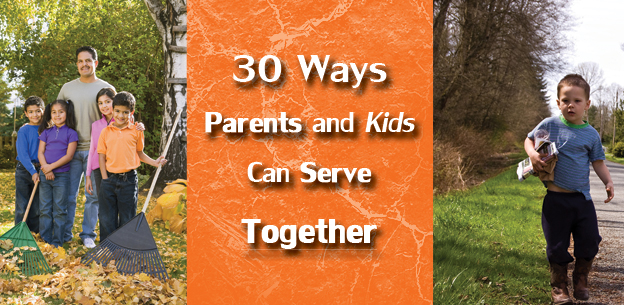
30 Ways Parents and Kids Can Serve Together

What is It?
This resource is an idea bank of 30 different ways parents can serve with their kids. Parents often just needs some ideas of how they can get involved with their kids and this will help them to think outside the box. Powerful things can happen when children learn to serve from their parents example.

How do I use it?
This resource comes as a three .pdfs of 10 different ways parents can serve with their kids. You can use these at different times of the year. Send out and email to your parents saying, “I often hear it said that discipleship is more often caught than taught. I want to challenge to get out and serve WITH your kids. Let your example be a tremendous teacher to them. Here are 10 ways you can do that. Have a blast serving with your kids and seeing them grow to become more like Jesus!”

Load all three pdfs on your webpage or in a dropbox for them to access at anytime.

Take the ideas and send one out a week challenging your parents find a time this week to serve with their kids.

Promote a family serving day in your church and encourage every family to pick one way from the list to serve the community on the same day. Imagine the community impact!

So here you go! Download the resource and get it in the hands of your parents!

Download Now

Month 6

Importance of Play

Email 1

Copy/Paste the following into your email:

Email 2

Copy/Paste the following email:

Video Script

Think about this situation. Your child is playing happily. Someone asks you what they are doing? Your response? “Oh, they’re just playing.” Just playing. Almost like we are implying that what our child is doing is somehow unimportant and not a big deal. We are learning though, playtime is so important in the development of children. What they are doing may seem silly or simple to us, but it could be teaching your child valuable life lessons. This month, we are going to examine the importance of playtime.

Let’s be honest. Our lives are busy. People are on the go all the time and everyone is in a hurry. We all have something to do. Little kids, just want to play and have fun. This is often overlooked in our rush to get things done.

First, let’s define what is playtime? There are two basic types: Unstructured, free play and Structured play. Free play is playtime that just happens, depending on what takes your child’s interest at the time. It isn’t planned and it is often coordinated by the child. It let’s your child use their imagination and move at their own pace. An adult may or may not be a part of it. Structured play is organized. It occurs at a fixed time and in a set place. This is usually led by an adult or some sort of instructor. Examples of this are dance classes, story time at the library or even swim lessons. Sometimes we push, even our little ones, to be involved in many structured activities like dance or sports. Organized activities are not bad. Many have very valuable benefits, as does free playtime. There must be a balance between the two and each child’s needs must be taken into account. The American Psychological Association reports that children today have eight fewer hours of free, unstructured play a week than they did twenty years ago due to busy lifestyles, electronics and organized activities.

Studies have shown that play is necessary for many kinds of development: Social, emotional, physical and cognitive development. Play is important for healthy brain development, problem solving and boosting language.

These days, there is more pressure on kids than ever before. The Kindergarten and Preschool of today looks totally different than it did twenty years ago. Many parents hold a fear of their child falling behind. All you have to do is look to the toy store shelves to see the enormous number of educational games and toys, some of which are very expensive. Education is so important but there must b3e a balance. Think back for a moment to when you were a kid. What was your favorite toy? I adored by baby dolls and I can remember my brother could make anything out of a simple stick. Be honest, was there anything better than a fort made of blankets or a really huge box? Despite the growing market of expensive toys, children actually need very little to maximize their playtime. Items that may seem simple or that aren’t even actually toys can be just as much fun and increase the use of a child’s imagination.

Playtime can also give parents an opportunity to fully engage with their child and see the world through their eyes. Kids don’t have to necessarily be taught how to play, but parents and teachers are important in helping kids advance through play. So, what are some ways to boost learning through play? Help increase your child’s verbal skills by asking questions about what they are doing. Say things like “Tell me about what you are building.” Challenge their imagination by asking for details as they pretend. If your son is pretending to be a pirate, ask them what kind of treasure they would look for and what their pirate ship is like. It’s also a great time to help them feel independent. Provide materials for them, but allow them to control their actions. This helps them to feel like a big kid.

There is a quote by the author Roald Dahl that says “A little nonsense now and then is cherished by the wisest men.” That is a great reminder that we need to let our kids be silly and play and just have fun. It may seem simple to us, but it is so meaningful to our children. Be watching later this month for our next parenting email. We will explore the different types of development that playtime stimulates in our kids and great play ideas for them.


Weekly tweets from you to parents:
TIP: Choose a hashtag for your tweets and use it consistently. That will tell Twitter to store a list of your tweets in one place for later reference.

Tweet 1 – Playtime provides parents with an opportunity to fully engage with their child. #urchurchparentministry

Tweet 2 – The time before the age of three is called a “critical period” in brain development. How are you helping your child learn? #urchurchparentministry

Tweet 3 – “We don’t stop playing because we grow old, we grow old because we stop playing.” -George Bernard Shaw #urchurchparentministry

Tweet 4 – Do you remember your most favorite toy as a child? Playtime makes an impact. #urchurchparentministry

Tweet 5 – Playtime is one of the first opportunities for a child to discover the world. #urchurchparentministry

Tweet 6 – Don’t think of it as “just playing”. It is important. #urchurchparentministry

Tweet 7 – Despite the growing market of expensive toys, children need very little to maximize playtime. #urchurchparentministry

Tweet 8 – As parents we must find a balance between structured activities and free play. #urchurchparentministry

Tweet 9 – Parents and teachers are crucial to help children advance through play. #urchurchparentministry

Tweet 10 – “A little nonsense now and then is cherished by the wisest men.” -Roald Dahl #urchurchparentministry

Empathy

Creating An Empathetic Child

Email 1

Copy/Paste the following email:

Email 2

Video Script

Every parent wants their kid to be that kid that is encouraging and kind to other kids. No parent holds their baby girl or boy in the hospital and dreams about their child being the playground bully who is mean to all the other kids. We dream about our children being kind, compassionate, and helpful. This month we want to do more than dream about that idea we want to help you help your kid truly care for others. We want your child to have empathy for their friends and other people in their life.

What is empathy? Good question!

Empathy is the ability to understand another’s perspective and to consider it before acting. It’s actually “other awareness” and it really doesn’t come naturally for most kids or adults. If you don’t believe me just start allowing your daughter or son to start having friends over to spend the night. If you want to know how your child is doing with the idea of empathy watch how they interact with their friends. See how they respond when their friend wants to watch a different movie than they do. See how they respond when their friend wants to ride bikes instead of playing a video game. See how they respond when there is only one chocolate chip cookie left. I watch this stuff every time my children have guests over for the night and many times my own kids choose to think of themselves over the needs of their guests. Over and over I have to remind them to rethink their choices and serve their guest instead of themselves.

Our kids will naturally choose to care for their own needs over other’s needs. It’s natural so in order to raise kids who care for others we need to do more than wish it would happen. There is even an incredible example from the Bible in the life of Jesus. Jesus modeled and lived out compassion for others. Listen to this verse…

2 Corinthians 5:21 (NLT)
21 For God made Christ, who never sinned, to be the offering for our sin, so that we could be made right with God through Christ.

Through sacrifice and love Jesus cared for our needs to have a relationship with God over his own needs. That’s an incredible act of sacrifice lived out. God even models empathy by giving us his own son. When we intentionally encourage our kids to care for the needs of others we are helping them be more like Jesus and that’s an incredible goal to have.

How can we practically help our children have more empathy for others? I’m glad you asked because you can start with these practical moves as their parent…

Move #1 / Encourage empathy by calling out selfishness in love.

Don’t hurt your child’s feeling but in love call out their selfish moments and allow them change their choice. Sometimes they will still choose the wrong thing but over time when you call those moments out they will begin to learn in the middle of real life.

Move #2 / Model empathy for your child this month.

This will take some planning but find some clear ways to show your kids how you are caring for the needs of others. You could really go out of your way to help your kids work through an issue in their life. Think about helping them with soccer practice or with their homework. You might even think about choosing a service project in the community you can do with your kids. This month your children’s pastor will have a list of ideas they can send to you to spur your imagination. Show your kids what compassion looks like!

Later in the month your children’s ministry will send you part 2 of this online class and give you more practical ways you can help your child be someone who cares for the needs of others. Thanks for watching this and thanks for passing on faith to your child day by day!

Weekly tweets from you to parents:

TIP: Choose a hashtag for your tweets and use it consistently. That will tell twitter to store a list of your tweets in one place for later reference.

TWEET #1- Defining empathy-the ability to understand another perspective and consider it before acting. #urchurchparentministry
TWEET #2- Teaching compassion-Be careful NOT to prioritize your child’s happiness above others. #urchurchparentministry
TWEET #3- Keep it in check parents, Do your children see you being kind to everyone?? #urchurchparentministry
TWEET #4-Kids naturally choose to care for their own needs above needs of others-teach our kids to DEFY nature. #urchurchparentministry
TWEET #5- Teach compassion/empathy-CHALLENGE PREJUDICES and EXPLORE COMMONALITIES #urchurchparentministry
TWEET #6- Compassion lived out-2 Corinthians 5:21 #urchurchparentministry
TWEET #7- Check out this great list of literary fiction books to encourage empathy and compassion: http://bit.ly/1nkATXs #urchurchparentministry
TWEET #8- Teaching empathy is a GREAT way to pass down our faith to our children. #urchurchparentministry
TWEET #9- Encourage empathy in your child by calling out selfishness in love. #urchurchparentministry
TWEET #10- Just as Jesus was moved with compassion for us, let us be moved by compassion for others. #urchurchparentministry

Home Improvement: The Parenting Book You Can Read to Your Kids

What is It?
“Home Improvement” is a very helpful ebook you can send to your parents that is brought to you by our friend Dr. Scott Turansky and the National Center for Biblical Parenting.   We had Dr. Turansky on for one our podcasts and he had some incredible things to share about parenting.   

Listen to Podcast

You can checkout their other amazing resources at biblicalparenting.org

“Home Improvement” is more than just a parenting book. It’s a tool that parents can use with their child. Each chapter is divided into two parts. The first part is a fiction story about a family who experiences problems and then learns a new tool. Parents can read this section to their child and it will present family issues from the parent’s perspective.

Children are often blinded by their own viewpoint and seeing the problem from the parent’s view is eye-opening. Furthermore, it opens opportunities to talk about ways their family can relate and ways parents can make changes.to help them Communicate with their child.

In This Book Parents Will Learn…
– Four truths that will motivate them to continue on when they’re tired, discouraged, and ready to give up.
– A powerful strategy to help children change their hearts–not just their actions.
– A unique concept that will reveal the cues parents give to tell their children when they must obey.
– A six-step “Secret Weapon” they can use when all else seems to have failed and they need a bigger plan to help their children develop character, not just change their behavior.
– Three practical ways they can be a coach to their children and help them learn from life.
– One small ingredient to add to their parenting to help their children develop wisdom.
– A three-step plan to help their children deal with anger through frustration management, anger control, rage reduction, and releasing bitterness.

How do I use it?

Offer it to Parents as a gift. You can put it in dropbox or store it online and then keep a link to it on your ministry website.

Send out an email to the parents in your ministry today saying, “I was wondering if any of you are struggling to communicate to your Teenager? I have a free ebook from our student ministry called, “Home Improvement: The Parenting Book You Can Read to Your Kids” I’d love to give it to you. Just reply to this email if you’d like it.” Then get ready for awesome Parent interaction.

Read this ebook yourself and use the content to create your own training seminar for Parents that you teach.

Write a series of blog posts on your Parenting Blog using the content in the ebook.

You’re going to love this book!  You’re parents are going to love this book! So go on and download it now!

Download Now

Heart Strings

For Parent’s Whose Kids Are Learning An Instrument

What is it?

“Heart Strings” is an ebook that you can give as a gift to your parents who have kids who are learning to play an instrument. This ebook will help your parents with some tough questions like:

  • “What happens when it gets hard?”
  • “What do I do when my kid wants to quit?”
  • “What do I do when my kid’s friends are getting better, faster?”
  • “How do I encourage my kid to keep working, to keep practicing, to push through even when he or she feels like giving up?”
  • How do I help my kid practice when I don’t know anything about music myself?”

So this book will be a great blessing to your parents of musicians!

How do I use it?

Get in the hands of your parents, however you can.

It comes as a .pdf so it can be emailed, printed out and mailed, or sent by carrier pigeon. No matter how you deliver it, parents of aspiring musicians will love it.

Like most of our resources we have branded this resource in such a way that it communicates to parents it is a gift from your ministry.

It makes us very happy to partner with your ministry, and help you look great to the parents you serve!

Click below to download this resource:

Download Now

Month 5

Discipline

Email 1

Email 2

Video Script

Thank you for joining us at parentministry.net for this month’s online parenting class. Our topic today is one that we as parents have to deal with probably every day…how and when to discipline our child.

We’ve all been there, in a public place and you hear a child pitching a fit, misbehaving or crying. We’ve all thought to ourselves, “If that were my child…(fill in the blank)”. And you know what, sooner or later, it will be your child. Even the most even-tempered child has their bad days. Misbehavior is so frustrating. None of us want to raise a spoiled brat, but we also want to foster independence and let them be their own person. How do you balance it?

Deciding how to discipline your child is something that is up to every parent. However, it is also very important to learn why kids misbehave and how we can make the most out of a trying and hard situation. When dealing with preschoolers, it may be beneficial to look at discipline as an opportunity for teaching, rather than a source of punishment. Most of the time, kids aren’t trying to be malicious, they are just being kids and they don’t think the same way adults do. Things that may make sense to us can be a foreign concept to them. Sometimes parents can overreact out of anger and frustration and not see the behavior for what it is…your child just being a child. You’ve just caught them coloring on the wall. To you, it’s a horrible mess and you don’t understand why they would do that. To a two year old, it is a masterpiece that they worked so hard on after they found some crayons! It is up to us to teach them what kind of behaviors are acceptable and which are not.

The most important thing to remember when approaching discipline is to be consistent. Decide which behavior you will allow and stick with it. These limits will be different for each family. What works for your friends, what they allow their children to do may not be right for your family. As a parent, it is your job to set limits for your child. Everyone, regardless of age, needs limits. The younger the child, the more defined the limits need to be. Limits, within reason, provide security. Don’t look at it as a restriction, but a way to protect your curious child.

Many times, children act out because they want attention. That may not make sense to us because they are getting in trouble, but they crave attention at this age regardless of the kind. Make sure that you are praising your child for what they do well. Show them that they will receive attention for good behavior. Also, make sure that you are on the same page as your spouse when it comes to family rules. Mixed messages will only confuse your child and make it harder on everyone.

I have two children of my own and I don’t think I could have been blessed with two any different from each other! My son has a precious, tender-hearted soul. His emotions are always just below the surface and he is definitely my worrier, the one always concerned about others. My daughter on the other hand is my free spirit, stubborn and fiercely independent. She has an opinion about everything and she’s not afraid to tell you about it! My husband and I have learned very early on that the same parenting techniques don’t work the same for them. We have to change things up depending on which child we are dealing with at that time.

Parenting is hard work and some days go much more smoothly than others. Make a plan for when those bad days happen and stick with it. Provide a consistent environment for your child. It will help them to understand what is expected of them and what the consequences are if they misbehave. Today we have just scratched the surface of discipline and our preschoolers. Later this month be watching for our next parenting class email. We will dig a little deeper into some techniques and tools that will hopefully help you to make a plan that works for your family and maybe give some insight that you haven’t considered before when it comes to discipline.

Weekly tweets from you to parents

TIP: Choose a hashtag for your tweets and use it consistently. That will tell twitter to store a list of your tweets in one place for later reference.

  • Tweet 1 – Proverbs 22:6, “Train up a child in the way he should go and when he is old, he will not depart from it.” #urchurchparentministry
  • Tweet 2 – Make it easy for your child to do the right thing. #urchurch-parentministry
  • Tweet 3 – As parents is is your job to reinforce lessons with consistency, patience and compassion. #urchurchparentministry
  • Tweet 4 – Do you look at discipline as an opportunity for teaching or pun-ishment? #urchurchparentministry
  • Tweet 5 – Be a model. Show your kids what you want them to do. #ur-churchparentministry
  • Tweet 6 – You must decide what is acceptable behavior and stick with it. #urchurchparentministry
  • Tweet 7 – Discipline isn’t about what we are doing to our kids, but for them. #urchurchparentministry
  • Tweet 8 – Be consistent in your parenting – don’t send mixed signals. #ur-churchparentministry
  • Tweet 9 – Misbehavior is frustrating. Do you have a plan to deal with it? #urchurchparentministry
  • Tweet 10 – Teach your child that the world is full of yes and no’s and how to deal with them. #urchurchparentministry

Tantrums

Teaching Emotional Self-Control

Email 1

Email 2

Taming Our Kids Emotional Meltdowns!

Now that my kids are a little older I realize that I told myself a little lie when they were preschoolers. When my kids were in preschool and they threw a temper tantrum in the middle of Wal-Mart or Target when they realized they couldn’t have what they wanted I told myself this would all get better when they were older. I longed to be past the emotional drain of a 2 year old mad about not getting candy! Truth is, now my kids are older, there are many days I still have to work through emotional meltdowns. My kids still “lose it” at times, and at the end of the struggle I am left wondering if this will ever pass.

This month in our online parenting class we are going to look at how to help our kids tame their emotions. Some kids are incredibly expressive when they are angry or frustrated. Some kids are reserved and withdrawn when mad. No matter how your child responds when their emotions get out of control we know the root of helping kids tame their emotional swings is a powerful word even parents need help with…SELF CONTROL.

Let’s process this a little. Think about what sets your kid off. What’s the trigger that really pushes your child over the emotional edge where they act more like Animal on the Muppets rather than your son or daughter? The root of your child’s emotional outbursts, the ones that drive you crazy as a parent, is the loss of self-control. If you want to help tame your child’s emotional meltdowns then you have to start with helping your child develop self-control. It’s always critical to remember that your child’s emotional outbursts do not make them a bad kid! Emotional kids are just like emotional adults; we all need help embracing self-control.

The Book of Proverbs is a book of wise sayings and there are so many incredible verses that push us to embrace self-control. I think these 2 verses will help us as parents when it comes to helping our kids with self-control…

Proverbs 25:28 (NLT)
A person without self-control is like a city with broken-down walls.

Our kids make terrible choices when they are out of control emotionally. When kids lose it they are left defenseless to many bad choices. Has any good ever come from a temper tantrum? Has an emotional meltdown ever helped your career as an adult? The answer is NO. Our kids need us to help them embrace self-control because it will help them make wise choices when they confront struggles in life!

Proverbs 29:11 (NLT)
Fools vent their anger, but the wise quietly hold it back.

I don’t know about you but I never want my child to be known as a fool. In my home growing up we were not even allowed to call each other a fool until Mr.T on the A-Team made his “pity the po fool” saying famous. In the Bible the word FOOL is the worst thing you could call someone. Helping our kids learn how to control their emotions actually helps them become wise. Really that’s the goal of parenting. We are here to help set our kids up to make better choices in the future…to be wise.

This month we want you to focus on helping your kids tame their emotional outbursts by helping them live out self-control. As a dad of emotional kids here are three things I constantly remind myself…

Model self-control when confronting their lack of self-control!

This is so difficult for me as a parent. When my kids are melting down my tendency is to allow my emotions to escalate with them. I get frustrated that my child is out of control and I have to remember to slow down and stay calm. When you model self-control in tense situations you are teaching your child about self-control. You can be firm and assertive and calm all at the same time. Modeling self-control can be done while you strongly handle parenting situations.

Coach kids before tense situations.

When you know your child is about to confront a situation that might be difficult for them coach them before you enter the environment. If your child struggles at grandmothers house with behavior then before you get out of the car make sure and set the tone for what you expect. You will be surprised by how far a little coaching can go to help kids control their emotions.

Help your children process why their meltdowns happened AFTER the meltdown.

Never try to help your kids process why they are out of control when they are out of control. I watch parents try to help their kids process situations rationally in the heat of the moment all the time. When your child has had a meltdown make sure and bring the situation back up later when they are calm and process how it could have gone differently. It’s so critical for us to help our kids understand that with self-control there are always other options besides melting down!

In a few weeks your children’s ministry will send you part 2 of this online parenting class. In that email we will be coaching you on how to help your child in the middle of some of those emotional meltdowns. Remember that each of these online classes start with us as parents living these ideas out for our kids to learn from. We are praying this month you will be a living example of self-control for your kids to see!

Weekly tweets from you to parents:

TIP: Choose a hashtag for your tweets and use it consistently. That will tell twitter to store a list of your tweets in one place for later reference.

  • TWEET #1- To help tame your child’s emotional meltdowns you have to start with helping your child develop self-control. urchurchparentministry
  • TWEET #2- Remember to model self control as you confront their lack of self-control. Be FIRM and CALM! #urchurchparentministry
  • TWEET #3- Once you realize that will power is just a matter of learning how to control your attention and thoughts, you can really begin to increase it-Mischel #urchurchparentministry
  • TWEET #4- Proverbs 25:28, A person without self-control is like a city with broken-down walls. #urchurchparentministry
  • TWEET #5- Never try to help your kids process why they are out of control when they are out of control. #urchurchparentministry
  • TWEET #6- 2 benefits of having a bed time ritual; teaching self-control and having a rested child who can live with self-control #urchurchparentministry
  • TWEET #7- Proverbs 29:11, Fools vent their anger, but the wise quietly hold it back. #urchurchparentministry
  • TWEET #8- http://purposedriven.com/blogs/dailyhope/index.html?contentid=3502 developing biblical self control #urchurchparentministry
  • TWEET #9- Coach kids before a situation, a little coaching can go a long way in helping kids learn self-control. #urchurchparentministry
  • TWEET #10-Helping our kids learn how to control their emotions actually helps them become wise. #urchurchparentministry

Lunch Box Notes

What is it?

This is a resource parents can use that is filled with 100 encouraging notes to help pass down faith. The notes are pre-written, include a scripture, and divided into helpful categories. All parents have to do is add their own personal touch, and it’s ready to go.

How do I use it?

Get in the hands of your parents, however you can. This resource is very self-explanatory and simple for them to use.

It comes as a .pdf so it can be emailed, printed out, mailed, or sent by carrier pigeon. No matter how you deliver it, parents will love it.

Like most of our resources we have branded this resource in such a way that it communicates to parents it is a gift from your ministry.

It makes us very happy to partner with your ministry, and help you look great to the parents you serve!

Click below to download this resource:

Lunch Box Notes for Kids